

More news on this day
Carnival Corporation is accelerating a sweeping efficiency push across its global fleet, deploying advanced technologies and new operating strategies that industry and company reports indicate are delivering substantial fuel savings and reshaping the economics of modern cruising.
Get the latest news straight to your inbox!
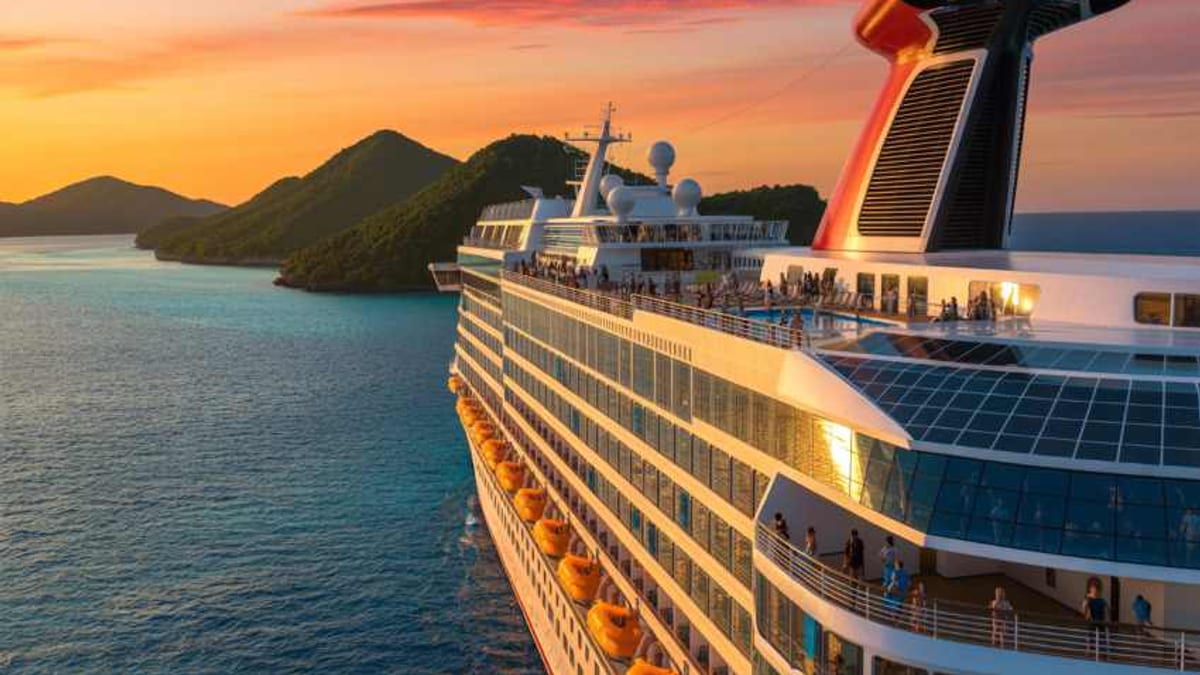
Image by International Cruise News: Latest Cruise Line & Cruise Ship News
Fuel-Saving Technology Becomes a Core Strategy
Publicly available information shows that Carnival Corporation has shifted fuel efficiency from a back-office concern to a central pillar of its business model. At the heart of this effort are Service Power Packages, a suite of upgrades designed to cut energy use across propulsion, hotel operations and onboard systems. The company has reported investing hundreds of millions of dollars over recent years to roll these and related measures out across its brands.
According to corporate filings and sustainability reports, the Service Power Packages are expected to deliver an average of 5 to 10 percent fuel savings per ship. The upgrades combine optimized automation and control systems, more efficient heating, ventilation and air conditioning, and improvements to lighting and hotel loads. By targeting the full energy footprint rather than individual components, Carnival aims to trim recurring operating costs while reducing emissions across voyages.
Company disclosures indicate that once fully implemented, these fleetwide energy projects are forecast to generate about 150 million dollars in annual fuel cost savings. That level of recurring reduction has become a key factor in Carnival’s broader financial recovery and its ability to manage volatility in global fuel prices.
The fuel-efficiency drive also underpins the group’s greenhouse gas reduction targets. Carnival has reported double-digit cuts in emissions intensity compared with 2019, crediting aggressive efficiency investments and changes in ship design and operations as major contributors to the gains.
Air Lubrication and Hull Innovations Cut Drag
One of the most visible examples of Carnival’s technical push is the rapid expansion of air lubrication systems across its fleet. The technology, supplied by specialist partners, releases a blanket of tiny air bubbles along the flat bottom of a ship, creating a thin layer that reduces friction between the hull and the surrounding water.
Data shared in company statements and independent trade coverage indicates that these air lubrication systems can reduce propulsive fuel consumption by around 5 percent or more on equipped ships. Carnival has already fitted the technology to a growing share of its vessels and has outlined plans for additional installations through the middle of the decade.
These upgrades sit alongside a broader focus on hull performance. Recent announcements highlight investments in advanced low-friction hull coatings and enhanced hull maintenance regimes, including the use of underwater drone inspections and more proactive cleaning schedules. By keeping hulls smoother and reducing biofouling, Carnival seeks to preserve efficiency gains over the full operating life of each vessel.
Industry analysts note that improvements in hull design and drag reduction are particularly powerful because any cut in resistance has a multiplying effect: less power is needed for the same speed, which means lower fuel burn, reduced engine wear and potentially extended maintenance intervals. For high-capacity cruise ships that sail year-round, the resulting cost savings can be substantial.
Smarter Itineraries and Shore Power Support Savings
Beyond hardware, Carnival is also pursuing efficiency through operational strategy. Corporate reports describe a continuing program of “itinerary efficiency,” which focuses on designing routes that require less fuel while still reaching in-demand destinations. That can include optimizing sailing speeds, refining port sequences to shorten distances, and favoring homeports and destinations that align with more efficient deployment of the fleet.
The company has reported that these itinerary reviews, combined with new ships that offer higher capacity per unit of fuel consumed, have contributed to a meaningful reduction in fuel consumption per available lower berth day, a key industry metric. Over time, such gains translate into lower operating costs per passenger and greater flexibility in pricing and deployment.
Shore power is another piece of Carnival’s efficiency playbook. Publicly available information indicates that more than two-thirds of the company’s ships are now capable of connecting to shore-side electrical grids where infrastructure exists. While shore power is primarily framed as an emissions and air-quality measure in port, it can also support engine efficiency by reducing run time and maintenance demands when ships are docked.
As more ports in North America and Europe build out shore power facilities, Carnival’s early investment in plug-in capability positions it to benefit from cleaner energy sources and potential cost advantages where grid electricity is competitively priced against marine fuels.
Efficiency Drive Feeds Into Financial Turnaround
The scale of Carnival’s efficiency program has significant implications for its bottom line. Recent earnings coverage from financial news outlets highlights that the company has returned to strong profitability after the disruption of the pandemic years, with record operating results and improving leverage metrics. Lower fuel consumption per passenger and per mile has been a critical enabler of that turnaround.
Fuel is one of the largest variable costs in cruise operations, and even small percentage improvements can translate into tens of millions of dollars in annual savings. With energy-saving technologies delivering mid-single to low double-digit reductions at the ship level, Carnival has been able to offset part of the impact of higher fuel prices and reinvest savings into debt reduction and new offerings.
Analyst commentary also links Carnival’s efficiency-focused capital spending to investor confidence. By prioritizing projects that generate measurable cost reductions, such as air lubrication, hull optimization and Service Power Package retrofits, the company has been able to present a clearer path to sustained margins and improved returns on invested capital.
The efficiency gains additionally offer a degree of competitive insulation. As Carnival reduces its energy costs per passenger, it has more room to manage pricing, absorb shocks and invest in new destinations and onboard experiences, while still targeting higher long-term profitability.
Decarbonization Goals Shape the Future Fleet
All of these measures fit within Carnival’s wider decarbonization roadmap. The company has publicly stated an aspiration to reach net-zero greenhouse gas emissions by 2050, and interim targets center on reducing emissions intensity through a combination of fleet renewal, alternative fuels and operational efficiency.
Newer ships entering the fleet are designed with more efficient hull forms, modern propulsion and advanced energy management systems from the outset, further expanding the baseline savings achieved through retrofits on older vessels. At the same time, Carnival continues to test emerging technologies such as battery storage, fuel cells and biofuels, which could layer additional reductions on top of efficiency gains.
Industry observers note that the company’s approach illustrates how cost control and climate objectives can align in large-scale travel operations. Fuel saved is both money saved and emissions avoided, and as regulations on maritime emissions tighten in key markets, early movers in efficiency and alternative technologies may enjoy both financial and licensing advantages.
For travelers, the changes are largely invisible, taking place below the waterline or behind the scenes in engine rooms and control systems. Yet the cumulative impact is reshaping how the world’s largest cruise operator powers its ships, manages its costs and navigates an era of rising environmental expectations.