

More news on this day
Carnival Corporation has lowered its profit forecast after a sharp jump in marine fuel prices linked to the Iran war, highlighting how the latest oil shock is rippling through the global travel industry just as cruise demand returns to record levels.
Get the latest news straight to your inbox!
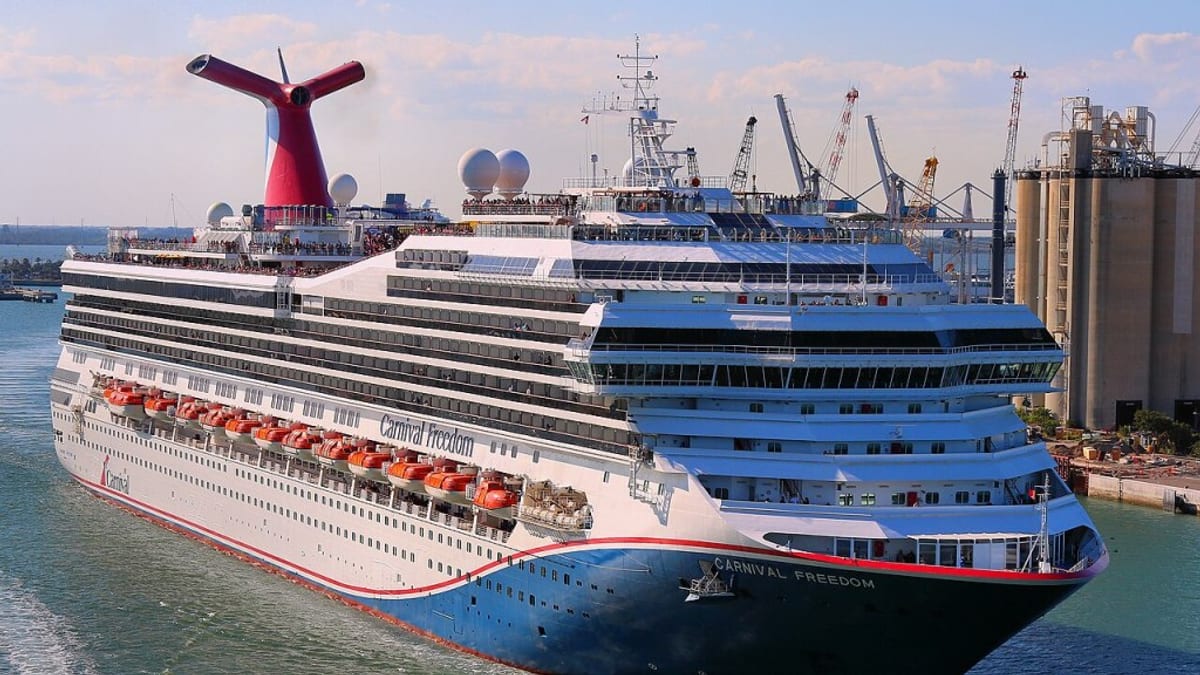
Image by Skift
Record Quarter Collides With Sudden Fuel Shock
Recent earnings updates and market commentary indicate that Carnival entered 2026 with strong momentum, reporting historic quarterly revenue and profit as travelers continued to book cruises at higher prices and occupancies. The company had been signaling mid‑single‑digit growth in earnings before interest, tax, depreciation and amortization for the year, underpinned by resilient demand and disciplined capacity growth.
That trajectory has been abruptly challenged by a rapid escalation in fuel costs since hostilities in Iran intensified and disrupted confidence in oil flows from the Persian Gulf. Brent crude has surged into triple‑digit territory, with some reports putting prices above 110 dollars a barrel as markets factor in potential disruption around the Strait of Hormuz, a key route for global energy shipments. Marine bunker fuel, which powers large cruise ships, has climbed in tandem.
According to financial analysis cited in market coverage, the jump in fuel prices is now expected to shave hundreds of millions of dollars from Carnival’s projected 2026 earnings, prompting management to cut its full‑year profit guidance even as underlying demand indicators remain positive. The revision has weighed on the company’s share price and underlined how exposed unhedged operators are to abrupt energy shocks.
One market newsletter that reviewed the company’s latest figures noted that higher fuel costs alone could add roughly 500 million dollars to Carnival’s annual expense base against an earnings target of around 7 billion dollars in EBITDA, a swing large enough to offset much of the benefit from record booking volumes.
Iran War Pushes Oil And Bunker Prices Higher
The conflict in Iran has triggered a broad repricing of energy risk, with analysts warning that any sustained threat to tanker traffic through the Strait of Hormuz could keep oil prices elevated for months. Public data compiled by international agencies show that a significant share of global seaborne crude and refined products typically transits this narrow chokepoint.
In recent weeks, oil benchmarks rose sharply as traders reacted to military strikes and political uncertainty in the region. Brent crude has repeatedly spiked by several percentage points in single sessions, and some banks have published scenarios in which prices could climb toward 120 to 130 dollars a barrel if disruptions worsen. These moves have filtered directly into marine fuels such as very low sulfur fuel oil, the primary energy source for the modern cruise fleet.
The resulting surge in bunker prices represents a direct hit to cruise operators, whose vessels consume large volumes of fuel on every voyage. While airlines and some shipping companies make extensive use of fuel hedging to smooth out volatility, published travel industry analysis notes that Carnival does not hedge its fuel costs to the same degree, leaving the company more exposed to spot price swings than some competitors.
Industry research quoted by travel and financial outlets also points out that the Iran war is contributing to higher insurance premiums and longer routing for certain cargo and tanker operations in the wider Middle East. Those costs ultimately filter into refined product prices worldwide, compounding the impact on sectors such as cruising that rely heavily on distillates and marine fuels.
Market Reaction And Pressure On Cruise Economics
The earnings downgrade has reignited investor debate over how sensitive the cruise business model is to oil shocks compared with past cycles. Market commentary circulated in recent weeks highlights that Carnival’s share price has underperformed broader indices since the start of the conflict as traders reassess fuel exposure and the scope for passing higher costs on to travelers.
Equity research circulated by major banks points out that, even after the guidance cut, Carnival’s fundamentals remain stronger than during the pandemic recovery phase, with leverage continuing to decline and forward bookings for 2026 said to be largely secured at higher pricing. However, analysts have trimmed their earnings estimates for the next two years by close to 10 percent, largely to reflect structurally higher fuel assumptions following the Iran‑related spike.
For cruise operators, fuel is one of the largest operating line items alongside crew and debt servicing costs. An abrupt, unhedged rise in bunker prices can compress margins quickly unless companies move to adjust itineraries, slow sailing speeds, or raise ticket prices and onboard spending targets. The latest revision to Carnival’s outlook suggests that management is factoring in significantly higher per‑ton fuel costs for the rest of the year than previously assumed.
Reports from financial news services also indicate that the downgrade has spilled over into the broader travel and leisure sector, with some investors rotating toward less fuel‑intensive segments or companies with stronger hedging programs. Cruise lines, which had enjoyed a powerful rebound as consumers prioritized experiences and delayed vacations, are once again trading in tandem with energy price headlines.
What Higher Fuel Costs Could Mean For Travelers
For cruise passengers, the immediate impact of Carnival’s higher fuel bill may not be obvious, as companies are often reluctant to raise published fares sharply in the middle of a selling season. However, travel industry coverage has already documented at least one cruise brand introducing new fuel surcharges to offset rising costs linked to the Iran war, and analysts suggest that more operators could follow if bunker prices remain elevated.
During previous oil spikes, large cruise groups experimented with per‑day fuel supplements and later rolled part of those increases into base fares. Commentators following the sector suggest that a similar pattern could emerge this time, with modest near‑term surcharges for new bookings followed by higher list prices on future sailings. Onboard revenue initiatives, from bar menus to specialty dining and shore excursion pricing, may also be used to protect margins.
Travel advisors quoted in recent consumer coverage are already urging guests with flexible plans to book earlier if they see attractive deals, noting that lines have been absorbing higher fuel costs for several weeks. If energy markets remain tight, there is an expectation that cabin prices on popular itineraries could trend upward into late 2026, particularly in fuel‑intensive regions such as long‑haul repositioning cruises.
At the same time, strong underlying demand and constrained new ship deliveries mean that operators retain some pricing power. Carnival and its peers entered the year with high occupancy projections and limited near‑term capacity additions, suggesting they may be able to nudge fares higher without derailing bookings, especially in marquee destinations where demand remains robust.
Broader Travel Industry Faces Parallel Fuel Squeeze
Carnival’s forecast cut is part of a wider pattern of travel and transport companies grappling with the financial fallout from the Iran war. Recent airline updates tracked by Reuters and other outlets describe a similar tension between strong passenger demand and surging jet fuel prices, with some carriers raising fares and reviewing capacity plans to protect profitability.
In Asia and parts of Europe, publicly available data and commentary suggest that the conflict has already triggered route adjustments, longer flying times to avoid sensitive airspace and a rise in operating costs tied to energy and insurance. Governments and tourism boards in some destinations have warned that a prolonged conflict could weigh on visitor numbers if higher airfares and fuel surcharges persist.
For cruise lines, the war‑driven fuel shock arrives just as the sector was closing the chapter on pandemic‑era disruptions. Financial filings from major operators over the past year have emphasized progress in reducing debt and normalizing operations. The latest jump in energy prices now threatens to slow that repair work by diverting cash flow back into running costs instead of balance sheet strengthening.
How quickly the outlook stabilizes will depend heavily on developments in the Iran conflict and the resulting path of oil prices. For now, Carnival’s downgraded profit forecast serves as one of the clearest signals yet of how geopolitical risk in the Middle East is feeding directly through to vacation budgets and the economics of global travel.