

More news on this day
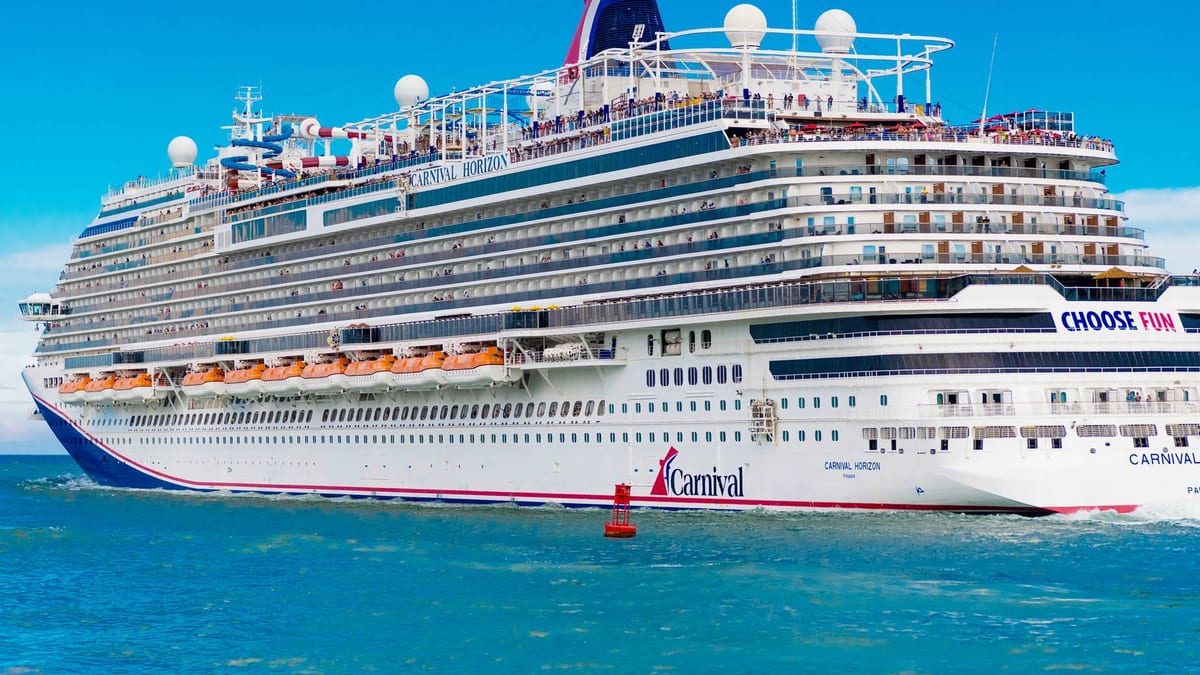
Carnival Horizon’s most recent Caribbean sailing returned to PortMiami several hours later than scheduled after a mechanical issue forced the cruise ship to operate at reduced speed, disrupting both the end of the voyage and onward travel plans for some guests.
Get the latest news straight to your inbox!
Mechanical Problem Forces Reduced Speed at Sea
Reports from cruise news outlets and passenger accounts indicate that Carnival Horizon developed a mechanical issue impacting the vessel’s propulsion during its latest voyage, limiting the ship’s operating speed and prompting an adjusted course plan. Publicly available coverage describes the ship “limping” at slower-than-normal speeds on the return leg toward Miami, with at times markedly reduced velocity compared with its typical schedule.
The issue emerged toward the latter part of the itinerary, as the vessel was sailing back to South Florida from the Caribbean. Rather than maintaining its standard cruising pace, the ship reportedly spent long stretches at significantly lower speeds, a pattern that can be seen on widely used ship-tracking platforms during the affected period. While the exact technical cause has not been detailed in available reports, coverage consistently characterizes the situation as a mechanical or propulsion-related problem rather than a weather-driven slowdown.
Mechanical constraints of this kind are not unprecedented in the cruise industry and can trigger cascading effects on port calls, arrival windows, and guest logistics. Industry incident summaries show that propulsion problems and mechanical faults occasionally lead to reduced operating speeds, missed ports, or delayed returns to homeport, particularly on tightly timed itineraries where schedule buffers are limited.
In this case, the ship remained operational and continued toward Miami under its own power, but the reduced speed narrowed options for keeping to the original timetable. With the vessel unable to maintain standard cruising velocity, the operator prioritized a safe return to PortMiami, resulting in schedule changes for the voyage’s final days.
Delayed Arrival Complicates PortMiami Turnaround
The slowdown at sea translated into a significantly later-than-planned arrival in Miami. Coverage in cruise-focused media notes that Carnival Horizon’s return to PortMiami on the affected sailing shifted from a typical early-morning call to an afternoon arrival, several hours past the published time. That delay compressed the ship’s turnaround window, with disembarkation and subsequent embarkation both starting later than usual.
Passenger reports shared through review platforms and social channels describe a knock-on effect for travelers who had booked morning or midday flights out of nearby airports, with some needing to adjust travel plans when it became clear the ship would not dock on schedule. In several accounts, guests highlighted frustrations around missed connections or the need to secure later departures once the revised arrival time circulated.
PortMiami is one of the busiest cruise hubs in the world, and even modest shifts in arrival times can complicate terminal congestion, ground transportation, and baggage handling. On heavy traffic days with multiple vessels in port, an unexpectedly late ship can add pressure to already tight logistics, particularly if terminal teams must handle disembarking guests, luggage operations, and new arrivals in a compressed timeframe.
Publicly available information on Horizon’s current deployment continues to list Miami as a primary homeport, with the ship scheduled on a series of Caribbean itineraries from South Florida. As of the latest published schedules, sailings remain on the calendar, suggesting the operator is treating the incident as a contained mechanical disruption rather than a long-term withdrawal from service.
Impact on Itinerary and Guest Experience
Because of the reduced speed, reports indicate that at least one port call on the voyage was shortened to help recover some sailing time. Cruise news coverage and passenger commentary describe a trimmed stay at a final Caribbean port, with departure moved earlier than originally planned so the ship could begin its slower-than-normal journey back to Florida.
For guests onboard, the operational change had visible effects on the daily rhythm of the trip. Some accounts describe a noticeable difference in the ship’s pace over the water and a sense that the vessel was “crawling” compared with previous sailings. While onboard entertainment, dining, and many amenities continued as scheduled, the combination of an abbreviated port call and a late arrival in Miami colored the overall perception of the cruise for some travelers.
Mechanical issues that affect propulsion typically require technical assessment and, in some cases, further inspection once a vessel reaches port. Publicly available reports on this incident suggest that specialized technicians were expected to examine Horizon at or after its delayed arrival in Miami to evaluate the fault and support repairs. How extensive that work will be, and whether it leads to adjustments on future departures, has not been detailed in current coverage.
Guest feedback collected in the days following the sailing reflects a mixed response. Some travelers emphasized that safety took precedence and expressed appreciation that the ship continued operating under controlled, reduced-speed conditions. Others focused on the disruption to carefully planned air travel and shore time, pointing to the importance of clearer contingency guidance when mechanical issues interfere with a published itinerary.
Broader Context of Cruise Mechanical Disruptions
The Carnival Horizon episode fits into a broader pattern of occasional mechanical events across the global cruise fleet that can cause delays, shortened port calls, or itinerary modifications. Industry reports on operational incidents document cases where propulsion problems, engine faults, or other technical issues have led ships to reduce speed, skip ports, or arrive late into turnaround ports.
These events remain relatively infrequent when measured against the total number of voyages operated each year, but when they do occur, the impact on guests can be significant. Late returns to homeport, such as the one recently reported for Horizon in Miami, can ripple through air travel arrangements, hotel stays, and ground transfers, particularly for passengers who schedule tight connections after disembarkation.
In response to such risks, many travel advisers and cruise-focused consumer guides recommend that guests build additional time into post-cruise plans, including scheduling flights later in the day or adding an overnight stay after disembarkation. The Horizon delay reinforces this guidance, underscoring how a technical issue at sea can translate into hours of variation by the time a ship reaches its homeport.
From an operational perspective, incidents like this also highlight the importance of redundancy and maintenance planning in modern cruise ship design. Large contemporary vessels rely on complex propulsion and power systems, and while they are engineered with safety and reliability in mind, unexpected faults may still occur and require on-the-fly adjustments to voyage plans.
What Passengers on Upcoming Sailings Should Know
As of the most recent public schedules, Carnival Horizon remains listed on its upcoming Miami-based itineraries, including multiple Caribbean sailings in the weeks and months ahead. There has been no broad indication in published materials of extended cancellations or redeployments tied specifically to this mechanical issue, which suggests that any necessary repairs are expected to be incorporated within the ship’s regular turnaround or short maintenance windows.
Prospective guests and those already booked on upcoming cruises may nevertheless pay closer attention to pre-cruise communications in the wake of this incident. Cruise lines commonly use email, app notifications, and online booking portals to share updates on embarkation times, expected arrival windows, and any schedule adjustments. Travel observers note that timely, transparent updates can help passengers adapt plans if an itinerary is affected by a technical or operational concern.
For travelers with flights booked out of South Florida on disembarkation day, travel-planning resources continue to emphasize flexibility where possible. Later departure times, travel insurance that addresses missed connections, and an awareness of potential delays at high-traffic ports like Miami can provide a buffer if a voyage experiences slower-than-expected sailing due to mechanical or weather-related issues.
The delayed return of Carnival Horizon to Miami illustrates how a single operational problem at sea can reshape the final hours of a cruise, even when the ship ultimately completes its itinerary. As the vessel resumes its scheduled program, observers will be watching future turnarounds and voyage reports for signs that the mechanical issue has been fully resolved and that the ship has returned to its normal cruising tempo.