

More news on this day
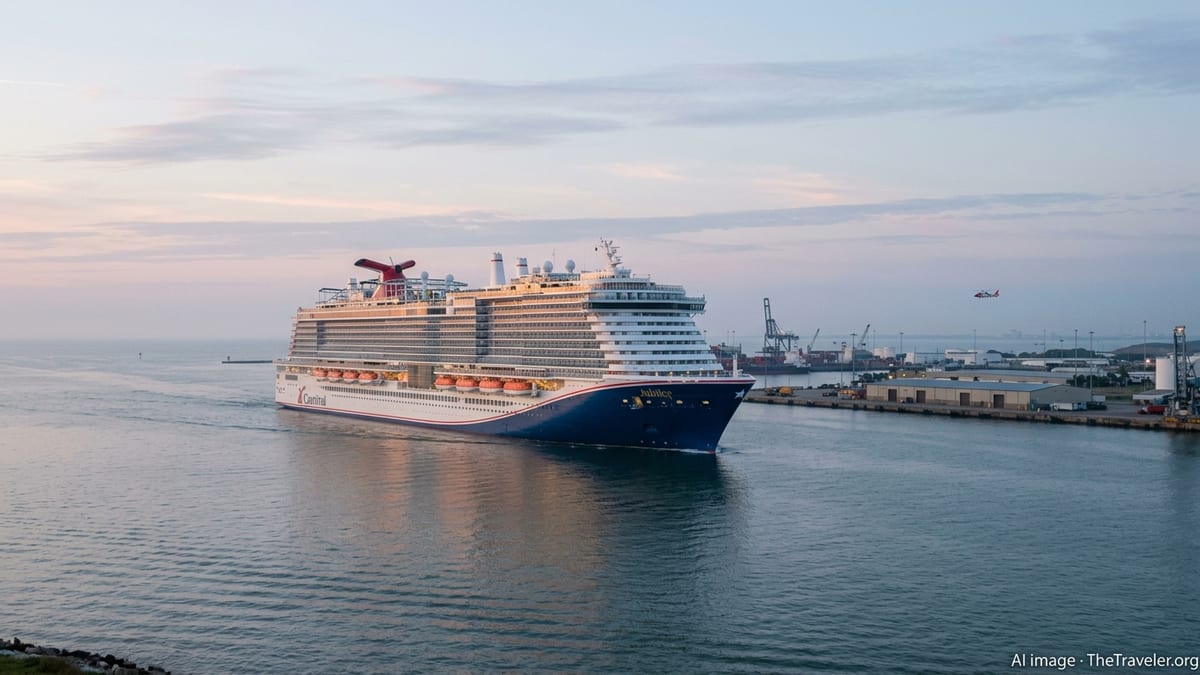
Carnival Cruise Line’s Galveston-based flagship Carnival Jubilee briefly diverted for a nighttime medical evacuation in the Gulf of Mexico, yet still completed its Western Caribbean itinerary on schedule, according to publicly available reports.
Get the latest news straight to your inbox!
Brief Diversion for Urgent Medical Airlift
Reports indicate that Carnival Jubilee altered course near the entrance to the Gulf of Mexico for a medical evacuation involving a guest who required urgent shoreside treatment. Publicly available information describes the incident as a coordinated response with the U.S. Coast Guard, which dispatched a helicopter crew to meet the ship and airlift the patient to a medical facility ashore.
The diversion occurred as the ship was sailing away from the Texas coast shortly after departure from Galveston. Automatic identification system tracking and cruise industry coverage show the vessel temporarily adjusting its heading and speed to facilitate a safe helicopter approach and hoist operation before resuming its planned route toward Mexico.
Despite the gravity of the situation for the individual involved, operational details suggest the maneuver was executed within a relatively short window. After the airlift was completed, the ship turned back toward its original course and continued along its scheduled path, minimizing impact on the wider voyage.
Timeline Shows Itinerary Remaining Intact
Based on published cruise-tracking data and media coverage, the medical evacuation took place late in the evening and into the early hours of the following day. The interruption to the voyage appears to have been limited, with the ship resuming normal speeds soon after the helicopter departure.
Subsequent port calls in Costa Maya, Cozumel and Mahogany Bay on the seven-night Western Caribbean itinerary proceeded as planned, according to available port calendars and cruise-port schedules. Arrival and departure times listed for Carnival Jubilee on those days align with the published itinerary, indicating that any time lost during the diversion was recovered through adjustments in speed and routing.
On the return leg to Texas, public arrival information from the Port of Galveston shows the ship docking within its regular morning window. That timing allowed standard debarkation to move forward and permitted the next voyage to begin with only routine turnaround procedures in the terminal.
Coast Guard and Cruise Crew Coordination
Publicly available Coast Guard summaries describe the type of response involved in this incident: watchstanders receive notice of a medical emergency at sea, evaluate the patient’s condition, and determine whether an airlift is necessary based on distance, weather and onboard medical capabilities. When an air evacuation is approved, a helicopter crew meets the ship at a predetermined rendezvous point to conduct the hoist.
In this case, reports indicate that the patient was experiencing serious but treatable symptoms that warranted transfer to a shoreside hospital rather than continued care in the ship’s medical center. The response required close communication between the flight crew and the vessel’s bridge team, including adjustments to speed and heading to ensure stable conditions for the helicopter.
While such operations are relatively rare in the context of the cruise industry’s overall passenger volumes, they are a planned part of emergency procedures. Modern ships like Carnival Jubilee routinely conduct safety drills and maintain established protocols for working with maritime rescue agencies when a guest or crew member needs rapid evacuation.
Impact on Guests and Operational Resilience
Passenger accounts shared through public forums and social media suggest the diversion was noticeable but not significantly disruptive to the onboard experience. Some guests reported feeling changes in the ship’s motion or seeing helicopter activity, while cruise-tracking enthusiasts observed the vessel’s change of course on third-party mapping platforms.
However, there is no indication from port schedules or subsequent sailing information that the medical evacuation caused major delays, missed ports or a shortened itinerary. The ship’s ability to recover its timetable after assisting with an urgent medical situation highlights the operational flexibility built into many modern cruise itineraries.
Carnival Jubilee, which has been based year-round in Galveston since its late 2023 debut, routinely sails weeklong Western Caribbean routes. The vessel’s size and propulsion capabilities provide some room to adjust speeds within safe operating limits, allowing it to make up modest amounts of lost time after weather deviations or emergency diversions such as this one.
Safety Procedures Under the Spotlight
The incident has drawn attention among cruise watchers to the broader medical and safety framework that supports large passenger ships operating from U.S. homeports. Cruise lines file detailed emergency plans with regulators and coordinate with regional Coast Guard sectors that oversee maritime safety zones in the Gulf of Mexico and Caribbean Sea.
These plans encompass everything from onboard medical staffing and equipment to communication protocols, helicopter hoist procedures and coordination with hospitals capable of receiving patients from offshore evacuations. Public documentation and prior case summaries show a pattern of similar medevac operations in the region over the years, reflecting the scale of cruise traffic from ports such as Galveston.
For travelers, the latest Carnival Jubilee diversion serves as a reminder that even on highly scheduled leisure voyages, medical contingencies can arise and be addressed swiftly without derailing the overall journey. While the focus in this case remains on the individual guest who required urgent care, available information shows that the ship returned to Galveston on time and maintained its role as one of the busiest large cruise vessels sailing from the Texas Gulf Coast.