

More news on this day
Carnival Corporation has announced a new mangrove restoration initiative in partnership with Conservation International in the Caribbean, expanding its portfolio of nature-based climate projects and spotlighting the cruise industry’s growing role in coastal ecosystem recovery.
Get the latest news straight to your inbox!
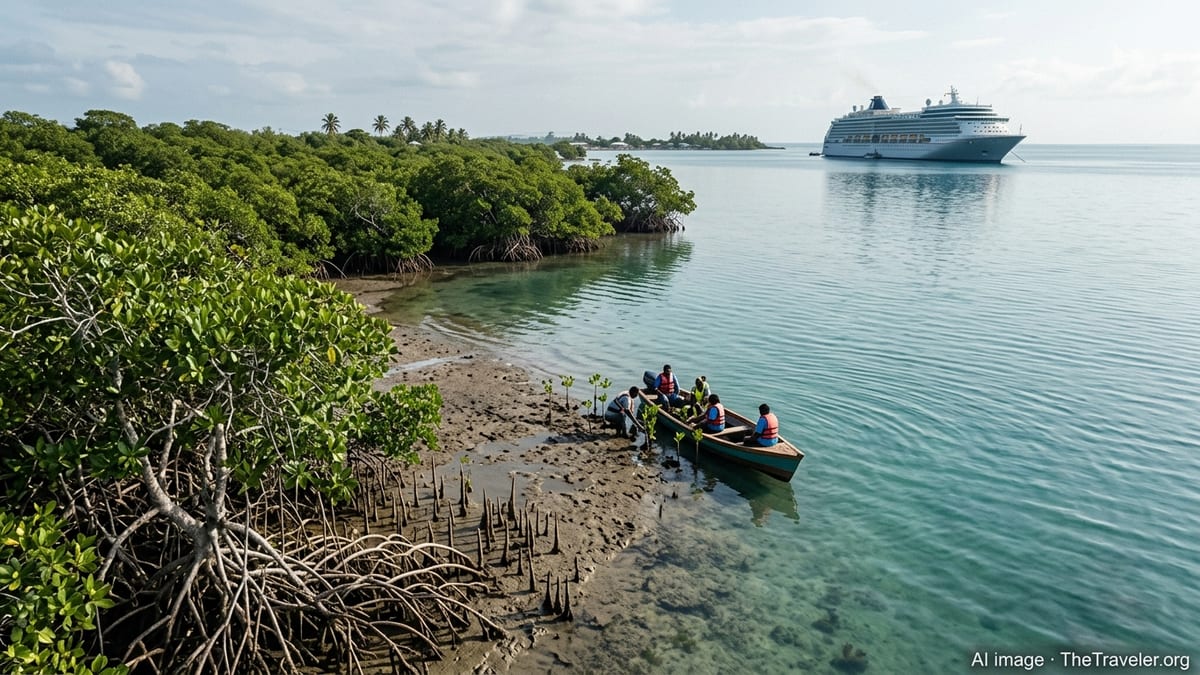
New Partnership Focuses on Coastal Resilience
According to publicly available information and recent sustainability disclosures, Carnival Corporation is deepening its engagement with science-based conservation work in the Caribbean, now centering mangrove restoration as a core focus area. The new initiative with Conservation International is framed as part of a broader shift toward nature-based solutions that can safeguard both communities and tourism hubs from climate-driven impacts.
The collaboration is expected to prioritize islands and coastal zones where mangroves provide a critical buffer against storm surges and erosion, areas that also overlap with key cruise destinations. Reports indicate that project siting will be informed by assessments of climate risk, shoreline vulnerability, and the potential for long-term ecological recovery, aligning the program with regional climate adaptation goals.
Publicly available descriptions of Carnival’s environmental strategy show a continued emphasis on partnerships with global conservation groups to design projects that can deliver measurable outcomes. The emerging mangrove effort with Conservation International follows this pattern, targeting on-the-ground restoration coupled with monitoring frameworks that can quantify benefits over time.
Mangroves as Natural Climate Infrastructure
Recent environmental research and conservation reporting consistently describe mangroves as some of the most effective natural defenses for tropical shorelines. These coastal forests reduce wave energy, stabilize sediment, and help limit flooding, functions that are increasingly important for low-lying Caribbean communities facing more intense storms and sea level rise.
Mangroves also store significant amounts of so-called blue carbon in their roots and surrounding soils, making them an important tool in climate mitigation strategies. Conservation organizations working in the region have highlighted that restoring degraded mangrove belts can simultaneously enhance biodiversity, increase fish nursery habitat, and support local livelihoods connected to small-scale fisheries and tourism.
In this context, Carnival Corporation’s new restoration initiative positions mangroves as a form of green infrastructure that complements traditional engineering solutions. The partnership with Conservation International is expected to tap into existing scientific frameworks for valuing ecosystem services, helping to demonstrate how restored mangrove systems can provide economic and social benefits alongside environmental gains.
Building on a Track Record of Marine Conservation Projects
Corporate sustainability filings and past project summaries show that Carnival Corporation has previously supported a range of marine conservation programs, including coral reef protection, coastal mapping, and earlier mangrove planting efforts in select destinations. These activities have typically been delivered in collaboration with established non-governmental organizations and local partners.
The new Caribbean mangrove initiative is presented as an evolution of that work, with a stronger emphasis on long-term restoration rather than short-term planting campaigns. Available documents indicate that the company and Conservation International intend to incorporate ecological baselines, survival-rate tracking for seedlings, and community stewardship components so that restored sites remain healthy beyond initial project timelines.
Observers of cruise-sector sustainability trends note that such partnerships are increasingly used by operators to demonstrate alignment with global biodiversity and climate frameworks. By expanding its restoration footprint through a dedicated mangrove program, Carnival Corporation is positioning its Caribbean ports and nearby coastal communities as early beneficiaries of that shift.
Local Communities Central to Restoration Strategy
Conservation International’s work in coastal ecosystems globally has highlighted the role of community participation in successful restoration, and the new Caribbean collaboration appears to reflect similar priorities. Project descriptions reference engagement with local stakeholders, including residents, fishers, and community groups, in order to identify priority sites and co-design restoration activities.
Available background materials on mangrove projects in comparable regions suggest that local involvement can include seed collection, nursery management, planting events, and long-term site maintenance. In some cases, restoration efforts are integrated with livelihood initiatives such as eco-guiding, community monitoring, or the development of small-scale tourism products that depend on healthy coastal habitats.
For the Caribbean, this approach is expected to support both environmental and social resilience. By incorporating community perspectives into planning and restoration, the partnership aims to increase the likelihood that newly restored mangrove stands will be protected from future degradation, while also creating opportunities for residents to benefit from enhanced ecosystem services.
Implications for Cruise Tourism and Sustainable Travel
The Caribbean remains one of the world’s most popular cruise regions, and the health of its coastal ecosystems is closely tied to the long-term viability of tourism. Publicly available coverage of the new mangrove restoration initiative suggests that Carnival Corporation views ecosystem stewardship as directly connected to guest experience and destination quality.
Travel and sustainability specialists point out that visitors are increasingly attentive to how large travel brands address climate and biodiversity challenges. Visible restoration projects, interpretive signage at ports, and partnerships with recognized conservation organizations can help demonstrate that cruise tourism is investing in the natural assets on which it depends.
For travelers, the growing emphasis on mangrove protection in the Caribbean may translate into new excursion formats, educational experiences, and opportunities to visit restored sites over time. As the partnership between Carnival Corporation and Conservation International advances, the region’s mangrove-lined bays and lagoons are likely to become both a symbol of climate resilience and a focal point for more responsible coastal tourism.