

More news on this day
Carnival Cruise Line is refining its 2026 Carnival Panorama itineraries along the Mexican Riviera, a move that travel analysts say strengthens Mexico’s position as a key West Coast cruise destination while emphasizing upgraded guest experiences and improved access to popular Pacific ports.
Get the latest news straight to your inbox!
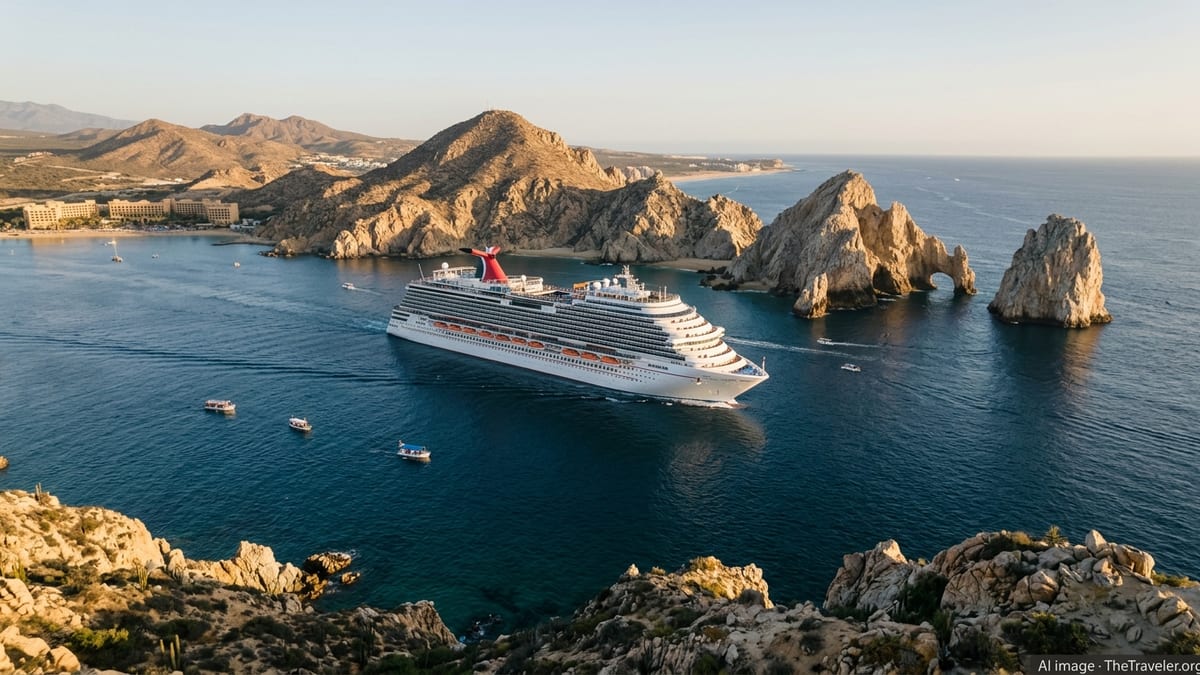
Updated 2026 Sailings Focus on the Mexican Riviera
Publicly available deployment information for 2026 shows Carnival Panorama continuing to sail primarily from Long Beach, California to Mexico’s Pacific ports, but with adjusted itineraries that place more weight on the classic Mexican Riviera circuit. The ship, which has been based in Long Beach since its debut and is one of Carnival’s largest vessels, is slated to offer a mix of seven and slightly longer voyages that concentrate on Cabo San Lucas, Mazatlán and Puerto Vallarta, with timing and port sequences tuned for smoother operations.
Industry observers note that these refinements come amid heightened attention on specific mainland destinations, with itineraries being adapted to reflect local conditions and demand patterns. Adjustments range from reshuffled port orders to altered call lengths, giving cruise planners additional flexibility to keep schedules reliable while maintaining the appeal of warm-weather escapes from the U.S. West Coast.
The reworked calendar is also designed to dovetail with broader fleet deployment across the region. By concentrating Panorama on consistently popular runs and aligning its calls with other brands in the Carnival Corporation portfolio, the cruise line is able to anchor a year-round presence in Mexico that underpins hotel stays, shore excursions and airlift through Los Angeles.
Longer Calls and Refined Port Access in Key Mexican Destinations
The 2026 plan places particular emphasis on port access in Cabo San Lucas, Mazatlán and Puerto Vallarta, three gateways that have historically formed the backbone of Carnival’s Mexican Riviera offerings. Schedules indicate more daylight hours in port on select sailings, especially in Cabo San Lucas, where tender operations and heavy traffic from multiple lines have long made call timing a critical factor for guest satisfaction.
In Mazatlán, itinerary spacing is being calibrated to match berth availability and crowding patterns, aiming to stagger arrivals from major lines and reduce congestion in the historic center. Travel trade reporting suggests that port authorities are continuing infrastructure work and tourism upgrades, and cruise operators are responding by refining arrival windows and tour departures to make better use of the city’s promenade and restored old-town areas.
Puerto Vallarta remains a marquee call for Panorama, but the 2026 framework reflects a careful balance between call frequency and operational considerations. Schedules show the ship arriving at times that allow for full-day excursions into the Bay of Banderas, including beach, adventure and cultural tours, while leaving buffer in the timetable to account for traffic in a busy multi-ship port. The net effect is a pattern of calls designed to keep the region firmly on the map for cruise travelers even as individual dates and call lengths are fine-tuned.
Enhanced Guest Experiences Onboard and Ashore
The adjusted 2026 itineraries coincide with a broader push by Carnival Cruise Line to emphasize curated experiences, both on Carnival Panorama and in port. Onboard, the ship’s existing lineup of dining, family activities and entertainment is being paired with refreshed destination programming that highlights Mexican cuisine, regional music and cultural touchpoints tailored to each port of call.
Shore excursion offerings are also evolving in tandem with the itinerary tweaks. Tour catalogs for upcoming seasons place renewed focus on small-group and adventure tours in Cabo San Lucas, including whale-watching in season, kayaking and coastal hiking, alongside classic beach club options. In Mazatlán and Puerto Vallarta, operators are promoting neighborhood walking tours, culinary experiences and visits to nearby towns, diversifying choices beyond traditional motorcoach sightseeing.
Travel agents report that guests are increasingly looking for flexible, authentic experiences rather than one-size-fits-all excursions. By aligning call times with these expectations and offering a broader menu of activities suited to different budgets and activity levels, Carnival aims to convert adjusted itineraries into an opportunity to deepen engagement with Mexico’s Pacific coast instead of simply repeating familiar patterns.
Economic Tailwinds for Mexico’s Pacific Ports
The 2026 deployment of Carnival Panorama is expected to provide steady economic tailwinds for the Mexican Riviera, reinforcing the role of cruise tourism in regional development. Each call typically brings thousands of passengers and crew into port, driving business for tour operators, restaurants, transport providers and retail outlets clustered around the piers and city centers.
Local tourism boards and port authorities in states such as Jalisco and Sinaloa have highlighted cruise ship visits as a stabilizing factor that supports jobs year-round, particularly when vessels homeported on the U.S. West Coast maintain regular weekly rotations. With Panorama’s itineraries structured around consistent calls and predictable patterns, stakeholders in Cabo San Lucas, Mazatlán and Puerto Vallarta can plan staffing, infrastructure improvements and marketing campaigns around a dependable schedule.
Analysts add that the presence of a large, feature-rich ship such as Carnival Panorama also serves as a marketing tool for Mexico more broadly. Travelers who sample a handful of ports on a weeklong cruise often return later for longer land-based vacations, spreading tourism spending beyond immediate pier areas into beach resorts, inland towns and adventure destinations throughout the region.
West Coast Cruise Market Signals Steady Demand
The recalibrated 2026 sailings for Carnival Panorama underscore a broader message about the health of the West Coast cruise market. Industry data and booking trends indicate ongoing demand for Mexican Riviera itineraries, especially from drive-to guests in California and neighboring states who favor seven-night voyages that require no long-haul flights.
By maintaining Panorama as a Long Beach mainstay while refining the details of its Mexican routes, Carnival positions itself to capture that demand even as competitive offerings expand across the Pacific and Caribbean. The strategy emphasizes reliability and incremental improvement rather than sweeping overhauls, with itinerary adjustments framed as a way to deliver more time in port, smoother operations and experiences that better match evolving traveler preferences.
For Mexico’s Pacific ports, the message in the 2026 deployment is clear: cruise tourism will remain a pillar of the local visitor economy, and carefully tuned itineraries from major players like Carnival Cruise Line will continue to funnel a steady stream of vacationers to the sun-drenched harbors of the Mexican Riviera.