

More news on this day
Carnival Corporation appears on course to report a powerful first quarter for 2026, as record bookings, firmer pricing and robust demand signal a new golden age for sea travel.
Get the latest news straight to your inbox!
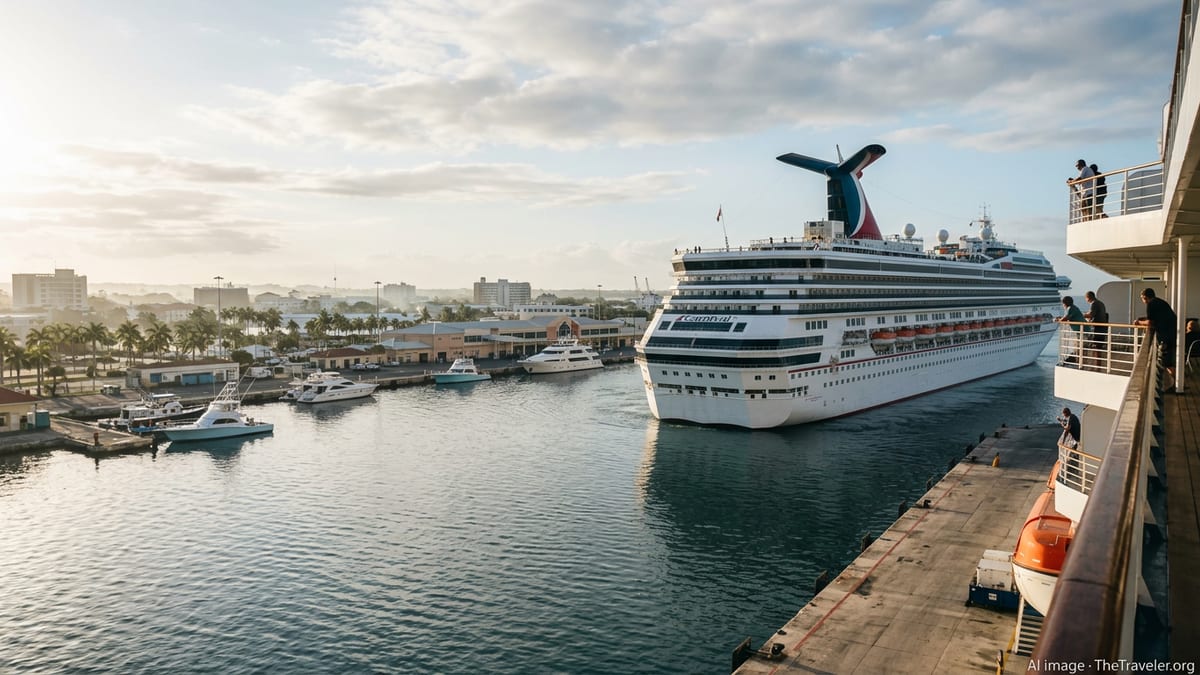
Momentum Builds Ahead of Carnival’s Expected Q1 2026 Surge
Recent financial disclosures and industry coverage indicate that Carnival is entering 2026 from a position of unusual strength following a record 2025. The company closed 2025 with record full-year revenues of about $26.6 billion and significantly higher net income compared with 2024, repeatedly outperforming its own guidance as close-in demand stayed strong and onboard spending remained elevated. Publicly available guidance for 2026 points to solid, if more measured, yield growth layered on top of this larger base, setting the stage for substantial year-on-year earnings expansion in the early part of the year.
Market analysts tracking Carnival expect the company to report its first-quarter 2026 results around late March, based on prior reporting patterns. Commentaries from equity research platforms note that consensus forecasts call for higher earnings per share and revenue compared with the same period in 2025, as occupancy moves above 100 percent and pricing holds near or above historical peaks. While cost pressures from fuel and inflation persist, Carnival has been steadily refinancing higher-cost debt and targeting investment-grade leverage by 2026, creating additional room for profit growth.
Fourth-quarter 2025 investor presentations suggest that management expects occupancy above 104 percent in the opening quarter of 2026, a level that implies tighter cabin availability and improved unit economics. Net yield growth guidance for the quarter lands modestly positive in constant currency, but follows several consecutive periods of record pricing. That combination of strong volume, resilient fares and improving balance-sheet efficiency underpins expectations that Carnival is set to post massive first-quarter growth compared with its still-recovering results only a few years earlier.
Record Demand Signals a New Golden Age of Cruising
The anticipated Q1 2026 performance for Carnival is unfolding against what travel and industry groups describe as the strongest demand environment the cruise sector has ever experienced. The Cruise Lines International Association’s latest State of the Cruise Industry report highlights that global passenger volumes have surpassed pre-pandemic levels, with consumer satisfaction and repeat intention outpacing many land-based vacation types. Repeat cruisers are sailing more frequently, and a growing cohort of first-time guests is entering the market, expanding the total pool of potential customers.
North American travel organizations are also projecting a wave of new cruise travelers. Forecasts published by AAA in late 2025 project that more than 21 million Americans could take an ocean cruise in 2026, a new record for U.S. passengers. That outlook aligns with travel coverage noting that cruise demand now exceeds pre-2020 levels, with particularly strong interest in Caribbean, Alaska and Mediterranean itineraries as travelers seek all-inclusive experiences and value for money at a time when land-based resorts and airfares remain expensive.
For Carnival, which operates a diversified portfolio of brands spanning the mass-market Carnival Cruise Line and more premium and niche lines, this demand upswing has translated into record booking curves. Coverage of the company’s 2025 first-quarter results noted that bookings for 2025 and 2026 reached all-time highs at higher prices, with guests booking further in advance and accepting stronger fare levels. As those early deposits convert into sailed revenue in 2026, the company is effectively harvesting several years of pent-up demand and re-priced inventory, feeding what observers increasingly describe as a new golden age of sea travel.
Pricing Power, Capacity Strategy and the Earnings Engine
One of the defining features of Carnival’s current cycle is its regained pricing power. Trade and financial press reports through 2025 pointed to record net yields and higher ticket prices across the fleet, as consumers continued to absorb increases without a notable slowdown in bookings. Onboard spending on specialty dining, beverages and experiences has also climbed, providing a high-margin complement to ticket revenue. This mix has allowed Carnival to grow revenue faster than capacity and to translate robust demand into stronger profits.
At the same time, Carnival has pursued a disciplined capacity strategy, retiring older, less efficient ships while bringing in newer vessels with more berths and improved fuel and environmental performance. Industry data show that the global cruise orderbook remains significant, but Carnival’s near-term capacity growth is relatively measured, focused on higher-yielding hardware rather than sheer volume. That measured expansion supports a healthier supply-demand balance, which in turn underpins Carnival’s ability to maintain pricing even as it adds cabins.
Investor materials for late 2025 outline a focus on cost control and efficiency alongside revenue growth. Adjusted cruise costs excluding fuel were held almost flat compared with 2024, with management emphasizing efficiency initiatives and scale benefits. Entering 2026, guidance implies modest cost increases tied partly to drydock activity and destination investments, but these are expected to be outweighed by revenue gains. The resulting operating leverage is a key reason analysts see scope for Carnival to post outsized first-quarter earnings growth relative to a still-elevated 2025 base.
Broader Industry Tailwinds: From New Ships to New Markets
The forces propelling Carnival’s expected Q1 2026 performance extend beyond its own balance sheet and booking curves. Across the sector, major competitors have reported record or near-record results, reinforcing the narrative that cruising as a whole is entering a structurally stronger era. Norwegian Cruise Line Holdings, for example, recently reported double-digit growth in adjusted EBITDA for 2025 and provided guidance that points to further earnings expansion in 2026, citing disciplined cost execution and healthy forward bookings. Royal Caribbean Group has also discussed solid yield growth and strong interest from both repeat and new-to-cruise guests in recent earnings coverage.
New ship deliveries are reshaping the product landscape and attracting travelers who might otherwise choose resort or city breaks. Industry references to the largest cruise ships ever built, alongside mid-size and expedition vessels, illustrate a widening range of options, from mega-resorts at sea to more intimate, destination-focused itineraries. These ships frequently debut with upgraded accommodation, entertainment and technology that command price premiums and help keep yields elevated.
Geographically, cruise lines are leaning into markets where demand is still maturing. Published analysis of cruise trends highlights rising participation from younger travelers and international source markets, complementing the traditionally strong North American and European base. For a global operator like Carnival, this diversification spreads risk across regions and cycles, while offering additional runway for growth beyond the near-term boom.
Risks, Costs and the Sustainability Question
Despite the optimism surrounding Carnival’s likely first-quarter 2026 performance, investors and travelers are also paying attention to potential headwinds. Fuel price volatility, inflation in food and labor, and the impact of a busy drydock schedule in 2026 all have the potential to pressure margins. Analyst commentary around Carnival’s late-2025 results pointed to higher operating expenses in the year ahead, as the company invests in its destination portfolio and maintenance, which are classified more as operating costs than capital expenditures compared with prior years.
There are also macroeconomic uncertainties. While cruise vacations are often marketed as strong value compared with land-based alternatives, a sharp economic slowdown could test the resilience of discretionary travel spending. So far, however, bookings and pricing for 2026 reported across the industry have remained firm, suggesting that many consumers continue to prioritize travel, particularly experiences perceived as once-in-a-lifetime or highly social.
Environmental performance and regulation remain central themes as well. According to trade association reporting, the cruise industry has committed tens of billions of dollars to more efficient, lower-emission ships and technologies, and Carnival has highlighted progress on reducing greenhouse gas emissions intensity since 2019. As regulators and port authorities tighten environmental requirements, continued investment in sustainability will be essential for maintaining access to key destinations and for meeting the expectations of increasingly climate-conscious travelers.
With these challenges in view, Carnival’s anticipated surge in Q1 2026 stands as both a testament to the cruise sector’s recovery and a reminder that the new golden age of sea travel will likely be defined as much by efficiency and responsibility as by record profits and ever-larger ships.