

More news on this day
Carnival Corporation is signaling a new phase in its post-pandemic strategy, steering capital away from an aggressive new-ship pipeline and toward revitalizing its existing fleet, enhancing destinations, and strengthening its balance sheet as cruise demand and profitability reach record levels.
Get the latest news straight to your inbox!
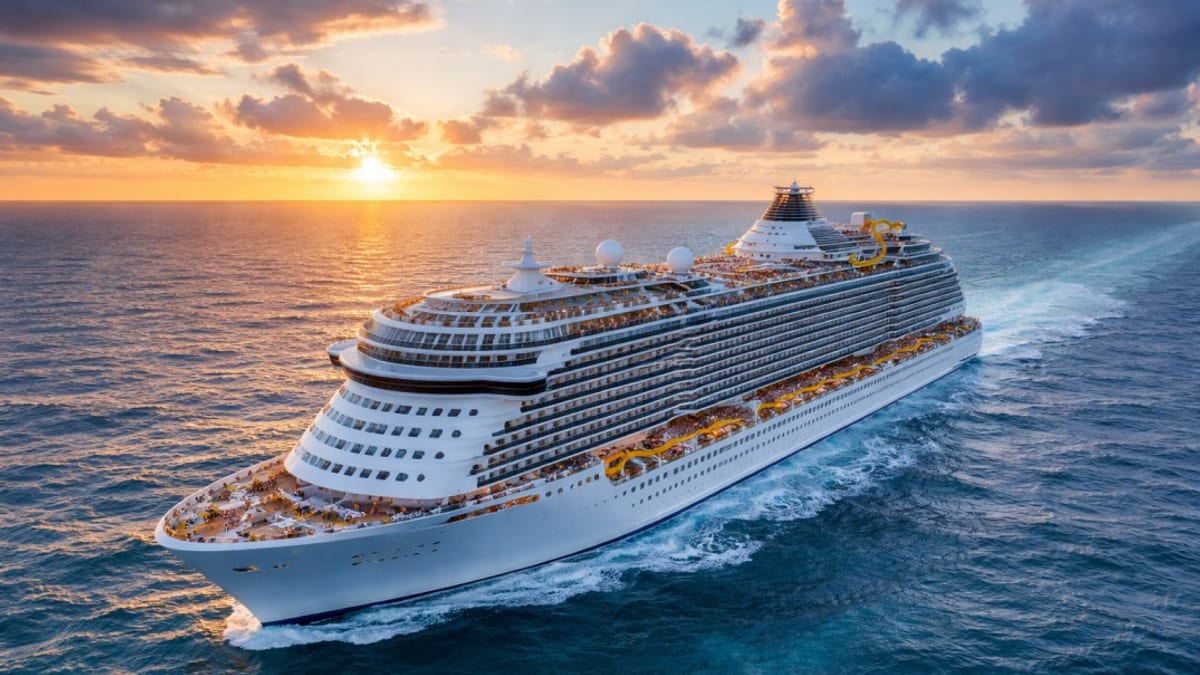
Image by Latest International / Global Travel News, Breaking World Travel News
Capital Spending Tilts Toward Existing Fleet
Recent filings and earnings materials indicate that Carnival Corporation is allocating considerably more money to non-newbuild projects than to fresh ship orders over the next several years. For full year 2026, the group has guided to approximately 0.6 billion dollars in newbuild capital expenditures, compared with about 2.5 billion dollars for non-newbuild spending such as refurbishments, dry docks, and product upgrades. This marks a clear shift toward sweating existing assets harder instead of adding capacity at pre-pandemic rates.
Company disclosures show a similar balance for the remainder of 2025, with newbuild capital expenditures projected at around 1.1 billion dollars versus roughly 1.2 billion dollars for non-newbuild items. The figures point to a multi-year pattern in which the world’s largest cruise operator runs one of the leanest newbuild order books it has held in decades, even as rivals tout ever-larger vessels and new classes of ships.
According to published coverage of Carnival’s recent earnings calls, executives have framed the strategy around “measured capacity growth,” emphasizing that fleet optimization and higher returns on invested capital are now prioritized over headline-grabbing tonnage additions. The company has already accelerated the exit of older, less efficient ships and is now concentrating on modernizing and reconfiguring the vessels that remain.
Industry analysts note that this approach reduces capital intensity at a time when interest costs, environmental regulations, and yard prices remain elevated. It also gives Carnival more flexibility to pivot capacity between brands and markets without being locked into a surge of large new deliveries in a demand environment that, while strong, has become more competitive in key regions such as the Caribbean.
From Newbuild Boom to Revitalization Cycle
Before the pandemic, Carnival was among the most prolific buyers of new cruise ships, working with European yards on next-generation vessels across several brands. That era culminated in the delivery of large liquefied natural gas powered ships and a series of Excel-class vessels, which significantly expanded capacity. The health crisis and resulting debt build-up, however, forced a strategic rethink.
Publicly available information in Carnival’s annual reports shows that the group accelerated the disposal of 19 ships as part of a fleet optimization program, trimming older and smaller vessels that were less fuel efficient and often yielded lower onboard revenue. At the same time, it continued to take delivery of a few highly efficient flagships, creating a younger, larger-ship-skewed fleet but with a slower net growth profile than in the 2010s.
More recently, updates from industry trackers highlight that Carnival’s firm newbuild pipeline is comparatively modest relative to historic norms, with only a handful of large ships scheduled between 2027 and 2028 for its various brands. This contrasts with a wider industry order book that still features dozens of mega-ships for competitors, particularly in the premium and contemporary segments.
The new focus is not on standing still, however. Carnival has been reshuffling tonnage between brands, transferring vessels such as Costa Firenze and Costa Venezia into the Carnival Cruise Line fleet and rebranding them with new concepts tailored to North American guests. Other ships have been redeployed to emerging or recovering markets, an approach that can deliver fresh product at a lower capital cost than commissioning a brand-new build.
Deleveraging, Dividends, and Financial Discipline
Carnival’s pivot toward fleet revitalization is closely tied to its broader financial objectives. The company has stated in public materials that it has reduced its debt by more than 10 billion dollars from peak levels reached during the crisis period, aided by strong cash generation and a measured approach to capital spending. Its leverage ratio has improved toward investment-grade metrics, reversing a rapid build-up that occurred when operations were largely paused.
In its most recent full-year update, Carnival highlighted that net debt to adjusted EBITDA had dropped to the mid-3 times range for 2025, a key threshold in its long-running “Sea Change” program. Management has outlined a target of driving that ratio below three times over the medium term, even while maintaining essential investments in the product and returning some capital to shareholders.
The financial reset has now reached a point where the group has reinstated a quarterly dividend in early 2026, with a modest initial payout signaling confidence in sustainable cash flows rather than an attempt to maximize short-term yield. Analysts point out that the move is only possible because the company expects robust free cash flow after funding both non-newbuild projects and the small slate of remaining ship deliveries.
Reports on Carnival’s debt management strategy describe a series of refinancings that have lowered the company’s average cash interest rate, smoothed out maturities, and reduced reliance on high-cost pandemic-era financing. By restraining newbuild commitments, Carnival has more capacity to direct incremental cash toward further debt reduction, potentially supporting additional credit rating upgrades over time.
Guest Experience and Sustainability at the Core of Upgrades
While the shift in spending priorities is largely framed in financial terms, the practical impact for travelers will be felt on board existing ships and in the destinations they visit. Company sustainability reports and investor presentations emphasize that a growing share of non-newbuild capital is being deployed into energy efficiency measures, advanced connectivity, and experiential upgrades designed to modernize the fleet without expanding its size dramatically.
Public documents describe investments in technologies such as next-generation internet services across the fleet, optimized HVAC and propulsion systems, and preparation for alternative fuels where feasible. These projects are intended to cut fuel consumption and emissions intensity while improving the onboard experience through more reliable connectivity and updated public spaces.
Carnival has also been spending heavily on private destinations and port projects, including new or expanded facilities in the Caribbean and other key markets. These developments are positioned as a way to differentiate the guest experience, give brands more control over the end-to-end vacation product, and capture additional revenue per passenger, all without the same capital outlay required for a major new ship order.
Industry observers note that refurbishments and destination enhancements can be rolled out in phases and fine-tuned based on real-time guest feedback. This incremental approach may prove more resilient in a market where travel patterns and customer expectations are evolving quickly, allowing Carnival to keep its fleet competitive while extending the useful life of existing hardware.
Implications for the Global Cruise Landscape
Carnival’s decision to prioritize fleet revitalization over rapid capacity growth has broader implications for the cruise sector. As the largest player by berth count, its restrained order book helps temper overall industry supply, which could support pricing and yield management across major markets if demand remains solid. That dynamic is particularly relevant in regions like the Caribbean, where capacity additions have been rapid and competition for itineraries is intense.
At the same time, the strategy underscores diverging paths among the biggest cruise operators. While some competitors continue to champion record-breaking new ships as brand centerpieces, Carnival is leaning into a model where disciplined capital allocation, targeted refurbishments, and destination-led differentiation are the main levers for growth. This may appeal to investors who favor cash returns and balance-sheet strength over headline-grabbing hardware.
For travelers, the result is likely to be a fleet that feels progressively refreshed rather than constantly replaced. Guests may encounter more modernized older ships offering upgraded amenities and technology, alongside a smaller number of newest-generation vessels. As environmental regulations tighten and ports increase scrutiny of ship emissions, Carnival’s focus on technical efficiency upgrades could also influence deployment choices and itinerary design in the coming years.
How this measured stance evolves will depend on macroeconomic conditions, shipyard availability, and regulatory developments around alternative fuels. For now, Carnival Corporation appears set on a course where fleet revitalization, debt reduction, and selective growth take precedence over a newbuild race, reshaping its investment profile and potentially altering the competitive balance across the cruise industry.