

More news on this day
Carnival Corporation is reshaping key Mexico itineraries and weighing exposure to Middle East routes just as a sudden spike in fuel prices and rising traveler anxiety threaten to slow the cruise giant’s hard-won profit recovery.
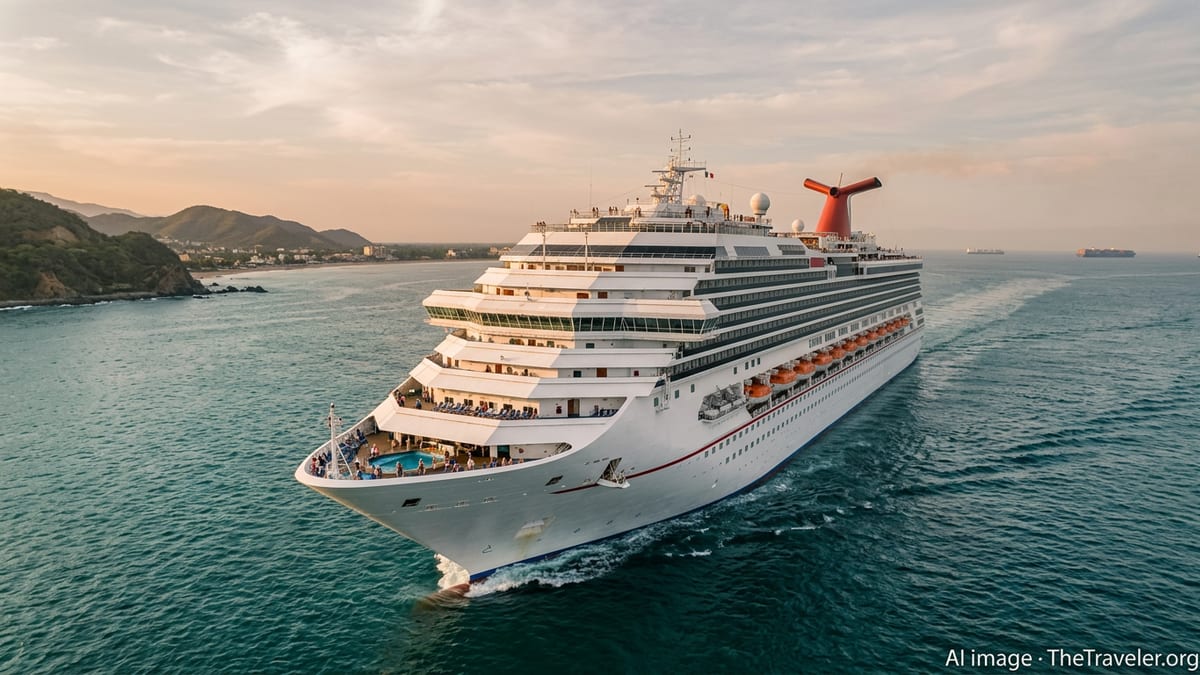
Mexico Ports Under Scrutiny After Violence and New Fees
Mexico has long been a cornerstone of Carnival’s North American cruise portfolio, from Cozumel and Costa Maya in the Caribbean to Puerto Vallarta and Cabo San Lucas on the Pacific. That network is now under pressure as security concerns and cost sensitivities converge, forcing the company to recalibrate its schedule and messaging.
In recent days Carnival and several sister brands have suspended calls in Puerto Vallarta, responding to a wave of cartel-related violence in the state of Jalisco that prompted U.S. security warnings and local unrest. The company has told booked guests that itineraries will be adjusted for “a few weeks,” replacing the popular Pacific port with alternative stops or extra sea days while it monitors the situation.
The rerouting underscores how sensitive cruise demand is to headlines about safety in Mexican destinations, even when violence occurs away from tourist zones. Puerto Vallarta alone welcomed hundreds of thousands of cruise passengers last year, making the temporary pause a blow not only to local businesses but also to Carnival’s finely balanced deployment of ships along the Pacific coast.
At the same time, a new per-passenger cruise fee negotiated between the Mexican government and major lines has sharpened focus on price. Authorities scaled back the original proposal, but the extra charge still lands on a customer base that has already seen steady ticket and onboard price increases since cruising’s post-pandemic rebound.
Shifting Demand Among Mexico Cruise Destinations
While Puerto Vallarta is off the schedule for now, Carnival is leaning more heavily on other Mexican ports that are perceived as more stable. Cozumel and Mahahual, the gateway to Costa Maya, remain high-volume stops on Western Caribbean itineraries, while Cabo San Lucas and Mazatlán are positioned as substitutes for guests seeking sun-and-sea experiences on the Pacific.
Industry surveys show Mexico remains one of the most sought-after cruise destinations, but there are signs that its dominance may be softening. Recent traveler intention data points to incremental shifts toward private islands in the Bahamas, Eastern Caribbean routes and Alaska, as price-sensitive customers weigh value, safety and novelty when choosing sailings.
For Carnival, which has invested in pier infrastructure at Puerta Maya in Cozumel and has new destination projects planned along the broader Caribbean arc, the task is to keep Mexico central to its network without appearing indifferent to security news. Executives have repeatedly emphasized that itineraries are designed with safety as the top priority and that ships can be redirected when risk profiles change.
In practice, that means the company is quietly re-weighting capacity among Mexican ports, favoring those with more predictable security conditions and better-developed tourism infrastructure. Travel advisers say they are fielding more questions about specific ports in Mexico, but note that bookings to the country overall remain resilient as long as guests feel operators are responding quickly to emerging threats.
Fuel Costs and Middle East Tensions Hit Profit Outlook
The fresh turbulence in Mexico comes just as global energy markets inject new volatility into Carnival’s cost base. Geopolitical tensions in the Middle East have pushed oil prices sharply higher in recent days, and cruise stocks, including Carnival, have fallen as investors reassess margin risks for fuel-intensive fleets.
Analysts estimate that even a modest rise in marine fuel prices can translate into tens of millions of dollars in additional annual costs for Carnival, whose ships operate on long-planned itineraries that cannot be easily reconfigured to chase cheaper fuel. The company has warned in regulatory filings that sustained increases in fuel prices, or changes in fuel availability, could materially affect scheduled itineraries and earnings.
Concerns about security around key maritime chokepoints in the region, particularly the Red Sea, have led some operators to reroute or lengthen voyages to avoid higher-risk areas. For Carnival, which has historically maintained a smaller footprint in the Middle East than some rivals, these developments still matter because disruptions to global shipping contribute to what energy market observers call a “war premium” on fuel.
The combined effect is a more cautious outlook for profit growth across the sector. While demand remains solid, any need to absorb higher fuel expenses, whether through hedging, surcharges or cuts elsewhere in the operation, narrows the runway for further margin expansion that shareholders have been expecting.
Traveler Anxiety Adds Pressure to Pricing Power
Beyond hard costs, Carnival must increasingly navigate a softer but potent threat: traveler anxiety. Elevated headlines about cartel violence in western Mexico, shifting Middle East security assessments and a broader sense of economic strain are feeding into consumer decision-making just as the cruise industry is relying on sustained price strength to support earnings.
Market commentary in recent days has highlighted how a growing share of middle-class travelers are feeling squeezed by inflation in day-to-day expenses, even as they continue to spend on vacations. That tension leaves cruise lines with less room to introduce new fees or significant fuel surcharges without potentially dampening demand, particularly for mainstream brands like Carnival that pitch themselves on affordability.
Feedback from travel advisers suggests guests are asking more detailed questions about safety protocols, alternative ports and cancellation flexibility when booking Mexico or Middle East-adjacent itineraries. While many travelers still proceed with plans, a subset is opting for what they perceive as “simpler” choices, such as Bahamas and Caribbean private islands, or domestic departures that avoid long-haul flights and complex geopolitics.
If that caution persists, Carnival could face a more challenging balancing act between maintaining price discipline and offering tactical promotions to keep ships full, especially on routes where news-driven anxiety is strongest. The risk is that discounts introduced to offset fears erode some of the yield gains that powered the company’s recent record revenue and profit results.
Strategic Responses as Carnival Seeks to Protect Momentum
In response to these crosscurrents, Carnival is leaning into its destination-led strategy, which emphasizes control over key ports and guest experiences as a way to support pricing even in choppy macro conditions. New investments in private or semi-private destinations in the Bahamas and Western Caribbean are intended to provide more predictable environments than many traditional port calls.
The company is also expected to continue refining its network of Mexico calls, pairing higher-yield marquee ports like Cozumel with a rotating cast of alternatives when security or cost dynamics shift in places such as Puerto Vallarta. Cruise planners say this built-in flexibility, supported by long-term contracts with multiple ports, allows Carnival to react faster to travel advisories without abandoning key regions altogether.
On the cost side, tighter fuel management, potential hedging and efficiency gains from newer, more fuel-efficient ships will be central to preserving profitability if oil prices remain elevated. Carnival has already cited fuel as a major variable expense in its risk disclosures and may use upcoming earnings updates to signal how aggressively it plans to mitigate that exposure.
For now, the company is trying to project confidence that strong underlying demand for cruising will withstand both security scares and higher operating costs. Yet as Mexico itineraries are tweaked and Middle East tensions push fuel higher, Carnival’s ability to carefully reroute ships, reassure guests and defend pricing will determine whether its profit trajectory merely slows or meaningfully stalls.