

More news on this day
Australia-based guests booked on a rare 10-night New Zealand cruise aboard Carnival Splendor are facing an unexpected itinerary change after the sailing was withdrawn from public sale due to a full-ship charter, leaving impacted travelers weighing their options for refunds, rebooking and alternative routes across the Tasman Sea.
Get the latest news straight to your inbox!
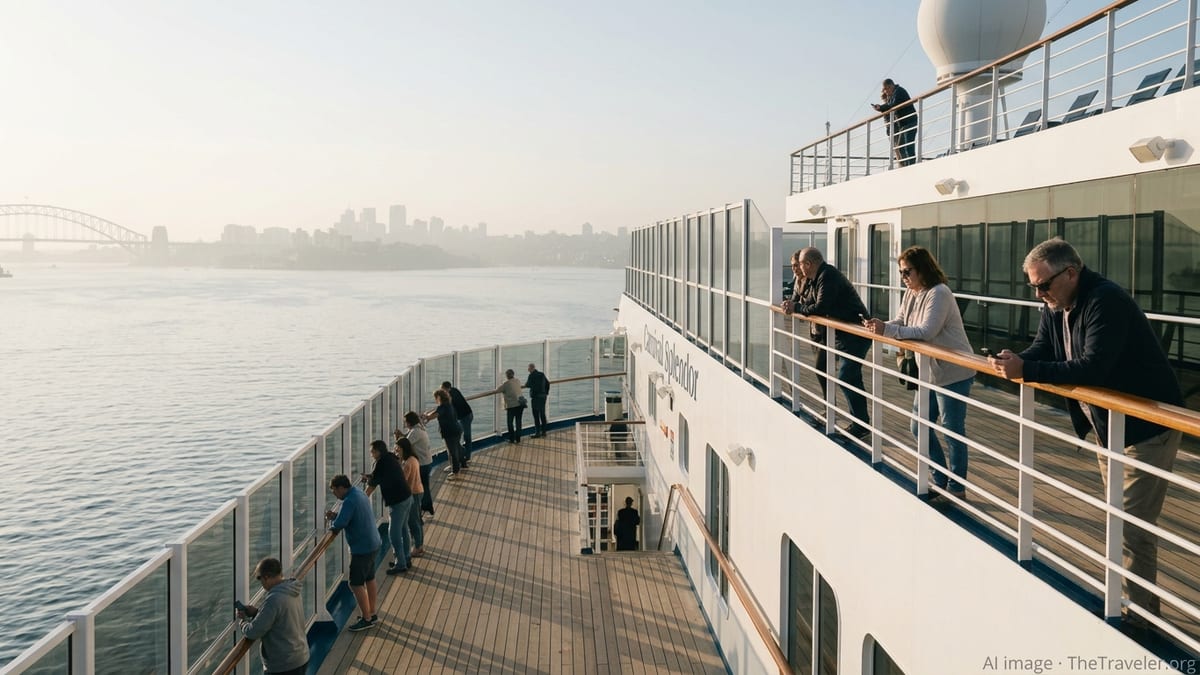
What Happened to Carnival Splendor’s 10-Night New Zealand Cruise
Publicly available cruise listings for Carnival Splendor show a pattern of 10-night roundtrip New Zealand itineraries from Sydney scheduled across the 2026 and 2027 seasons, including sailings in March and November that visit ports such as Wellington, Lyttelton and Port Chalmers, along with scenic cruising in Fiordland National Park. These longer New Zealand voyages are marketed as seasonal or “Journeys” style departures and appear less frequent than shorter South Pacific or coastal runs, which adds to their appeal for Australian and international guests planning a once-in-a-few-years holiday.
Recent updates on agency and aggregator sites indicate that one of these 10-night New Zealand departures has been removed from normal inventory because the full ship has been chartered. In practice, this means the voyage has been sold wholesale to a third party, such as a corporate group, themed event operator or incentive travel organizer, rather than sold cabin by cabin to the general public. The sailing date, ship and general route remain blocked on calendars, but standard consumer bookings are no longer being honored.
Reports shared across travel agency channels and cruise forums suggest that guests who had already secured cabins on the affected date have received cancellation notices and are being offered rebooking options or refunds consistent with the cruise line’s charter and cancellation clauses. For many, the disappointment is compounded by the rare nature of a 10-night New Zealand itinerary from Sydney, which often requires long-range planning, locked-in annual leave and sometimes nonrefundable flights or pre- and post-cruise stays.
While full-ship charters are a known part of the cruise industry, the loss of a single, longer itinerary can have outsized impact in a regional program like Australia and New Zealand, where ships often juggle a limited number of extended voyages between shorter sailings that focus on more familiar South Pacific routes.
Why Cruise Lines Charter Entire Ships
Full-ship charters are a long-standing feature of the global cruise business. Instead of selling a sailing cabin by cabin, a cruise line contracts the entire vessel to a single buyer or organizer, who then determines who sails and how the onboard program is shaped. Public schedules, port bookings and marine operations typically remain similar, but the onboard atmosphere can be transformed for a corporate conference at sea, a music festival, a sporting supporter group or a private celebration.
Cruise industry coverage notes that such charters can be lucrative for operators, providing guaranteed revenue and reducing the commercial risk compared with a regular retail sailing. For lines based in or sailing from Australia, where ships such as Carnival Splendor already operate a seasonal mix of South Pacific and New Zealand itineraries, a charter on a longer, in-demand voyage can be commercially attractive if a group is willing to commit to all available berths at once.
These charters do, however, require the cruise line to clear existing reservations on the affected departure date if standard retail sales have already opened. Guests are normally protected under contract terms that outline the cruise line’s right to substitute, change or cancel sailings in circumstances that include charters, mechanical work or redeployments. The details of compensation or alternative options are guided by each brand’s specific ticket conditions and by local consumer regulations in markets such as Australia and New Zealand.
Travel advisors observe that the ripple effects are typically felt most strongly on rarer itineraries, such as extended New Zealand journeys from Sydney, because replacement sailings with similar ports and durations may not be available for the same season. As a result, some clients elect to move to a shorter cruise, while others opt for a different line operating comparable New Zealand routes.
What Affected Guests Can Expect in Terms of Options
For travelers booked on the canceled 10-night New Zealand cruise, the first step is to carefully review the notification sent by the cruise provider or booking intermediary. Publicly available examples from past schedule changes by major brands in the region show that compensation can take several different forms, including a full refund, offers to rebook on another date, or a combination of rebooking plus an onboard credit incentive. The exact package depends on corporate policy and how far in advance the cancellation occurs.
With this sailing withdrawn for a charter rather than for urgent maintenance or force majeure, affected guests are generally being contacted well ahead of departure, allowing some time to re-plan. Travelers who booked through travel agencies are often encouraged, in publicly accessible guidance, to work through their agent to compare new cruise dates, verify refund timelines and review any knock-on impacts to air tickets, hotels and travel insurance policies.
Government taxes, fees and port charges associated with the canceled voyage are usually returned in addition to any cruise fare refund, as reflected in standard cruise contract language and frequently asked questions published by multiple operators. Ancillary purchases tied directly to the sailing, such as pre-paid shore excursions or specialty dining reservations, are typically reversed automatically, but guests may wish to confirm these items have been credited back to their original method of payment.
Travel insurance may play a role for those who have nonrefundable arrangements built around the original cruise date. Policy documents often distinguish between supplier-initiated cancellations and voluntary trip changes, so travelers are encouraged in consumer advisories to check whether additional costs for rebooking flights, tours or accommodation can be claimed. Those without comprehensive coverage may face out-of-pocket adjustments if their new plans differ significantly in cost or date from the original itinerary.
Alternative Ways to Sail New Zealand From Australia
Although losing a specific 10-night Carnival Splendor departure is frustrating, New Zealand remains a core destination in the broader Australia cruise calendar. Schedules compiled by tourism boards and port authorities across Wellington, Dunedin and other key gateways show a mix of ships and lines calling during the 2025 to 2027 seasons, offering a range of options from week-long tasters to two-week voyages that combine New Zealand with Australian coastal segments.
Other sailings on Carnival Splendor featuring similar 10-night New Zealand routes continue to appear on travel agency and aggregator platforms, including departures in later months that retain marquee ports such as Wellington and Fiordland cruising. Depending on cabin availability and pricing, some displaced guests may choose to shift to one of these later dates, preserving a broadly comparable experience, albeit at a different time of year with potentially different weather conditions across the Tasman.
Travelers who are more flexible on ship brand have additional alternatives. Mainstream and premium lines homeporting in Sydney, Brisbane and sometimes Melbourne list their own New Zealand itineraries for the same seasons, many of which mirror Carnival Splendor’s ports, including stops at Wellington, Lyttelton and Port Chalmers. These cruises may vary in length, onboard style and price point, but can help salvage long-awaited New Zealand holiday plans if sailing in a particular month or over school holidays is non-negotiable.
For those who prefer to keep their booking window open, industry observers often recommend monitoring cruise calendars published by New Zealand ports and local tourism organizations. These documents highlight which ships are scheduled to call on specific dates, providing a forward-looking picture of capacity on the route and helping travelers and agents identify replacement options when a single voyage drops out of public sale due to charter activity.
How to Protect Future Cruise Plans From Sudden Changes
The charter-driven cancellation of a rare New Zealand itinerary highlights the importance of planning for contingencies when booking longer or more complex cruises. Consumer travel guides frequently advise locking in flexible or refundable airfare when possible, particularly for international or cross-country flights that connect with a cruise departure, so that a ship schedule change does not automatically trigger high airline change fees.
Comprehensive travel insurance that explicitly addresses supplier cancellations, schedule disruptions and additional transportation or accommodation costs is another safeguard often highlighted by travel industry commentators. Not all policies treat charter-related cancellations in the same way, so travelers are encouraged by public advisory materials to read coverage summaries carefully and to ensure benefit limits are sufficient for their total trip value.
Booking through a knowledgeable travel advisor can also provide an extra layer of support if a cruise is suddenly withdrawn. Agents have access to multiple brands and consolidator inventories, which can make it easier to quickly identify substitute sailings that keep similar ports, durations or school holiday dates. They can also help coordinate the rebooking of flights, pre-cruise hotels and airport transfers, which may be particularly useful for travelers coming into Sydney from regional Australia or overseas.
Finally, experts who track cruise deployment patterns note that rare or headline itineraries, such as extended New Zealand journeys from Australia, are often the first to sell out and occasionally among the most attractive to charter buyers. For travelers who consider these voyages a bucket-list experience, booking early, maintaining flexible land arrangements and staying informed about schedule changes through cruise line and agency communications can all help reduce the stress if a once-in-a-season sailing suddenly becomes a private charter.