

More news on this day
PortMiami is bracing for severe traffic bottlenecks as construction, surging cruise schedules and chronic congestion converge, prompting Carnival Cruise Line to urge passengers to arrive well ahead of their assigned terminal times or risk missing their ship entirely.
Get the latest news straight to your inbox!
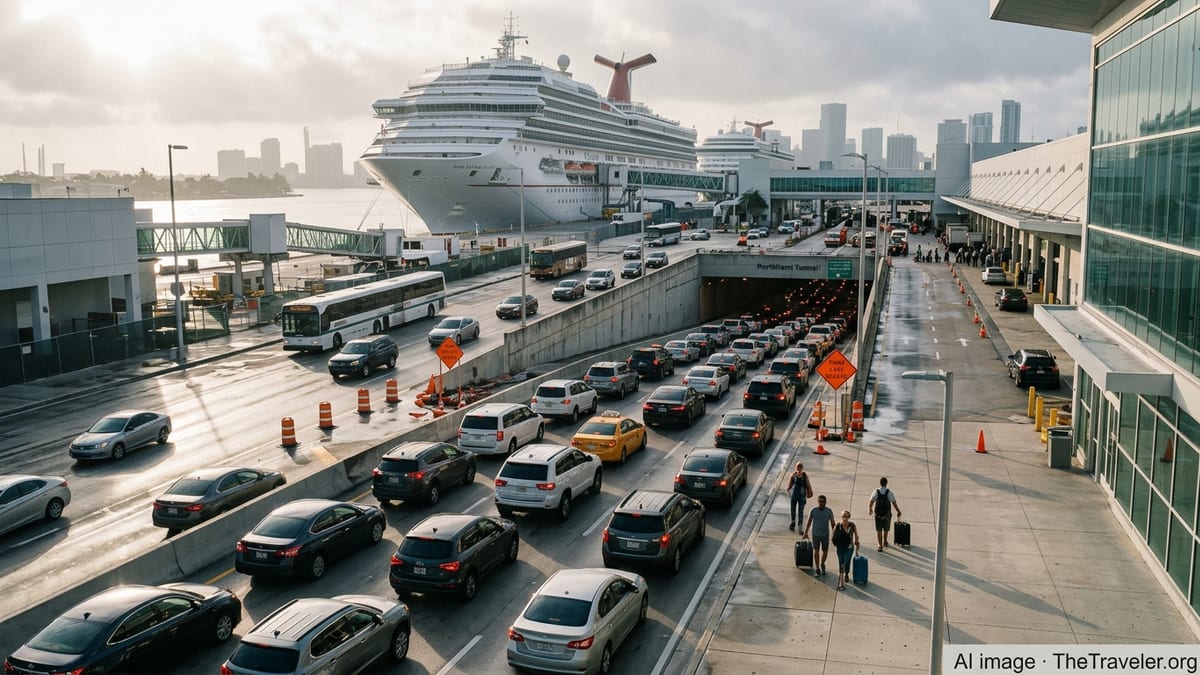
Traffic Turmoil Builds Around PortMiami
Recent weekends at PortMiami have seen mounting reports of gridlock, with travelers describing standstill traffic on the causeways and long queues just to enter the cruise terminals. Publicly available information on local forums and travel communities points to a combination of factors: heavy cruise day volume, lane restrictions in and around the PortMiami Tunnel, and wider roadwork across downtown Miami feeding backups onto port access roads.
Passengers recount vehicles inching forward for more than an hour between downtown Miami and the port, despite the short distance. In some cases, taxis and rideshare drivers reportedly abandoned pick-up requests near the terminal area because traffic made it nearly impossible to reach passengers in a reasonable time. These conditions are especially pronounced on Saturdays and Sundays when multiple large ships are scheduled to depart within similar time windows.
The situation has become so acute that some recent sailings reportedly delayed embarkation processes when large numbers of guests remained stuck in traffic. While cruise schedules tend to be tightly timed around arrivals, turnarounds and evening departures, the current congestion pattern is compressing those margins and leaving late-arriving guests with less flexibility than in previous years.
Travel commentary indicates that local drivers familiar with the area are adjusting their own routines, either leaving for the port hours earlier than they once did or aiming for quieter midday windows. Visitors, however, often underestimate the final leg of their journey, assuming that proximity to the port translates into predictable arrival times.
Carnival’s Message: Treat Arrival Times as a Minimum, Not a Target
Against this backdrop, Carnival has been circulating traffic advisories to guests booked from PortMiami, particularly for busy winter and spring sailings. According to publicly available guest communications and shared advisories, the cruise line is urging travelers to allow significantly more time than usual to reach the terminal, even if they have already selected a specific arrival appointment during online check in.
Embarkation instructions reviewed in recent weeks highlight the need to arrive within the pre selected terminal arrival window, but they now pair that guidance with explicit warnings about heavy congestion and possible delays. One traffic alert distributed in January referenced high operational volume at PortMiami and recommended that guests build in substantial extra travel time between their hotel or airport and the pier.
Guests discussing these notices on cruise forums describe receiving multiple reminders in the days leading up to departure, including emails and app notifications referencing expected traffic jams and construction bottlenecks. Some travelers have responded by planning to reach the port at least two hours before their official check in time, treating the designated window as a minimum threshold rather than the moment to pull up at the curb.
Industry documentation on arrival appointments notes that U.S. security rules require cruise lines to submit final departure manifests before sail away, leaving only limited flexibility for processing very late arrivals. Carnival’s intensified messaging around PortMiami suggests that the company is attempting to shift guest behavior in advance, rather than relying on last minute accommodations once traffic problems have already materialized.
Real-World Impact: Delays, Missed Check-Ins and Stressed Travelers
For passengers, the operational challenges at PortMiami are translating into a range of real world impacts. Reports from recent sailings describe travelers who left downtown hotels or Miami International Airport with what once would have been comfortable buffers, only to find themselves watching the minutes tick by in unmoving traffic.
Some guests recount arriving at the port well after their assigned arrival appointments, joining snaking queues of equally delayed passengers and facing a further wait to clear security and reach the check in counters. Others describe being among the last to board, with staff moving swiftly to close embarkation lines ahead of departure deadlines.
There are also accounts of travelers who tried to honor official arrival windows too literally, timing their approach to match their designated slot and then being caught off guard by unanticipated congestion. In several shared experiences, those who ignored strict adherence to the appointment and simply aimed to arrive early appear to have fared better, trading some extra waiting time inside the terminal for peace of mind.
The rising tension around embarkation days is evident in online discussions, where prospective cruisers frequently ask whether they should disregard scheduled arrival times at PortMiami and instead prioritize beating the traffic. Many repeat visitors now describe early arrival as a form of informal insurance, especially during peak holiday periods, spring break and other high demand weekends when multiple mega ships are in port.
Strategies Emerging for Beating PortMiami Gridlock
In response to the current conditions, a set of common strategies is emerging among experienced cruisers aiming to reduce their exposure to delays. One widely circulated recommendation is to target very early arrival at PortMiami, often between mid morning and late morning, before traffic builds toward midday peaks. Another tactic is to stay in downtown Miami or Brickell the night before sailing to shorten the final transfer to the port.
Travelers are also weighing the relative merits of parking at the port versus using offsite garages and shuttles. Some argue that driving directly to the port garages keeps control in their own hands, while others prefer offsite lots that can be reached before traffic reaches its worst and then rely on shuttle transfers with extra time built in. Publicly shared parking guides emphasize the importance of reserving spots in advance and padding the schedule by at least an hour for shuttle operations.
Rideshare users are being urged to request vehicles earlier than they might instinctively plan, given anecdotes of long waits and drivers canceling when congestion becomes too severe near the cruise terminals. A recurring theme in traveler advice is to treat the final few miles to PortMiami as the most unpredictable segment of the journey, even if flights and long distance drives have gone smoothly.
Some veteran cruisers further recommend aiming for boarding during the earlier phases of embarkation, when terminal crowds can be more manageable and there is greater time cushion before the ship’s departure. This approach requires aligning flight schedules or hotel checkout times with a proactive port arrival, rather than assuming that a mid afternoon check in will be practical under current conditions.
What PortMiami Cruisers Should Expect in the Coming Weeks
With construction projects ongoing in and around the port and cruise schedules remaining robust through the spring break and early summer period, there is little indication that PortMiami congestion will ease immediately. Local travel discussions continue to flag lane closures and evolving traffic patterns, suggesting that conditions may change from week to week even as the underlying pressure on road capacity persists.
Cruise observers note that cruise lines, including Carnival, tend to adjust guest communications as patterns become clearer, which may mean further reminders and revised embarkation guidance if backups persist or intensify. For now, the consistent message across guest advisories, traveler reports and parking guidance is that arriving earlier than strictly required is the safest course of action for anyone sailing from PortMiami.
Prospective passengers are being encouraged to factor these realities into their broader travel planning, from choosing flight times to selecting nearby hotels and transfer options. The added complexity around the final approach to the port is becoming a defining element of the PortMiami experience, particularly on peak weekends when a record number of ships converge on the same limited stretch of roadway.
For travelers, the practical takeaway is straightforward: treat PortMiami not as a routine urban commute but as a major event corridor where unexpected bottlenecks can emerge without warning. In that environment, Carnival’s urgent call to arrive early is less a marketing message than a reflection of the on the ground conditions that now shape the start of many South Florida cruises.