

More news on this day
Carnival Corporation is on track to save more than six hundred million dollars in 2026 through stepped-up fuel efficiency measures, a shift that is reshaping its cruise growth strategy and reinforcing a broader pivot toward lower-emission operations and high-yield private destinations.
Get the latest news straight to your inbox!
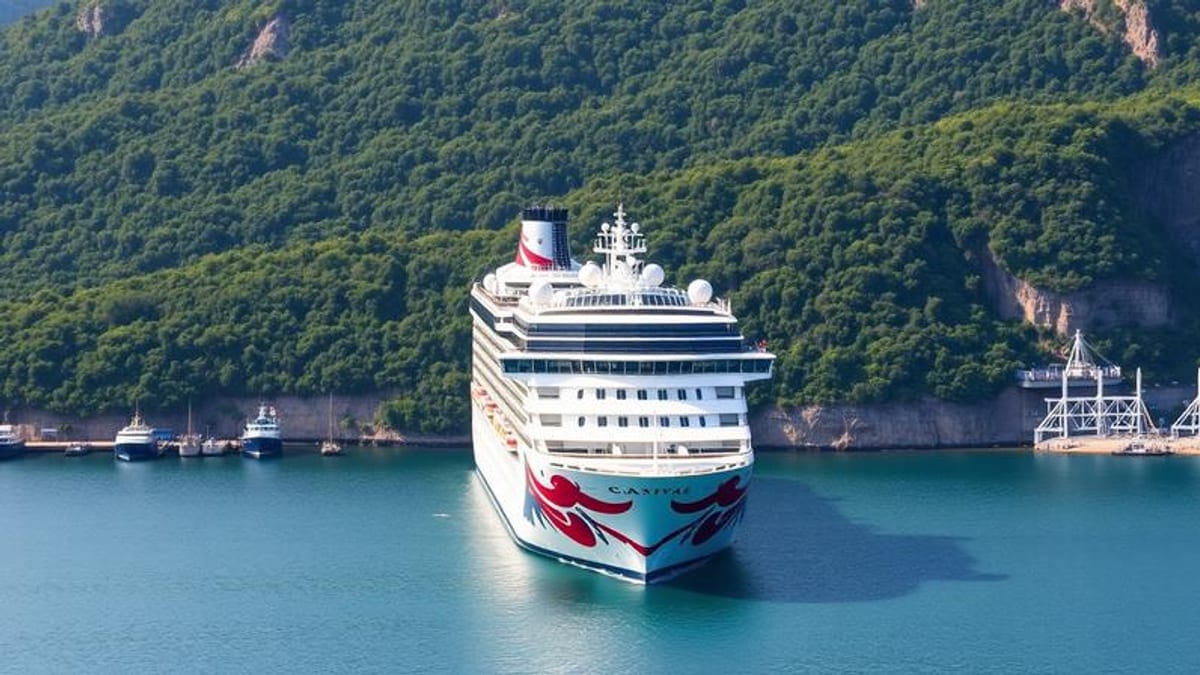
Image by International Cruise News: Latest Cruise Line & Cruise Ship News
Fuel Efficiency Becomes a Core Profit Engine
Publicly available filings and analyst commentary indicate that Carnival Corporation has steadily turned fuel efficiency from a compliance exercise into a central profit driver. After cutting greenhouse gas emissions intensity by more than 20 percent versus 2019 several years ahead of a 2030 target, the company has increasingly highlighted the financial upside of using less fuel per guest and per day at sea.
Across its brands, Carnival has invested in a suite of energy-saving technologies, including optimized hull forms, advanced coatings that reduce drag, air lubrication systems, and next-generation voyage planning tools that fine-tune speed and routing. These measures are designed to deliver average fuel savings in the mid-single digits per ship each year, which scales quickly across a global fleet of more than 90 vessels.
Industry analyses of Carnival’s recent earnings show that these technical improvements, combined with more efficient itineraries, are helping contain one of the company’s most volatile cost lines. With fuel representing a significant share of operating expenses, an annual saving now framed as exceeding six hundred million dollars in 2026 gives the cruise group a larger buffer against swings in oil markets and provides cash it can deploy into new products and balance sheet repair.
Company sustainability reports also point to an expanding toolkit for future reductions. Trials of alternative fuels such as methanol, investments in shore power readiness, and exploration of fuel cells and wind-assisted propulsion are presented as longer-term levers that could deepen cost and emissions cuts beyond the 2026 horizon.
Route Optimization and Slower Steaming Shape Itineraries
The financial impact of Carnival’s fuel strategy is not only tied to technology on board. The group has rethought how and where its ships sail, with itinerary design emerging as one of its most powerful tools for cutting fuel use while sustaining capacity growth. Shorter sailing distances between ports and more regionally clustered deployments directly reduce consumption, amplifying the payoff from technical upgrades.
Lower average speeds at sea, sometimes described as “slow steaming,” further curb fuel burn. Public guidance suggests that by blending modestly longer transit times with port calls that remain attractive to vacationers, Carnival can trim consumption without eroding the perceived value of its cruises. For travelers, the change is often invisible beyond slightly adjusted arrival and departure times.
Energy-efficiency fact sheets published by the company also highlight the role of increasingly sophisticated weather and current routing. Ships are directed along paths that balance comfort with fuel savings, using real-time data and predictive models to avoid unnecessary detours and to take better advantage of prevailing conditions.
These operational choices are an important backdrop to the headline savings figure expected in 2026. By locking in structural reductions through smarter routing and speed management, Carnival seeks to embed lower fuel intensity into its business model rather than relying solely on temporary market conditions.
Private Destinations Anchor a New Growth Formula
While efficiency initiatives cut costs, Carnival’s owned and operated destinations are central to how those savings are redeployed to drive growth. The company’s “Paradise Collection” of private and semi-private ports, anchored by Celebration Key on Grand Bahama, has become a defining feature of its Caribbean strategy.
Celebration Key opened in 2025 after an investment estimated in the hundreds of millions of dollars and is already handling multiple ship calls per day. Travel trade coverage reports that the destination has quickly become a major contributor to visitor numbers in Grand Bahama and a key source of incremental revenue for Carnival, with early indications of premium pricing on itineraries that include the stop.
Additional developments are in motion. Corporate reporting points to planned expansions or enhancements at existing properties such as Half Moon Cay and other branded beach destinations through 2026, as well as new projects like Ensenada Bay Village in Baja California. Collectively, these locations allow the company to control more of the shoreside experience and capture a greater share of guest spending that might otherwise flow to third-party tour operators or port authorities.
The link back to fuel efficiency is direct. By clustering itineraries around owned destinations within relatively tight geographic regions, Carnival shortens sailing distances, which reduces fuel consumption and related emissions. This, in turn, strengthens the economics of its private-port strategy, enabling further investment in attractions and capacity without a proportional increase in environmental impact.
Record Demand Meets Tighter Environmental Expectations
The focus on efficiency and private destinations comes as demand for cruising remains robust. Analysts reviewing Carnival’s 2025 performance highlight record revenues and strong onboard spending, even as the company signaled limited new ship deliveries and modest capacity growth for 2026. That combination places the emphasis squarely on yield, cost discipline, and asset optimization rather than rapid fleet expansion.
At the same time, the company faces rising expectations from regulators, investors, and travelers regarding environmental performance. International maritime rules on greenhouse gas emissions are tightening, and several key cruise markets are incentivizing or requiring lower-emission operations, particularly in sensitive regions.
By claiming more than six hundred million dollars in anticipated fuel savings in 2026 and demonstrating tangible reductions in emissions intensity, Carnival is positioning its efficiency program as a response to both economic and regulatory pressures. Sustainability reports describe the decarbonization pathway as a multi-decade journey, but early achievements ahead of stated targets are used to frame the cruise group as a leader among mass-market operators.
For guests, the shift is beginning to show up in marketing that emphasizes cleaner technologies, newer destination concepts, and a narrative of “responsible fun” at sea. The company’s messaging links its fuel and emissions progress to the long-term viability of the destinations its ships visit, suggesting that operational savings and environmental stewardship are increasingly intertwined.
Implications for Cruise Travelers and Destinations
The combination of large-scale fuel savings and intensified investment in private destinations is likely to shape the cruise experience through and beyond 2026. Itineraries featuring Celebration Key and fellow Paradise Collection ports are expected to become more prominent, particularly on short and medium-length Caribbean sailings that align well with fuel-efficient routing.
For travelers, that could mean more days at highly curated beach resorts and fewer calls at traditional mixed-use ports on some routes. While private destinations offer controlled environments, purpose-built attractions, and streamlined logistics, there is ongoing debate among local stakeholders about how such developments distribute economic benefits across nearby communities.
On the environmental front, the scale of Carnival’s projected 2026 fuel savings illustrates how operational measures can deliver both cost and emissions reductions. However, environmental groups and some analysts continue to emphasize the importance of absolute emissions cuts in addition to intensity metrics, noting that global cruise capacity remains on a long-term growth trend.
As 2026 unfolds, the cruise sector will be watching whether Carnival’s efficiency gains and destination-centric strategy translate into sustained profitability without undermining broader sustainability commitments. For now, the company’s approach suggests that the path to greener cruising is being charted as much through engine rooms and itinerary maps as through glossy new beachfront pavilions.