

More news on this day
Carnival Corporation’s latest first quarter performance has reinforced the cruise sector’s revival, with publicly available filings and coverage indicating record booking volumes stretching through 2026 and pointing to a new golden age of global leisure travel.
Get the latest news straight to your inbox!
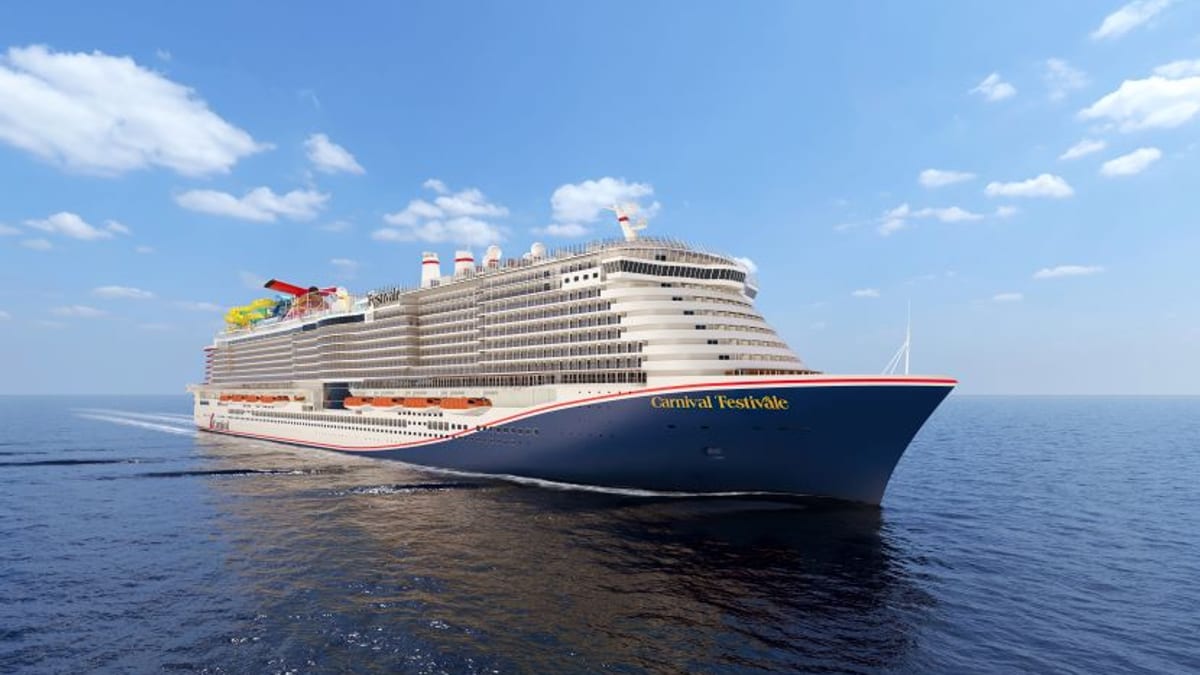
Image by International Cruise News: Latest Cruise Line & Cruise Ship News
Record First Quarter Underscores Surging Cruise Demand
Carnival Corporation’s most recent first quarter results show the company building on a string of record-breaking quarters, with higher revenue, stronger profitability and an expanding order book. Publicly available information on the quarter indicates that Carnival delivered its strongest first quarter in history in 2025, including record adjusted EBITDA and sharply improved net income compared with the prior year.
Reports on the quarter show revenue in the first three months of 2025 climbing to new highs, supported by both higher ticket prices and onboard spending. Industry coverage notes that the company’s adjusted net income guidance for 2025 points to growth of more than 30 percent compared with 2024, reflecting confidence that current momentum can be sustained even in the face of broader economic uncertainty.
Financial disclosures and analyst summaries also highlight Carnival’s progress on repairing its balance sheet after the pandemic downturn. The company has been refinancing higher-cost debt, cutting interest expenses and reducing overall leverage, steps that have directly supported the return to record profitability and strengthened its capacity to invest in new experiences for travelers.
These results are being closely watched across the travel industry because they provide one of the clearest real-time windows into global demand for discretionary leisure spending. The strength of Carnival’s first quarter has been interpreted by many observers as a signal that appetite for travel at sea is not only recovering, but expanding beyond pre-pandemic patterns.
Unprecedented Booking Curve Extends Through 2026 and Beyond
What has captured particular attention is the company’s forward booking profile. According to earnings releases and financial media coverage, booking volumes taken during the first quarter for 2026 and beyond reached record levels. Industry reports describe an unprecedented booking curve, with sailings through 2026 achieving record volumes at higher prices than in previous years.
Recent fourth quarter and full-year 2025 disclosures reinforce this trend. Coverage of Carnival’s year-end results indicates that roughly two-thirds of 2026 capacity has already been sold at historically high prices, with record booking volumes for both 2026 and 2027 sailings. Travel trade publications note that booking activity over key promotional periods such as Black Friday and Cyber Monday in late 2025 outpaced already strong levels from the prior year.
Customer deposits, a closely watched indicator of future revenue in the cruise sector, have also risen to all-time highs. Analyst summaries point to first quarter 2025 deposits reaching a record level, signaling that guests are not only reserving future sailings earlier, but are committing more money up front. This pattern suggests that travelers are treating cruises as core, non-discretionary elements of their future vacation plans.
The strength of the booking curve is especially notable because it has developed despite mixed consumer sentiment in some major markets. Public commentary on the company’s performance highlights that Carnival has been able to achieve record booking volumes and higher pricing even as travelers confront inflation and macroeconomic uncertainty, underlining the resilience of demand for travel experiences.
Pricing Power and Capacity Discipline Redefine the Cruise Cycle
The current phase of growth at Carnival is not simply about selling more cabins. Industry analysts point to a shift toward disciplined capacity management and yield optimization, elements that are helping to redefine the cruise cycle compared with past booms. Publicly available presentations from the company indicate that overall capacity growth is modest, with minimal new ship deliveries planned for 2026 and only a limited number in subsequent years.
This restraint on capacity, combined with strong demand, has supported higher pricing across Carnival’s global brands. Financial commentary notes that net yields for 2025 improved at mid-single-digit rates in constant currency, outpacing previous guidance, while ticket prices and onboard revenue per passenger day both rose. The fact that record booking volumes are being achieved at these higher price points suggests that the company has gained genuine pricing power.
At the same time, Carnival is investing in products and destinations that command premiums. Coverage of recent earnings materials highlights the role of private destinations and new port developments, which allow the company to differentiate its itineraries and capture a larger share of guest spending. These investments appear to be contributing to sustained yield growth without the need for aggressive discounting.
For the broader travel sector, Carnival’s approach offers a potential template for how operators can pursue growth while maintaining financial discipline. Rather than chasing market share through rapid fleet expansion, the focus has shifted toward enhancing the onboard experience, tailoring itineraries to emerging demand patterns and using data to refine pricing across a longer booking window.
Macro Tailwinds and a Reordering of Global Travel Priorities
The surge in Carnival’s bookings through 2026 reflects wider forces reshaping how and where people choose to travel. Travel industry observers link the company’s performance to a structural shift in consumer priorities, with experiences, multigenerational travel and bucket-list itineraries taking precedence over material purchases for many households.
Publicly available reports on the cruise sector note that many guests are planning further ahead than before, locking in cabins for milestone events and family gatherings one or even two years in advance. This behavior is visible in Carnival’s booking data, where volumes for late 2026 and early 2027 sailings have set records despite limited capacity growth. It suggests that cruises have become a preferred format for complex, multi-stop vacations that might otherwise require substantial independent planning.
Demographic and geographic trends are also at work. Analysts point to rising participation from younger travelers and new international source markets, broadening the demand base beyond traditional North American and European cruisers. Carnival’s multi-brand portfolio gives it exposure to a wide range of price points and regions, which appears to be helping the company capture these emerging segments while maintaining strength in its core markets.
Although geopolitical tensions and economic headwinds remain, the pattern emerging from Carnival’s results indicates that the desire to travel is proving durable. Industry assessments increasingly describe cruises as offering perceived value relative to land-based vacations, a factor that may be encouraging households to commit to itineraries through 2026 even as they otherwise moderate discretionary spending.
Signals of a New Golden Age for the Cruise Industry
For many analysts and travel commentators, the combination of record earnings, unprecedented forward bookings and disciplined capacity growth at Carnival is being interpreted as evidence that the cruise sector is entering a new golden age. The company’s guidance suggests that 2026 is expected to surpass 2025’s record earnings, with adjusted net income projected to rise again on the back of higher yields and improved return on invested capital.
Publicly available investor materials highlight that Carnival’s return on invested capital has already climbed back into the mid-teens, approaching its highest levels in roughly two decades. This improvement has been supported by cost efficiencies, lower interest expenses following a large-scale refinancing program and a more profitable mix of itineraries and onboard offerings.
Importantly for travelers, a stronger financial footing gives the company more room to invest in fleet enhancements, sustainability initiatives and new guest experiences. Reports indicate that Carnival is channeling capital into destination development, onboard technology and upgraded accommodation categories, all of which are likely to shape what cruise vacations look like for guests booking sailings into 2026 and beyond.
As the world’s largest cruise company, Carnival’s trajectory carries outsized signaling power for the wider travel industry. Its first quarter results and booking trends through 2026 suggest that the appetite for global exploration at sea is not only intact, but expanding, supporting the view that a new era of growth and innovation in leisure travel is underway.