

More news on this day
Carnival Corporation’s record financial performance and robust 2026 outlook are emerging as a bellwether for a wider global tourism boom, as strong cruise demand feeds growth across airlines, hotels and destinations worldwide.
Get the latest news straight to your inbox!
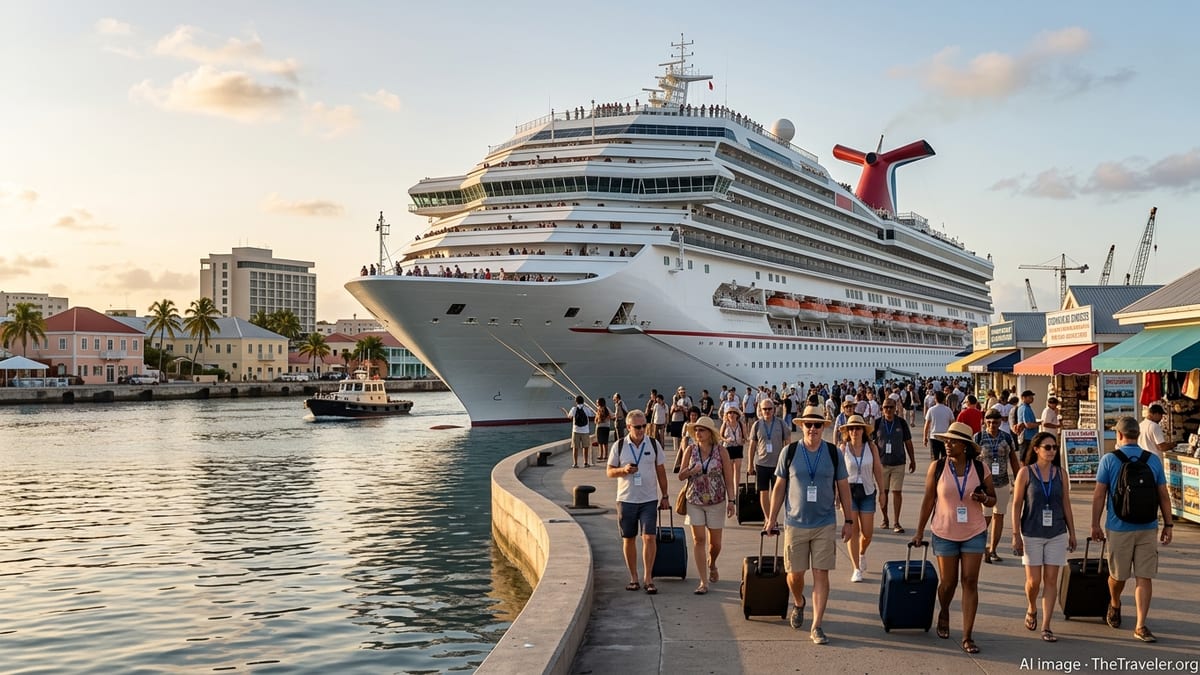
Record Earnings Turn Carnival Into a Tourism Barometer
Publicly available financial disclosures for 2025 show Carnival Corporation delivering its highest adjusted net income on record, capping several consecutive quarters of stronger pricing and near full-ship occupancies. The company’s turnaround from pandemic-era losses has been closely watched by investors and tourism authorities as a test of how far consumers are willing to keep spending on leisure travel.
Guidance released with Carnival’s latest annual results points to adjusted net income for 2026 rising further, even as capacity growth remains modest at under 1 percent. Analysts note that this combination of limited new berth supply and higher yields suggests a structural shift toward more profitable operations rather than a volume-only recovery.
Market commentary from equity research platforms indicates that Carnival’s trajectory now compares favorably with broader leisure and hospitality benchmarks, as the company reduces debt while still funding product upgrades and new destination investments. This financial momentum is reinforcing perceptions of cruising as one of the most resilient segments of the post-pandemic travel economy.
Because Carnival operates the world’s largest cruise fleet, its booking trends and pricing power are increasingly being used as a proxy for global appetite for longer-haul, higher-ticket vacations. Strong forward bookings into 2026, described in company materials as running ahead of capacity at higher prices, are therefore viewed as a leading indicator for the wider tourism cycle.
Booking Boom Signals Deepening Consumer Demand
Cruise industry reports compiled by trade bodies highlight that global passenger numbers are expected to exceed pre-pandemic highs, with 2025 already marking a step-change in volumes and 2026 forecast to extend that run. Within this upswing, Carnival’s brands, spanning North America, Europe and Australia, have reported record customer deposits and historically high booked positions for upcoming seasons.
Industry bulletins summarizing Carnival’s recent quarters note that yields have been rising on a same-ship basis, reflecting both higher ticket revenue and robust onboard spending. This suggests that demand strength is not limited to entry-level fares but extends to premium cabins, specialty dining and excursions, a pattern that typically correlates with confidence in disposable incomes.
Travel-focused research platforms also point to specific 2026 deployment plans that underline the scale of the booking boom. Seasonal schedules indicate that Carnival will be operating more ships concurrently in core markets such as North America compared with summer 2025, yet company forecasts still project that pricing will remain firm, implying that additional capacity is being absorbed without discount-driven promotions.
Forecasts from tourism economists for the broader cruise sector anticipate that global passenger volumes will climb further through 2026 on the back of expanded itineraries in regions such as Alaska, the Caribbean and the Mediterranean. Carnival’s early booking curves, which have been described in industry commentary as “historical highs,” place the group at the center of this demand wave.
Global Tourism Ripple Effects From Cruise-Led Growth
The surge in cruise demand is feeding directly into wider tourism flows, with recent analyses by international tourism consultancies highlighting strong linkages between cruise calls and overnight stays in gateway cities. As Carnival increases deployment in destinations such as Alaska, Bermuda and key European ports, local authorities and business groups are reporting growing interest in pre- and post-cruise stays, guided tours and regional air links.
Latest global travel outlooks for 2026, including assessments from sector-focused media, describe a broad-based travel boom that is reshaping tourism markets. Air travel volumes are running above pre-pandemic benchmarks, while hotel performance is steadily improving, helped in part by cruise passengers who extend their trips on land. Carnival’s port development initiatives and new private-destination projects are seen as catalysts that spread visitor spending beyond traditional hubs.
Regional tourism analyses focused on the Caribbean and Mediterranean indicate that cruise growth is helping to accelerate recovery timelines for smaller island and coastal economies. Calls by large fleet operators such as Carnival are driving investment in port infrastructure, shore excursion capacity and environmental upgrades, which in turn support additional land-based tourism and encourage repeat visits.
In Asia and the Pacific, where tourism ministries are promoting diversified visitor profiles, cruise calls are increasingly being integrated into national development plans. Observers note that Carnival’s global network, which touches more than 700 port destinations, positions the group as a key conduit for dispersing long-haul visitors to secondary cities and emerging resort areas during the 2026 high season.
Investment Wave Underscores Long-Term Tourism Expansion
Beyond the immediate revenue impact, Carnival’s record results are unfolding against a backdrop of rising global travel and tourism investment. Recent projections from international travel councils estimate that trillions of dollars will flow into tourism-related infrastructure in major economies through the next decade, with ports, airports and hospitality assets among the primary beneficiaries.
Sector analysts interpret Carnival’s improved balance sheet, debt-reduction progress and high return on invested capital as signals that large-scale cruise operators are regaining the capacity to commit to longer-term projects. Although the company’s near-term newbuild pipeline is relatively modest, resources are being redirected toward port enhancements, private destinations and digital guest-experience platforms that can sustain higher yields per passenger.
Financial commentary following Carnival’s latest earnings cycles has also highlighted the company’s progress toward investment-grade credit metrics, a milestone that could lower financing costs and unlock additional capital for both fleet renewals and destination partnerships. This dynamic is seen as reinforcing a virtuous cycle in which stronger financial performance enables more investment, which then supports further tourism growth.
Parallel moves by other cruise groups to expand capacity and modernize fleets suggest that Carnival’s record performance is part of a broader structural expansion in cruise-related tourism. New ships scheduled for delivery across the industry from 2026 onward are expected to introduce larger, more efficient vessels that concentrate passenger spending in key port regions, amplifying the economic footprint of each sailing.
Risks and Opportunities Shaping the 2026 Tourism Outlook
While Carnival’s record earnings and bullish 2026 guidance are bolstering confidence in the travel sector, industry observers caution that external risks remain. Macroeconomic uncertainty, higher interest rates and geopolitical tensions could influence consumer sentiment, particularly for discretionary long-haul travel such as ocean cruising.
Travel industry summaries tracking 2026 trends flag potential headwinds from changing visa rules, shifting health requirements and regional security concerns that may alter itineraries or dampen demand in certain markets. Cruise operators, including Carnival, are responding by emphasizing itinerary flexibility, diversification across regions and targeted promotions designed to keep ships full even amid local disruptions.
At the same time, evolving consumer expectations present new opportunities. Analysts point to rising interest in sustainable travel, immersive shore experiences and digital personalization as forces that could favor well-capitalized operators able to invest in cleaner technologies and data-driven guest services. Carnival’s scale, along with its ongoing work on efficiency upgrades and new destination concepts, positions the group to capture a significant share of this emerging demand.
As 2026 unfolds, the company’s performance is likely to remain a key marker for the health of global tourism. With record profitability, strong advance bookings and expanding deployment across key regions, Carnival Corporation has become both a beneficiary and a driver of the travel boom that is reshaping how, and where, the world chooses to vacation.