

More news on this day
Carnival Corporation’s record-breaking 2025 financial performance and historically strong forward bookings for 2026 are emerging as a powerful catalyst for global tourism growth, reinforcing cruises as one of the most dynamic segments in the post-pandemic travel economy.
Get the latest news straight to your inbox!
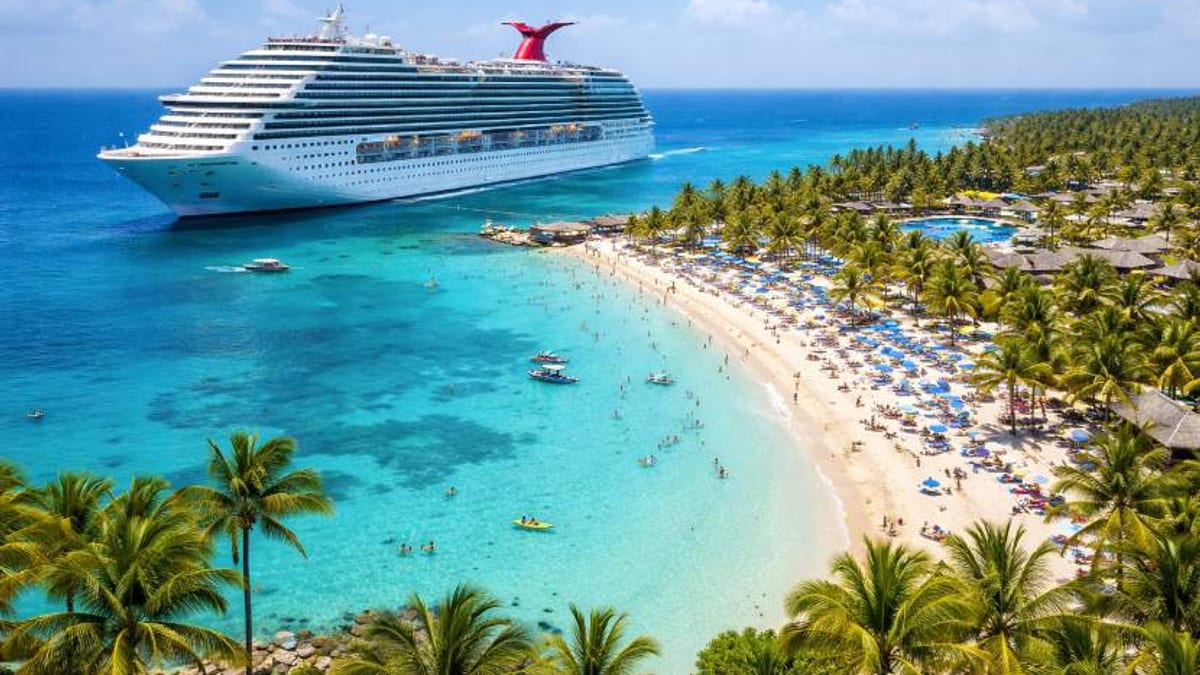
Image by Latest International / Global Travel News, Breaking World Travel News
Record Earnings Position Carnival at the Center of Travel’s New Cycle
Publicly available financial filings for 2025 show Carnival Corporation delivering the strongest results in its history, with all-time high revenue, record net income and robust cash generation. Company disclosures indicate that profitability has surpassed pre-pandemic peaks, supported by higher pricing and fuller ships across its major brands.
Earnings presentations published in early 2026 highlight that adjusted net income for 2025 reached a record level, while net yields rose sharply compared with the prior year. Management guidance points to further yield gains in 2026 on top of those increases, suggesting the group expects sustained demand and pricing power even as capacity growth remains modest.
Analyst commentary and independent research published in March 2026 describe Carnival as a key driver of a new phase of “disciplined growth” for the cruise sector, noting that the company has refinanced substantial pandemic-era debt and improved returns on invested capital ahead of earlier targets. This improving balance sheet is enabling renewed investment in destinations, technology and guest experience that feed back into the broader tourism ecosystem.
The company’s return to consistent profitability also coincides with the reinstatement of shareholder distributions, a signal often interpreted by market observers as evidence of confidence in the durability of cash flows generated by strong global travel demand.
Historic Bookings and Pricing Fuel Cruise Tourism Expansion
Carnival’s latest earnings materials emphasize that bookings for 2026 and even 2027 are running at “historical highs” in both volume and pricing. Fourth-quarter 2025 booking trends for future years are described as record-breaking, covering sailings in North America and Europe and extending deep into the booking curve.
Advance booking data published by the company show that a large share of 2026 inventory is already sold, with capacity largely fixed and no new ships scheduled for delivery in that year. With supply effectively capped and demand continuing to rise, publicly available commentary notes that ticket prices for 2026 itineraries are at or near record levels across Carnival’s portfolio.
Sector research from cruise and tourism consultancies projects that the global cruise tourism market will continue to expand in 2026, with steady mid-single-digit annual growth in value. Forecasts from multiple firms point to cruise revenues worldwide increasing from 2025 into 2026, underpinned by strong demand for experiential travel and longer itineraries.
Market observers also highlight an elongated booking window, with many guests committing to sailings more than a year in advance. This shift supports price discipline and reduces reliance on last-minute discounting, reinforcing the elevated revenue environment that is helping Carnival and its peers post record financial results.
Carnival’s Growth Ripples Across Ports, Destinations and Jobs
The financial upswing at Carnival is being felt far beyond its own balance sheet. Cruise lines are deeply intertwined with local economies through port charges, shore excursion spending, provisioning and employment, meaning that record performance at the industry’s largest player carries global implications.
Reports from tourism analysts and industry groups estimate that cruise passengers generate substantial onshore spending on accommodations, food and beverage, entertainment and transportation in homeports and ports of call. With Carnival deploying its fleet at higher occupancies and on more yield-accretive itineraries, the associated visitor flows are contributing to stronger tourism receipts in key coastal regions.
World Travel and Tourism Council data and other recent global tourism reports project that the wider travel sector will reach new highs in economic contribution around 2025 and 2026, measured in trillions of dollars of GDP and hundreds of millions of jobs worldwide. Within that context, the cruise industry’s continued expansion, led by companies such as Carnival, is cited as one of the components underpinning rising investment and employment in destinations ranging from the Caribbean and Mexico to the Mediterranean and Asia.
New destination projects linked to major cruise brands, including port upgrades and purpose-built entertainment districts, are also expected to stimulate additional travel demand. Carnival’s previously announced development initiatives, combined with its record earnings capacity, signal that capital expenditure on such tourism infrastructure will remain an important lever for future growth.
Global Tourism Indicators Point to a Strong 2026 Outlook
International tourism bodies report that global arrivals reached or surpassed pre-pandemic records in 2025, with volume growth projected to moderate but remain positive in 2026. Forecasts from UN-affiliated tourism agencies and private research firms point to single-digit percentage increases in international arrivals this year as markets normalize after the rapid rebound of 2023 and 2024.
Confidence indices compiled from panels of tourism experts show that a majority expect better or much better performance in 2026 than in 2025, while only a small minority anticipate deterioration. This broad optimism aligns with Carnival’s own forward guidance, which anticipates higher yields in 2026 and sustained strength in bookings across its core source markets.
Global cruise market outlooks likewise project continued expansion in 2026, with estimates suggesting that industry revenues will grow from 2025 levels and that passenger volumes will set new records. Analysts attribute this to pent-up demand for multi-destination itineraries, growth in premium and luxury segments and rising participation from emerging markets.
At the same time, tourism economists caution that geopolitical uncertainty, inflation and fuel costs remain potential headwinds. Carnival’s guidance for modest net yield growth and limited capacity additions in 2026 reflects a strategy of balancing strong demand against these risks while preserving pricing power and profitability.
Investment, Innovation and Sustainability Shape the Next Phase
Record performance has given Carnival greater room to invest in fleet upgrades, new technologies and environmental initiatives that could reshape how cruise tourism interacts with destinations. Company materials and industry analyses highlight ongoing efforts to deploy more efficient ships, adopt alternative fuels where feasible and implement advanced energy-saving systems on board.
Technology investments, including wearable devices and digital platforms, are being used to streamline embarkation, personalize onboard experiences and manage crowd flows more effectively. These tools can enhance passenger satisfaction while also helping ports and destinations plan for visitor peaks, improving the overall tourism footprint.
Global travel and tourism reports for 2026 stress that sustained growth will depend on balancing economic benefits with environmental and social considerations. Carnival’s scale means that any shift in its operating practices, from shore power adoption to waste management and excursion design, can influence standards and expectations across the cruise sector.
As 2026 unfolds, Carnival’s combination of record financial strength, high forward bookings and active investment program places the company at the center of a cruise-led tourism upswing. The extent to which this momentum can be sustained, and translated into broader gains for destinations and communities, will be a central storyline for the global travel industry over the coming year.