

More news on this day
As checked baggage delays and evolving security rules continue to disrupt air travel, frequent flyers are increasingly treating a well packed carry on bag as essential insurance rather than an optional extra.
Get the latest news straight to your inbox!
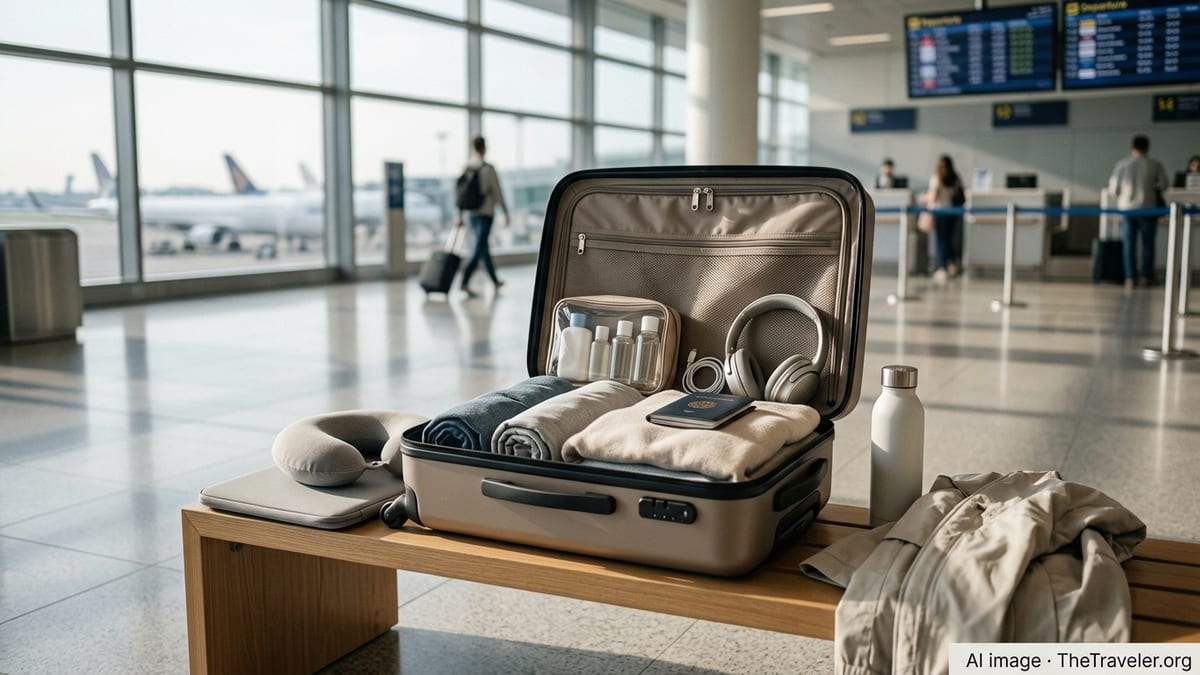
Why the Carry-On Has Become Non-Negotiable
Recent industry data indicates that, although global mishandled baggage rates have improved compared with the immediate post-pandemic years, travelers remain wary of relying solely on checked luggage. Reports drawing on government statistics and airline disclosures show that hundreds of thousands of bags are still delayed, damaged or lost each year, particularly during peak travel seasons when staffing and scheduling are under strain.
Surveys of passenger concerns published over the past year highlight lost baggage as one of the most common worries. In response, more travelers are choosing to fly with only a carry on or to keep at least one day’s worth of essentials within reach in the cabin. Travel insurance policies and airline compensation frameworks can soften the financial impact of lost bags, but they do not remove the inconvenience of arriving without clothes, toiletries or medication.
This shift in behavior has turned the cabin bag into a critical part of trip planning. Packing decisions are now framed not just around comfort but around resilience: if a checked suitcase goes missing, can the traveler still function for 24 to 48 hours using only what is in the overhead bin or under the seat?
Understanding Security Rules Before You Pack
Carry on packing still starts with security rules. In the United States, current Transportation Security Administration guidance continues to enforce the familiar liquids limit often summarized as the 3 1 1 rule. Travelers are generally allowed to bring containers of liquids, gels, creams and pastes of 3.4 ounces, or 100 milliliters, or less that fit into a single transparent quart sized bag in their cabin luggage.
Publicly available information from US and European regulators shows that some airports, particularly in the United Kingdom and parts of Europe, are gradually introducing advanced scanners that can accommodate larger volumes of liquids without the traditional bagging and decanting. However, these changes are far from universal. Airport by airport implementation means many travelers still have to comply with older limits, especially on connecting journeys that may pass through different security regimes on the same ticket.
Because of this patchwork of rules, travel advisories consistently encourage passengers to pack carry on liquids as if the strictest standard will apply throughout the route. That typically means limiting liquid toiletries to travel sizes, favoring solid formats where possible, and keeping all such items together so they can be presented quickly at checkpoints. Electronics such as laptops and tablets may also need to be removed for separate screening at many airports, so placing them near the top of the bag or in an easily accessible sleeve has become a practical necessity.
Core Essentials to Keep Within Reach
Against this regulatory backdrop, a consistent set of carry on essentials has emerged in recent travel coverage and packing guides. The first priority is documentation and access: passports, identity cards where required, boarding passes, visas and any supporting paperwork such as hotel confirmations or transit requirements should be kept in a secure but easily reachable pocket. Many travelers now add printed copies of critical documents as a backup in case a phone battery fails or a device cannot connect to the internet.
Health related items are increasingly emphasized. Airlines and consumer advocates advise that prescription medications, basic over the counter remedies, and any essential medical devices should never be placed in checked luggage. Recent disruptions, from weather closures to staffing related delays, have left passengers unexpectedly stuck overnight far from their intended destination, and having medication in the cabin can be crucial. Packing a small supply of personal hygiene items, such as a toothbrush, travel sized toothpaste and facial wipes that comply with liquid rules, can also help travelers stay comfortable during long delays.
Clothing strategy has become another focus. Travel experts commonly recommend placing at least one complete change of clothes and an extra set of undergarments in the carry on, even for travelers who check a larger suitcase. Lightweight layers made from quick drying fabrics can be especially useful if a hotel sink wash becomes necessary. A compact scarf or sweater can double as an in flight blanket while also serving as an extra layer at the destination.
Electronics and chargers are now treated as non negotiable cabin items. Laptops, phones, noise reducing headphones or earplugs, and necessary charging cables or power banks are generally packed together for easy removal at security. Reports on airport disruptions over the past few years have underscored how quickly access to information, boarding updates and digital payment services becomes difficult without a charged device.
Staying Comfortable and Productive in the Air
Beyond bare necessities, reports focused on passenger wellbeing point to a small set of comfort items that can significantly improve the in flight experience. A compact neck pillow or inflatable headrest remains a popular choice on longer flights, particularly overnight services where even partial rest can reduce jet lag. Lightweight eye masks and soft earplugs can help block light and cabin noise, making it easier to sleep in an unfamiliar environment.
Hydration and nutrition planning is another area where carry on packing makes a difference. While liquid restrictions limit what can be brought through security, refillable water bottles can usually be carried empty and filled airside at fountains or cafes. Many travelers also pack non perishable snacks such as nuts, granola bars or crackers to avoid relying entirely on in flight catering, which can be delayed or limited during turbulence or schedule changes.
For travelers who need to work on board, organizing documents and devices in a slim pouch or folder helps avoid rummaging in the aisle. Industry commentary on business travel trends notes that productivity on the road often depends less on airline cabin class and more on thoughtful preparation, including having noise management tools, offline copies of key files and any necessary adapters for power outlets at the destination.
Smart Strategies to Avoid Overpacking
While the temptation to prepare for every scenario is strong, airlines continue to enforce weight and size limits for cabin bags, and overhead bin competition remains a common source of stress at boarding. Travel advisors therefore recommend starting with a short, repeatable checklist that focuses on essentials rather than trying to anticipate every possible need. Items that duplicate what hotels or hosts typically provide, such as large toiletry bottles or multiple pairs of shoes, are increasingly seen as better suited to checked luggage or left at home altogether.
Recent research in travel behavior and baggage design has also highlighted the role of packing systems in avoiding clutter. Packing cubes or small fabric pouches can help group clothing, tech accessories and toiletries, reducing the risk that a vital item will be left behind at security or under a seat. Transparent, resealable bags for liquids remain important for compliance, but travelers are encouraged to keep them separate from other pouches so they can be placed in security trays without delay.
Finally, many experienced travelers now treat the carry on as a semi permanent kit rather than rebuilding it for every trip. Keeping a dedicated set of travel sized toiletries, an extra phone charger, and a small first aid selection in the same bag reduces the chance of last minute omissions. As airline schedules, security rules and baggage performance continue to shift, a consistently prepared cabin bag offers one of the few variables travelers can directly control.