

More news on this day
A sweeping wave of cartel-related violence following a major Mexican military operation has upended travel across some of the country’s most popular destinations, forcing tourists in cities from Cancún to Puerto Vallarta to shelter in place as flights are canceled, roads are blocked, and transport networks strain under the turmoil.
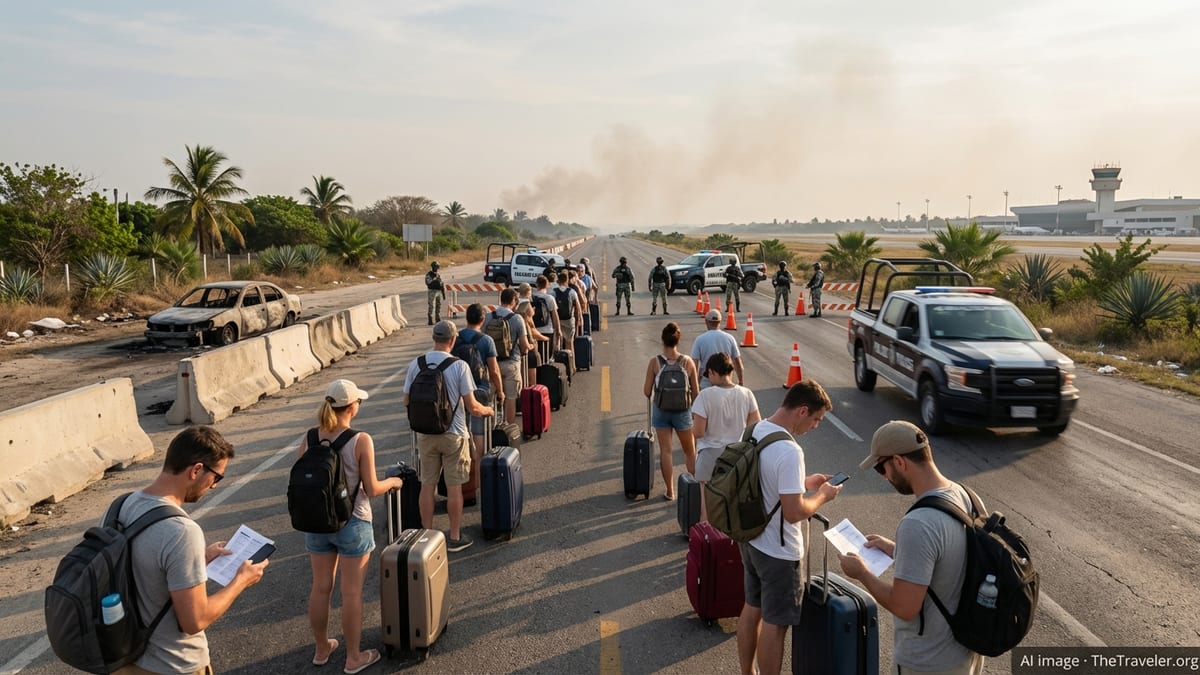
Military Operation Sparks Nationwide Security Emergency
The current disruption began on February 22, 2026, when the Mexican army killed Nemesio “El Mencho” Oseguera Cervantes, alleged leader of the Jalisco New Generation Cartel, in an operation in Jalisco state. Within hours, reports of gunfire, vehicle fires, and road blockades poured in from multiple states as suspected cartel gunmen responded with force, targeting highways, businesses, and critical infrastructure.
The unrest has been concentrated in Jalisco and neighboring regions, but the shockwaves quickly rippled outward to coastal resort areas and major transit hubs. Authorities activated emergency protocols, including a code red alert in Jalisco, canceling public events and in-person classes in some areas and deploying federal forces to protect airports and strategic roadways.
While Mexican officials have stressed that security forces remain in control of key assets, the scale and speed of the retaliatory attacks have created acute uncertainty for visitors and residents alike. Travelers who just days ago were heading to Mexico for winter sun breaks now find themselves navigating curfews, cancelled flights, and rapidly changing advisories.
Foreign governments, including the United States, Canada, and several European countries, have issued updated travel warnings and urged citizens in affected zones to remain indoors, avoid crowds, and closely monitor local news and embassy channels.
Puerto Vallarta and Guadalajara at the Epicenter of Flight Chaos
Puerto Vallarta and Guadalajara, both in Jalisco, have emerged as ground zero for the worst transport disruption. The U.S. Embassy and consulates reported that roadblocks and criminal activity have heavily impacted access to both cities, with gunmen setting vehicles ablaze on key routes and staging barricades that have halted road traffic for hours at a time.
In Puerto Vallarta, a major Pacific beach resort popular with North American and European visitors, authorities placed the international airport under military and National Guard protection. Airlines, however, responded by canceling most or all international services and a large portion of domestic flights, stranding thousands of passengers who suddenly found themselves unable to leave.
Guadalajara, a crucial domestic and international aviation hub, has seen a more mixed picture. Airport officials there insist terminals remain secure and operational, but limited staffing and disruptions on surrounding roads have led to confusion and sporadic cancellations. International carriers have announced flexible rebooking policies for travelers scheduled to fly through Guadalajara and Puerto Vallarta in the coming days.
On the ground in Puerto Vallarta, taxis and ride-hailing services have been suspended under local security measures, compounding the logistical challenges. Many tourists report being confined to hotels, with resort staff advising guests to stay on property and avoid unnecessary movement around the city.
Shelter in Place Orders Stretch from Baja California to Quintana Roo
What began as a crisis centered on Jalisco has rapidly expanded into a broader security operation that touches nearly every side of the country. The U.S. Mission in Mexico has issued shelter in place guidance for citizens in a wide swath of states, including Jalisco and neighboring Nayarit and Colima, as well as Baja California in the northwest and Quintana Roo in the southeast Caribbean region.
In Baja California, home to border cities such as Tijuana and coastal destinations like Ensenada, U.S. consular staff have also been instructed to shelter in place. Local reports describe heightened security patrols, sporadic road closures, and visible tension around border crossings and main highways that connect tourism corridors along the Pacific coast.
On the Caribbean side, Quintana Roo, which includes Cancún, Cozumel, Playa del Carmen, and Tulum, is now under intensified security scrutiny. While no widespread gun battles have been confirmed in the main resort strips, the state is explicitly named in embassy alerts due to concerns about potential spillover violence, targeted roadblocks, and opportunistic criminal activity amid the broader turmoil.
Travelers in these regions are being urged to remain in their hotels or residences, limit outings to essential movements only, and stay away from law enforcement operations, which can attract hostile attention. Tour operators have scaled back excursions, especially those that require long drives on highways or rural roads.
Cancún, Cozumel, Los Cabos and Other Resorts Brace for Disruptions
Cancún and Cozumel, pillars of Mexico’s Caribbean tourism industry, continue to receive flights, but airlines and airports are preparing for possible further disruption as the security situation evolves. Airport authorities in Mexico City and other major hubs have stated that operations remain normal, yet they acknowledge that roadblocks in affected states have already delayed crew movements and aircraft rotations.
In Cancún’s hotel zone, many resorts remain operational, but guests are reporting heightened security checks, more visible law enforcement presence, and a flurry of notifications from tour providers about schedule changes or cancellations. Cruise calls to Cozumel are still moving ahead as of Monday morning, but some cruise lines are reviewing shore excursion programs and contingency plans.
On the Pacific side, Los Cabos in Baja California Sur has not seen the same level of direct unrest as Puerto Vallarta or Guadalajara, but the broader security alerts have rattled confidence. Local tourism officials are emphasizing that beaches and resort areas remain calm, even as they coordinate closely with state authorities on risk assessments and potential route changes for airport transfers and intercity buses.
Smaller but fast-growing destinations such as Nuevo Nayarit, Mazatlán, and parts of Oaxaca’s coast are also feeling the impact as travelers weigh whether to proceed with trips or cancel at the last minute. Even in cities where streets remain quiet, hotels report an uptick in cancellation requests and calls from concerned guests seeking safety assurances.
Road Blockades and Highway Attacks Paralyze Overland Travel
Beyond the airports, Mexico’s vast road network has become a central pressure point in the unfolding crisis. Security alerts describe organized groups setting up improvised roadblocks on major highways, including those connecting Guadalajara to coastal resorts, as well as key routes in Michoacán, Guanajuato, and Tamaulipas.
Witnesses have reported burned-out vehicles left as barricades, targeted attacks on convenience stores and fuel stations, and sporadic gunfire near checkpoints as security forces move in to clear the routes. In some instances, drivers have turned around and sought alternative roads, leading to traffic jams and long detours in states already notorious for cartel activity.
Intercity bus companies have curtailed or suspended service on certain corridors, particularly those passing through the most affected parts of Jalisco and neighboring states. Where buses are running, they are frequently rerouted or subject to last-minute schedule changes. Travel agencies are telling clients to avoid nighttime road travel entirely and, where possible, to postpone long overland journeys until authorities clearly signal an improvement in conditions.
The patchwork nature of the blockades means that conditions can vary sharply even within the same state. A stretch of highway that appears calm in the morning can be blocked by afternoon, leaving travelers and logistics companies in constant need of fresh updates from local authorities and highway monitoring services.
Tourists Stranded, Events Canceled, and Economic Stakes Mounting
The immediate human impact is already evident. Tourists in Puerto Vallarta, Guadalajara, and other hotspots have found themselves suddenly stuck, with airports open in theory but flights canceled or rescheduled without clear timelines. Some travelers have reported sleeping in terminals or extending hotel stays day by day while they search for alternative routes home through Mexico City or other still-operating hubs.
Major events have also been thrown into doubt. Sports tournaments and conferences scheduled for late February in cities such as Mérida and Acapulco are facing cancellations or reduced attendance as participants scramble to rebook flights or decide whether to travel at all. Local businesses that depend heavily on visitor spending are bracing for a sharp drop in revenue if the security situation does not stabilize quickly.
Mexico’s tourism industry, which has seen record visitor numbers in recent years and plays a crucial role in the national economy, is particularly vulnerable. Destinations like Cancún, Los Cabos, and Puerto Vallarta anchor a vast network of hotels, restaurants, tour operators, and informal workers whose livelihoods are tied to the steady arrival of international travelers.
Tourism officials at both the federal and state levels now face the complex task of reassuring visitors while neither downplaying the gravity of the security challenge nor contradicting the urgent warnings issued by foreign governments and their own security agencies.
What Travelers Need to Know Right Now
For travelers currently in Mexico’s affected regions, the most consistent message from officials and airlines is to stay put, stay informed, and stay flexible. Embassies are urging citizens to enroll in traveler registration programs to receive real-time alerts, keep mobile phones charged, and maintain regular contact with family members back home.
Airlines serving Puerto Vallarta, Guadalajara, and other impacted routes are issuing travel waivers, allowing passengers to change dates or reroute trips without standard penalties. However, limited seat availability and ongoing cancellations mean that rebooking options may be constrained for several days. Passengers are being advised to verify flight status repeatedly rather than rely on earlier confirmations.
For those with upcoming trips to Cancún, Cozumel, Los Cabos, and other resort areas mentioned in security alerts, experts recommend closely reviewing insurance policies, monitoring airline and hotel communications, and considering contingency plans. That can include booking refundable fares where possible, allowing more connection time through Mexico City or U.S. gateways, and avoiding itineraries that rely on late-night arrivals or long road transfers.
Travel advisers stress that conditions remain highly fluid. Some airports and tourist zones may continue to function largely as normal, even as nearby states contend with serious unrest. The key, they say, is to treat any February and early March travel into Mexico as subject to rapid change, with a premium on safety, patience, and backup plans.
Balancing Security Concerns with Mexico’s Enduring Appeal
The latest outbreak of cartel violence presents another stern test for Mexico’s image as one of the world’s leading holiday destinations. The country has long managed a complex dual reality in which stunning beaches, vibrant cities, and rich cultural heritage coexist with entrenched organized crime and periodic security crises.
In recent years, tourist arrivals have continued to grow despite sporadic flare-ups, as many visitors focus on resort bubbles where security is tight and violence rarely encroaches. Yet when unrest spills into airport access roads, major highways, or city centers, the perception of safety can shift quickly, prompting governments abroad to tighten advisories and travelers to rethink plans.
Industry observers note that the timing of the current disruption, coming at the height of the winter high season and in a year when Mexico is preparing to host global events such as World Cup matches in Guadalajara, raises the stakes further. The ability of federal and state authorities to restore calm, secure transport corridors, and communicate clearly with international partners will be closely watched.
For now, the sight of tourists watching plumes of smoke rise beyond beach resorts in Puerto Vallarta, or scanning departure boards filled with cancellations, underscores the fragile balance that underpins Mexico’s tourism success. Many travelers are hoping that the coming days bring not only clearer flight schedules, but also reassuring evidence that the worst of the violence has passed.