

More news on this day
Casablanca Cruise Port has reached a new milestone by handling three cruise ships at the same time for the first time, a historic call that signals Morocco’s fast-growing appeal on Atlantic and Mediterranean itineraries and showcases the capacity of its new purpose-built terminal.
Get the latest news straight to your inbox!
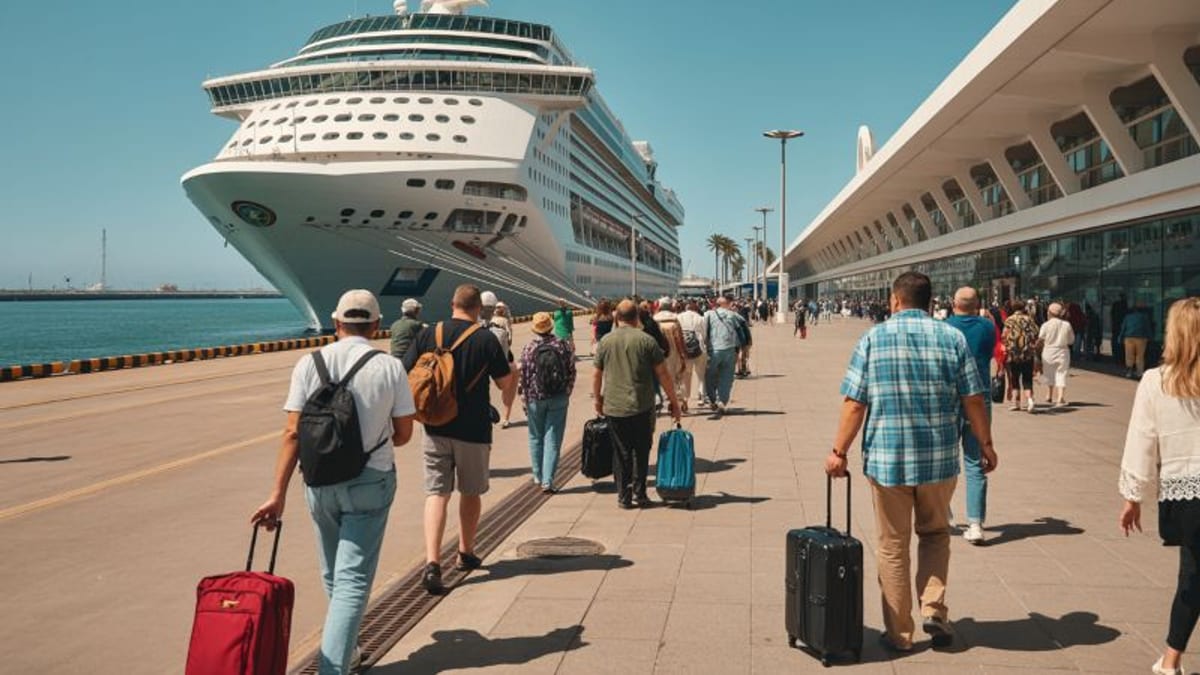
Image by International Cruise News: Latest Cruise Line & Cruise Ship News
A New-Generation Terminal Built for Bigger Numbers
The historic three-ship call comes less than a year after Casablanca unveiled its dedicated cruise terminal, a facility designed to bring the port in line with leading hubs in the region. Publicly available information indicates that the terminal, part of a wider modernization of the Port of Casablanca, was developed with an investment in the hundreds of millions of dirhams to expand the city’s tourism footprint and improve passenger handling standards.
The complex includes a cruise-dedicated quay of around 660 meters and infrastructure capable of receiving ships up to approximately 350 meters in length. This configuration allows the port to berth either a single new-generation vessel or multiple mid-sized ships, which is what has enabled the recent three-ship operation. The facility is equipped with modern security, baggage and check-in areas, along with passenger circulation designed to separate arrivals and departures.
Casablanca Cruise Port’s operators have framed the terminal as a cornerstone in national tourism and infrastructure plans, noting that it is now Morocco’s largest dedicated cruise facility by capacity. Operational data published by Global Ports Holding, which took over management in January 2026, suggests that the port can handle more than 450,000 cruise passengers per year, a significant increase on historic volumes.
The three-ship milestone is seen within the industry as a proof of concept for that capacity. Being able to coordinate simultaneous calls, while keeping turnaround times and border procedures flowing smoothly, positions Casablanca as a more flexible choice for cruise planners building complex itineraries across the Atlantic, Canary Islands and Western Mediterranean.
Global Ports Holding and the 2026 Season Pivot
The multi-ship call also showcases the role of Global Ports Holding in reshaping Casablanca’s cruise profile. The company signed a 15-year concession to operate the cruise port and assumed responsibility at the start of 2026, integrating Casablanca into a network of berths stretching across the Mediterranean, Atlantic and Caribbean.
Reports on the opening of the 2026 season show that Silversea’s Silver Muse was among the first ships to call under the new management, inaugurating a schedule that projects more than one hundred cruise calls and well over one hundred thousand passengers this year. The three-ship operation builds on that momentum by demonstrating that the port can scale up beyond single-vessel visits, accommodating overlapping calls from premium and contemporary brands.
Industry coverage notes that the terminal’s design, including mobile telescopic gangways and dedicated security and customs zones, is intended to support both transit calls and partial or full turnarounds. This flexibility is important for operators that may wish to start or end voyages in Casablanca, taking advantage of the city’s international air connections through Mohammed V International Airport.
By leveraging its position within a major global port network, Casablanca is also gaining visibility during a period of rebalancing in cruise deployment, as some lines shift itineraries away from more volatile regions. Recent program changes, such as Atlantic and Iberian routes that now incorporate Moroccan calls, suggest that Casablanca is increasingly viewed as a stable, high-interest port in broader regional planning.
Morocco’s Rising Profile on Atlantic and Mediterranean Routes
The historic call of three ships at once highlights a broader trend: Morocco’s ports are appearing more frequently on itineraries that link Iberia, the Canary Islands and the Western Mediterranean. Published deployment announcements from several cruise brands for 2025 and 2026 show Casablanca sharing the stage with ports such as Lisbon, Funchal and Las Palmas, as lines promote a mix of culture-focused and sunshine-driven sailings.
Industry forecasts for global cruise demand continue to climb, with Mediterranean and near-Atlantic routes among the strongest performers going into the mid-2020s. Within that context, Morocco’s combination of year-round mild weather, established tourist circuits and distinctive cultural experiences is becoming more attractive for planners seeking variety beyond traditional European stops.
Casablanca benefits from its location on the Atlantic coast while remaining only a short sailing distance from other high-demand ports. It offers a practical stop for repositioning voyages between Northern Europe and the Mediterranean, as well as for round-trip cruises out of Iberian and Canary Islands homeports. The ability to host three ships simultaneously strengthens its candidacy as a regular feature on such routes, rather than an occasional outlier.
The recent multi-ship day further underlines that Moroccan ports, led by Casablanca and supported by destinations such as Tangier and Agadir, are moving from emerging to established status in cruise planning. As infrastructure matures and operational track records lengthen, itineraries are likely to give these calls more prominent billing in marketing materials aimed at culturally curious travelers.
What Passengers Can Expect at Casablanca Cruise Port
For travelers stepping off one of the three ships during the historic call, the new terminal environment is a significant change from earlier facilities. The building provides covered, climate-controlled spaces, check-in counters and waiting lounges that align with international standards, improving comfort at peak times and during concurrent ship operations.
Casablanca Cruise Port sits close to the city center, with ground transport options typically including shuttle buses, taxis and pre-arranged tour coaches. Public information and traveler reports describe organized shuttles connecting the port area with central landmarks and shopping districts, making it relatively straightforward for passengers to reach the city’s main sights during a standard day call.
Most itineraries and excursion programs focus on a combination of Casablanca highlights and longer tours to other cities. In-town, passengers commonly visit the Hassan II Mosque, art deco boulevards, traditional markets and the Corniche waterfront. Some cruise lines offer full-day overland trips to destinations such as Marrakech, capitalizing on Casablanca’s rail and road links and the port’s capacity to process large groups efficiently at embarkation and return.
Within the terminal itself, services typically include basic retail, information desks and facilities for passengers with reduced mobility. As traffic grows and more multi-ship days are scheduled, observers expect further gradual upgrades on the landside, including improved signage, expanded transport staging areas and additional visitor services aimed at independent explorers.
Looking Ahead: Capacity, Itineraries and Regional Impact
The successful handling of three cruise ships in a single call provides a tangible benchmark for Casablanca’s future growth plans. With annual traffic projections already pointing toward several hundred thousand passengers in the coming years, the port’s ability to manage such peaks will be closely watched by both cruise lines and local tourism stakeholders.
As more brands announce 2026 and 2027 deployments, early indications from published itineraries suggest that Casablanca will feature on a mix of luxury, premium and contemporary products. Some lines are positioning the city as a gateway to wider Moroccan touring, while others highlight it as an urban, culinary and cultural stop on longer Atlantic voyages.
The economic implications extend beyond the port perimeter. Higher volumes of cruise visitors can translate into increased demand for guided tours, hospitality, retail and cultural experiences in Casablanca and across Morocco. Local authorities have framed cruise development as one component of a diversified tourism strategy that also targets city breaks, coastal resorts and desert circuits.
While much will depend on broader market conditions, geopolitical stability and environmental regulations affecting cruise operations, the recent historic three-ship call underscores that Casablanca has both the infrastructure and growing industry confidence to play a more central role in regional cruise tourism in the years ahead.