

More news on this day
Tuscan hilltop estate Castelfalfi has entered a strategic alliance with Sommet Education, uniting with renowned hospitality schools Les Roches and Glion in a joint bid to reshape how luxury hospitality leaders are educated and developed.
Get the latest news straight to your inbox!
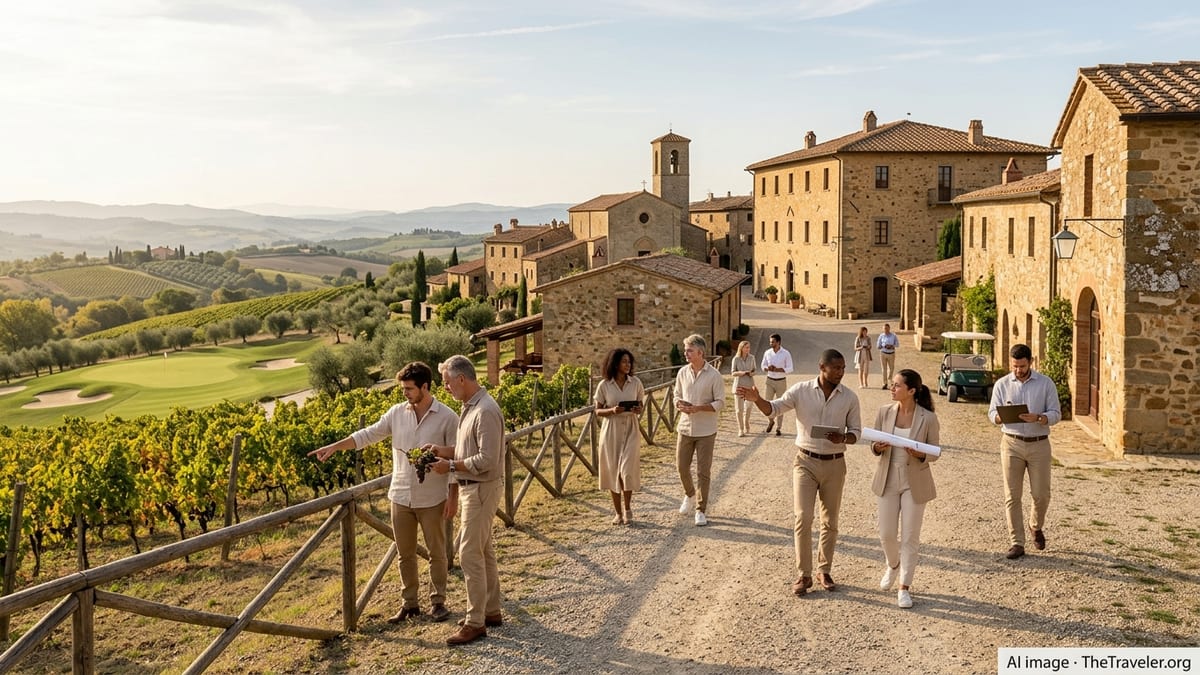
A Tuscan Estate Becomes a Live-Action Classroom
The partnership places Castelfalfi, a restored medieval borgo between Florence and Pisa, at the center of a new model for experiential hospitality education. The resort’s blend of five-star accommodation, golf, vineyards and agricultural land offers a real-world environment where students can test classroom theory across operations, guest experience and destination development.
Publicly available information on Castelfalfi describes an estate that has evolved from historic village into a contemporary luxury resort, while retaining its roots in Tuscan rural life. By incorporating this setting into formal learning pathways, the alliance is positioning the property as a living laboratory for future general managers, asset managers and experience designers.
Industry observers note that international hospitality programs have been steadily increasing the share of on-site, project-based learning in response to changing guest expectations. Castelfalfi’s scale, from boutique-style lodging to extensive outdoor and wellness facilities, allows students to work across multiple segments of the guest journey in a single location.
The collaboration is also expected to strengthen the estate’s own positioning in the high-end travel market, aligning it with a global network of recruiters and alumni who specialize in luxury and ultra-luxury hospitality.
Sommet Education’s Global Schools Add Academic Firepower
Sommet Education, which groups Glion Institute of Higher Education and Les Roches Global Hospitality Education, brings established academic frameworks and international reach to the alliance. Both Swiss-born schools have long focused on luxury hospitality, tourism and related sectors such as events, finance and brand management.
According to institutional material, Glion and Les Roches serve thousands of students from more than 100 nationalities across campuses in Switzerland, Spain and other locations, with strong rankings in hospitality management and employer reputation. Their curricula combine rigorous business education with operational training and leadership development tailored to service industries.
By integrating Castelfalfi into this ecosystem, Sommet Education can extend its portfolio of applied learning destinations beyond traditional campus hotels and restaurants. Students may be exposed to estate management, sustainable agriculture, golf and spa operations, as well as residential real estate and destination marketing, all within the framework of luxury standards.
The alliance is expected to generate new executive programs, intensive modules and possibly bespoke corporate trainings that leverage the Tuscan estate as a setting for leadership retreats and strategic workshops.
Redefining Luxury Hospitality Leadership for a New Generation
The collaboration is emerging at a time when luxury hospitality is expanding beyond traditional five-star hotels into branded residences, wellness retreats, culinary destinations and mixed-use lifestyle estates. This shift is placing new demands on leadership profiles, with owners and operators seeking managers who can combine financial acumen, brand storytelling, sustainability and community engagement.
Reports on Sommet Education’s broader strategy indicate a growing emphasis on leadership, entrepreneurship and innovation in its programs. Linking these themes to an operational resort like Castelfalfi allows learners to confront live challenges such as seasonality, labor shortages, experiential design and high-yield revenue management.
Observers note that top hospitality schools are under pressure to demonstrate direct career outcomes and rapid employability for graduates. Embedding students in complex, high-touch environments is increasingly seen as a differentiator, especially in the luxury and ultra-luxury segments where service personalization and emotional intelligence are central.
For Castelfalfi, hosting future leaders and mid-career executives could foster a culture of continuous improvement on property, with pilots in guest experience, technology and sustainability tested in collaboration with faculty and students.
Tapping Global Talent and Alumni Networks
Sommet Education’s institutions maintain extensive alumni communities working across global hotel groups, independent luxury brands, asset management firms and related industries. These networks are often used to facilitate internships, management training programs and senior placements.
By integrating Castelfalfi into this ecosystem, the alliance aims to channel a pipeline of talent directly into the resort and its partners, while offering students exposure to a destination that blends resort, residential and experiential components. Alumni engagement events, industry panels and talent fairs on site would further enhance the resort’s visibility in recruitment circles.
Published coverage of Sommet Education’s initiatives shows a recurring focus on employability metrics and close collaboration with hospitality and luxury employers. Situating educational activities at a high-profile Tuscan estate supports this strategy by providing a physical stage for networking between students, alumni and corporate partners.
The partnership also reflects a broader trend of education groups aligning with destination brands to co-develop talent pipelines, particularly in markets where staffing senior roles has become increasingly competitive.
Implications for Tuscany and Experiential Education
The arrival of an international hospitality education alliance at Castelfalfi may have wider effects on the surrounding region. Tuscany’s long-standing appeal to affluent leisure travelers, second-home buyers and wellness seekers makes it a natural testing ground for new luxury concepts and sustainability models.
Regional tourism stakeholders are likely to monitor how the partnership influences best practices in areas such as heritage conservation, local sourcing and landscape management. As students and faculty engage with the territory, projects may emerge around community partnerships, agritourism, cultural programming and slow-travel itineraries that extend benefits beyond the estate’s boundaries.
From an educational perspective, the collaboration underscores the growing role of place-based and experiential learning in hospitality management. Combining rigorous academic content from Glion and Les Roches with the operational realities of Castelfalfi illustrates how institutions are rethinking internships, capstone projects and executive education formats.
If successful, the model could serve as a template for similar alliances between leading hospitality schools and destination estates, as the industry seeks to cultivate leaders capable of navigating both the business and cultural dimensions of luxury travel.