

More news on this day
Weeks of cascading rail disruptions across Catalonia, capped by safety inspections and long-term works on key commuter corridors into Barcelona, are forcing the region’s tourism industry to confront a new, more fragile era for rail-dependent travel.
Get the latest news straight to your inbox!
From Derailment to Network Crisis
The turning point for Catalonia’s rail system arrived on 20 January 2026, when a Rodalies commuter train derailed near Gelida after hitting a collapsed retaining wall during heavy storms. According to publicly available information, the accident killed a trainee driver and injured dozens of passengers, and it triggered sweeping safety checks across the network. Those inspections have cascaded into repeated suspensions and diversions on the suburban lines that feed Barcelona’s main stations, leaving both residents and visitors facing uncertainty on routes that were once routine.
Published coverage indicates that the January derailment came on the heels of years of mounting reliability concerns on Rodalies, with vandalism, copper theft, staffing pressures and infrastructure wear already weighing on punctuality. Barcelona’s commuter network had developed a reputation for some of the worst delays in Spain even before the recent crisis, but the combination of extreme weather and aging assets has pushed the system into a new phase of chronic disruption. For tourists accustomed to relying on these lines to reach beaches, wine regions and mountain towns, the derailment marked more than a tragic accident; it was the start of a structural shock to how they move around Catalonia.
As storm-related damage has intersected with technical faults and maintenance backlogs, rail incidents have no longer been isolated events. Instead, they have unfolded as rolling breakdowns affecting multiple corridors and often coinciding with other weather disruptions and station works. For visitors planning short breaks built around precise timetables and tight connections, the cumulative effect has been a significant erosion of confidence in rail as the backbone of a Barcelona holiday.
Garraf Tunnels Works Squeeze Coastal Tourism
The latest blow for the tourism sector is focused on the Mediterranean coastline south of Barcelona. Reports indicate that starting in mid March 2026, major works in the Garraf tunnels, on the busy R2 South corridor, will last around three months and cut capacity by nearly half between Sitges and the Garraf area. This line is a crucial artery linking the Catalan capital with coastal destinations such as Castelldefels, Vilanova i la Geltrú and Sant Vicenç de Calders, and it also carries regional trains from Tarragona, Cambrils and Tortosa.
Rail planners have introduced a mix of single-track operation, diversions and replacement buses, but the result for passengers is longer journeys, fewer trains and more complex route choices. Tourism businesses along the coast now face a peak spring and early summer season shaped by slower access from Barcelona, with day-trippers potentially rethinking excursions and some conference and events organisers reconsidering venue choices away from the most affected stations. In a region that has promoted climate-friendly mobility and car-free holidays, the prospect of visitors returning to highways and rental cars is emerging as a tangible risk.
Accommodation providers and local tourism boards along the R2 South corridor are responding by highlighting alternative rail-based options, including routes via other lines and the use of Barcelona’s metro and tram systems to bridge gaps. Yet the necessity of careful advance planning, buffer times and back-up plans represents a marked departure from the spontaneous day trips that many travelers associate with Barcelona’s coastal escapes.
Sants Station Under Strain as Rail Hub and Tourist Gateway
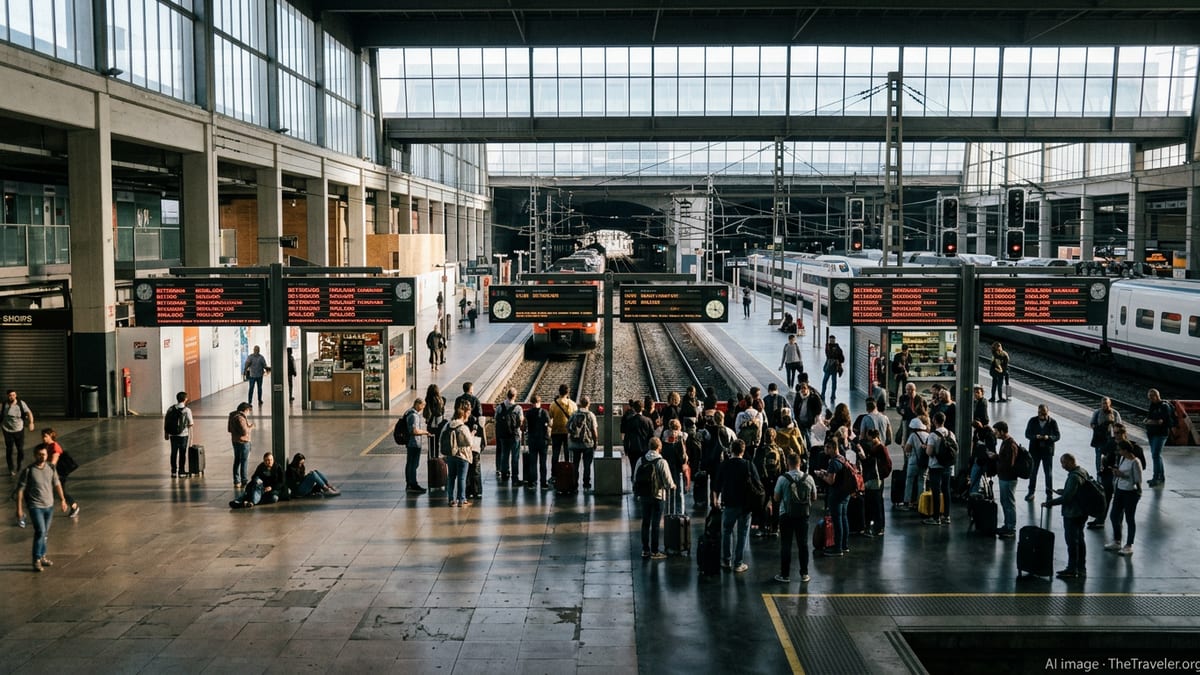
Barcelona Sants, the city’s main intercity and high-speed rail hub, has become a symbol of the new fragility in Catalan rail travel. Prior to the current crisis, construction works to expand the station had already closed a majority of its commercial units, diminishing the range of food, retail and services available to passengers waiting for delayed trains or making long connections. Recent reports of repeated high-speed breakdowns, overhead line failures and emergency evacuations through tunnels have reinforced Sants’s image as an overburdened node under near-constant stress.
For visitors, Sants is often the first encounter with Barcelona, especially for those arriving by high-speed services from Madrid, France and the wider Spanish network. The combination of construction hoardings, reduced amenities and unpredictable departure boards can make that first impression feel utilitarian and chaotic rather than welcoming. Travel media and rail user guides now regularly advise arriving passengers to factor in extra time to navigate the station, find functioning services and respond to last-minute platform changes.
The ripple effects extend far beyond the station concourse. When commuter trains are curtailed or diverted, Sants loses some of its connectivity to neighborhoods, conference venues and cruise terminals, pushing more visitors onto metro lines, taxis and ride-hailing services. Tourism operators that once promoted seamless “train to hotel” packages are adjusting their messaging, focusing instead on flexibility, real-time updates and a wider mix of transport modes for the final leg of the journey.
Tourism Industry Adapts to a More Fragile Network
Despite the disruption, Barcelona’s tourism machine has not stopped. Instead, it is reshaping how it sells the city and the wider Catalan region. Travel advisories from airlines, tour operators and online booking platforms increasingly emphasize the importance of checking rail status on the day of travel, buying flexible tickets and allowing generous transfer times at hubs like Sants and Estació de França. Some international tour companies are quietly redesigning itineraries to reduce dependency on the most affected commuter lines, swapping suburban excursions for urban experiences accessible by metro or on foot.
Hotel concierges and apartment hosts are updating their standard welcome briefings, adding detailed instructions on alternative routes and contingency options if specific Rodalies lines are suspended. In some cases, private shuttle services and small-group transfers are filling gaps left by reduced regional trains to coastal resorts and wine regions. This shift nudges visitors toward more organized, and often more expensive, mobility solutions, altering the cost structure of what used to be budget-friendly rail-based getaways.
The public response from rail and infrastructure managers has centered on major investment plans, with publicly available information indicating that Spanish and Catalan authorities have agreed to sharply increase maintenance spending on the lines used by Rodalies and to modernize rolling stock and stations. For the tourism sector, those long-term commitments are essential, yet the reality is that construction and upgrades frequently bring additional short-term disruption. Over the next few seasons, visitors are likely to travel through a system caught between breakdown-prone legacy infrastructure and the upheaval of works designed to fix it.
Why Barcelona Travel Will Not Return to the Old Normal
For years, Barcelona marketed itself as a city where visitors could arrive by high-speed rail, change with ease to frequent commuter services and be on the beach or in the vineyards within an hour. The recent chain of incidents and long-term works has fractured that narrative. Even if reliability improves, the memory of network-wide suspensions, empty platforms and mass delays is feeding a more cautious approach among both residents and visitors. Rail may remain central, but blind trust in timetable promises is being replaced by habits of double-checking, screenshotting schedules and building redundancy into every day trip.
These experiences are converging with a broader debate over tourism in Barcelona, which has already seen protests and policy moves aimed at curbing overtourism and rebalancing public space. As rail access becomes less predictable, some travelers may opt for shorter, more localized stays within the city, reducing the traditional pattern of using Barcelona as a springboard for wider Catalan exploration. Others may shift to alternative Spanish or Mediterranean destinations perceived as offering smoother transport experiences, particularly for short weekend breaks.
At the same time, the crisis is prompting a revaluation of what “sustainable” travel means in practice. The ideal of low-emission rail-based tourism remains powerful, but Barcelona’s current reality underscores that it depends on resilient infrastructure, consistent maintenance and clear communication. Tourists who continue to choose trains in and around the city are likely to do so with a more critical eye, favoring operators and routes that demonstrate transparency and reliability. In this sense, the Gelida derailment and the ensuing Rodalies crisis mark a point of no return: Barcelona’s travel scene is entering an era where rail is no longer taken for granted, and where flexibility, local knowledge and backup plans become as essential as a boarding pass.