

More news on this day
Cathay Pacific has suspended passenger flights to Dubai and Riyadh as conflict-linked airspace disruptions and weakening demand hit Gulf connectivity, intensifying pressure on tourism revenues in the United Arab Emirates and Saudi Arabia just as global airlines confront another major shock.
Get the latest news straight to your inbox!
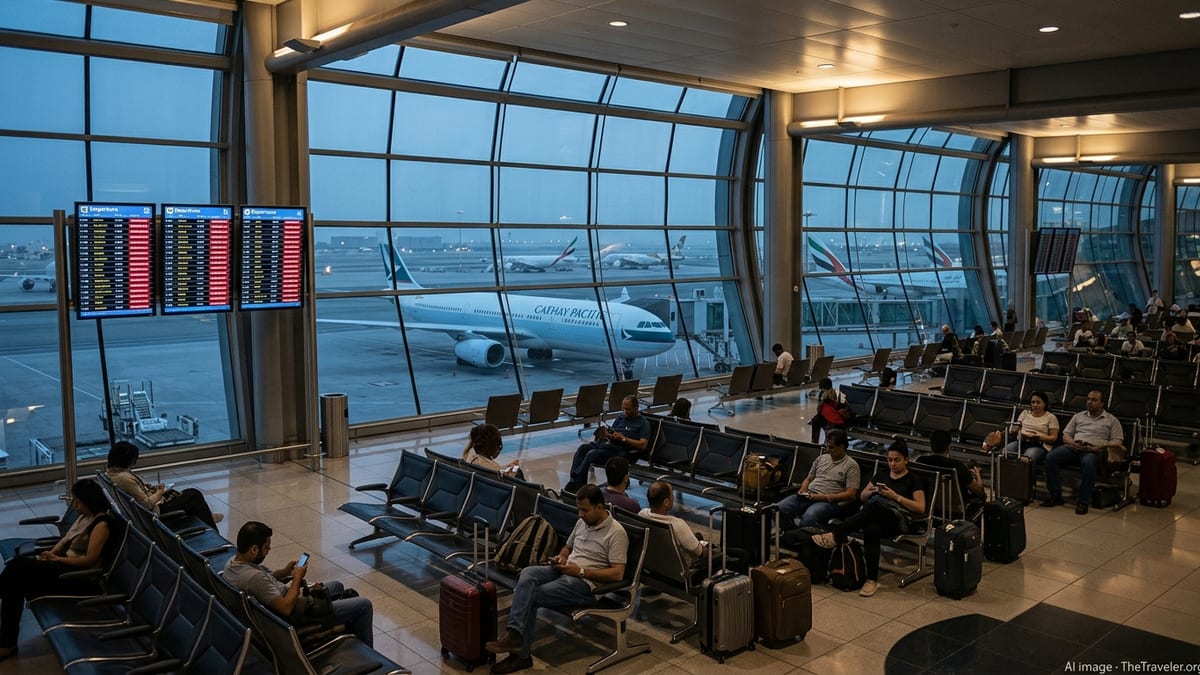
Cathay Pacific Pulls Back From Key Gulf Gateways
Publicly available network information indicates that Hong Kong based Cathay Pacific has stopped operating its Hong Kong Dubai and Hong Kong Riyadh passenger services, removing a oneworld carrier link into two of the Gulf’s most strategically important aviation hubs. Regional coverage from Gulf-focused outlets in early March reported that the airline was among several Asia Pacific carriers cancelling or suspending flights into the United Arab Emirates, Bahrain and Saudi Arabia as the regional security situation deteriorated.
The withdrawals mark a sharp reversal from Cathay Pacific’s recent push into the Gulf. The airline only launched scheduled passenger services to Riyadh in late 2024 after years of focusing primarily on cargo links to the region. Dubai has long featured in the carrier’s network, serving both point to point traffic and connecting flows between Asia, Europe and Africa. The removal of these flights reduces itinerary options for business travellers, leisure visitors and transit passengers who relied on Hong Kong as a connecting hub.
Timetables and booking engines now show limited or no availability on Cathay Pacific operated services to both cities for the coming months, with some itineraries re-routed via partner carriers or alternative hubs. Industry analysts note that airlines typically frame such pullbacks as temporary suspensions rather than permanent exits, leaving open the possibility of a return once conditions stabilize and demand recovers.
Regional Conflict Chokes Middle East Air Corridors
The suspensions come against the backdrop of severe disruption to Middle East airspace following the escalation of conflict involving Iran and Gulf states. Published analyses of the economic impact of the 2026 Iran war describe widespread flight cancellations, rerouting and capacity cuts as airlines seek to avoid missile and drone attack zones and navigate shifting safety advisories. With many carriers forced to take longer routes or bypass the region altogether, the economics of serving certain destinations have deteriorated rapidly.
Reports in European and regional media highlight that airlines based in the United Arab Emirates are operating at well under pre conflict capacity, with a substantial proportion of their fleets grounded. Connectivity through major hubs such as Dubai and Abu Dhabi has been curtailed as international carriers trim frequencies or halt services entirely. This has knock on effects not only for point to point routes like Hong Kong Dubai but also for complex global itineraries that historically funneled through the Gulf.
For Cathay Pacific, the volatile security environment adds to familiar pressures around fuel costs, insurance, crew rostering and schedule reliability. Aviation analysts point out that when routes become operationally unpredictable and commercially marginal, network planners often prioritize resilience in core markets over thin long haul sectors, particularly those that overfly or terminate in conflict adjacent areas.
Tourism Revenues in UAE and Saudi Arabia Under Strain
The hit to air connectivity is reverberating across the wider visitor economies of the United Arab Emirates and Saudi Arabia. Economic commentary from international outlets in March suggests that tourists have begun to avoid parts of the Gulf amid heightened geopolitical risk, even as governments in both countries continue to promote ambitious tourism targets and invest heavily in mega projects, hospitality infrastructure and entertainment districts.
Prior to the latest crisis, Dubai had reported record international arrivals in 2025, underscoring its role as one of the world’s most visited cities and a crucial demand driver for airlines and hotels. Saudi Arabia, meanwhile, has been expanding visa schemes and leisure offerings beyond the religious tourism that traditionally dominated arrivals to cities such as Mecca and Medina. The current wave of cancellations and suspensions, however, threatens to derail this momentum by limiting air access and undermining traveller confidence.
Travel trade commentary indicates that tour operators are already reworking itineraries, redirecting some traffic to alternative destinations in Europe and Asia that are perceived as more stable or easier to reach without complex rerouting. For Gulf economies where aviation, hospitality and retail have become central pillars of diversification strategies, prolonged weakness in visitor numbers risks feeding through to employment, investment and non oil growth.
Global Airlines Reel From Another Systemic Shock
The ripple effects of the Middle East turmoil extend far beyond the Gulf. Airlines worldwide are recalibrating networks, schedules and pricing as they grapple with constrained airspace, higher operating costs and disrupted traffic flows between Europe, Asia and Africa. Industry data providers and aviation consultancies draw parallels with earlier systemic shocks, from the coronavirus pandemic to past regional conflicts that sharply reduced demand and forced widespread route cuts.
Carriers with exposure to the Gulf and broader Middle East region face particularly complex decisions. While some, like Cathay Pacific, are suspending selected destinations outright, others are reducing frequencies, upgauging or downgauging aircraft, or consolidating services into a smaller number of hubs. Each option carries trade offs in terms of yields, connectivity and brand presence in fast growing but volatile markets.
These challenges arrive at a time when many airlines had only recently returned to profitability after years of pandemic related losses. Balance sheets remain fragile, and the additional strain of conflict driven disruptions, insurance premiums and fuel price swings is likely to test even relatively strong carriers. Market watchers caution that if the current situation persists for months rather than weeks, more airlines may follow Cathay Pacific in retreating from routes once seen as lynchpins of future growth.
Uncertain Outlook for Gulf Connectivity and Recovery
Looking ahead, the pace at which services between Asia and the Gulf are restored will depend heavily on security developments, regulatory guidance and passenger sentiment. Aviation safety bodies and insurers will play a central role in determining which air corridors are considered viable, while travellers and corporate travel managers assess perceived risk and practical convenience.
For the United Arab Emirates and Saudi Arabia, restoring a dense web of international air links will be critical to sustaining their tourism driven diversification agendas. Both countries have invested in new airports, airline partnerships and global marketing campaigns aimed at positioning Dubai, Abu Dhabi, Riyadh and emerging leisure destinations as must visit stops for holidaymakers and business travellers alike. The temporary loss of carriers such as Cathay Pacific complicates those plans, especially for source markets in East Asia.
Analysts note that Gulf hubs have shown resilience in past crises, often rebounding quickly once restrictions and risks ease. However, the combination of security concerns, rerouting costs and broader uncertainty in the global economy suggests that the current downturn in aviation and tourism revenue may be deeper and more prolonged than earlier disruptions. Until conditions stabilize, Cathay Pacific’s retreat from Dubai and Riyadh stands as a visible symbol of how fragile Gulf connectivity has become in an increasingly turbulent global environment.