

More news on this day
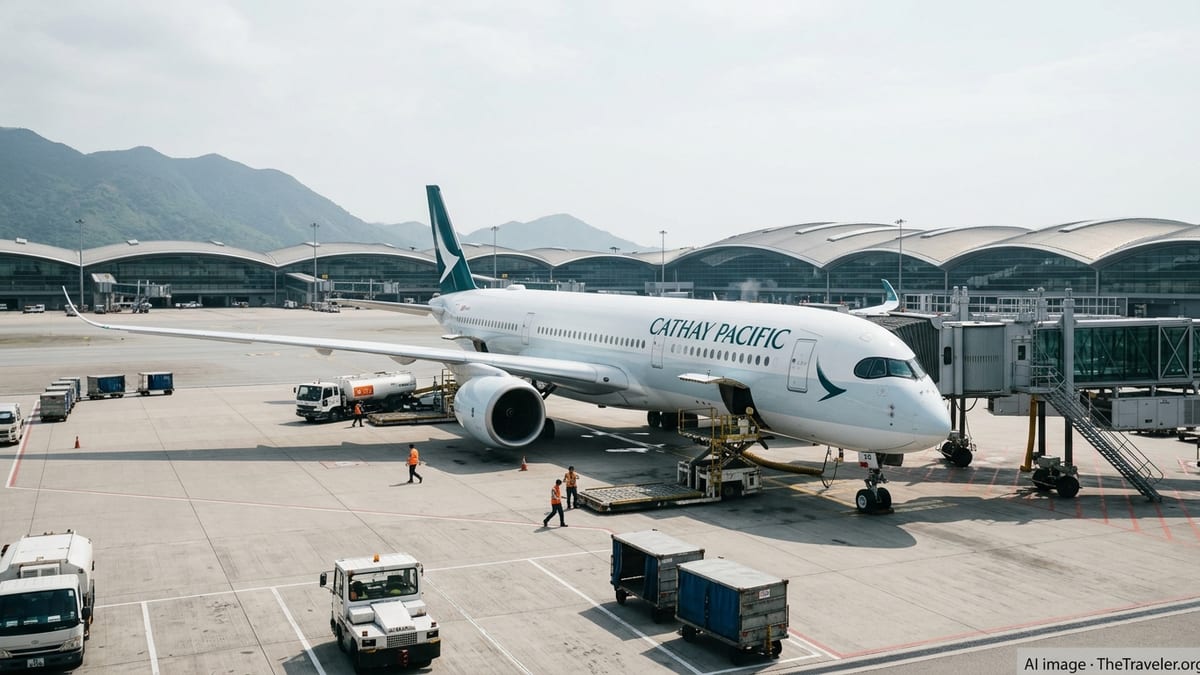
Cathay Pacific is set to restore nonstop service between Hong Kong and Seattle from March 30, 2026, using Airbus A350-900 aircraft in a move that underscores the rapid rebound of transpacific travel and trade.
Get the latest news straight to your inbox!
Nonstop Hong Kong–Seattle Link Returns in 2026
Publicly available schedule information indicates that Cathay Pacific will resume nonstop flights between Hong Kong International Airport and Seattle-Tacoma International Airport from March 30, 2026. The airline had suspended the route at the onset of the pandemic, leaving Seattle without a direct connection to its Hong Kong hub for several years.
The restored service is expected to operate five times weekly, positioning Seattle once again as a key gateway for passengers traveling between Asia and the Pacific Northwest. Industry summaries of the carrier’s upcoming network show that the flights are scheduled for an initial period into late May 2026, with a second operating window from September through late October.
The return of the Hong Kong–Seattle route aligns with Cathay Pacific’s broader strategy of rebuilding long-haul connectivity from its home hub. The airline has steadily brought back routes across North America and Europe, using a leaner but more efficient widebody fleet to match the evolving pattern of post‑pandemic demand.
For Seattle, the renewed link adds a direct connection to one of Asia’s most important aviation hubs, providing onward access to a wide range of destinations throughout mainland China, Southeast Asia and the wider Asia-Pacific region via Cathay Pacific and its regional partners.
A350-900 Deployment Reflects Fleet and Product Shift
The Hong Kong–Seattle flights are slated to be served by Airbus A350-900 aircraft, reflecting Cathay Pacific’s growing reliance on the twin-engine type for long-haul routes. Public fleet data and recent schedule changes show that the carrier has been progressively shifting North American services to the A350 family as it phases its network away from older widebodies.
The A350-900s deployed on the route will offer a three-cabin configuration with Business, Premium Economy and Economy Class. Travelers can expect the carrier’s latest long-haul interiors, including lie-flat seating in Business and a dedicated Premium Economy cabin designed to appeal to both leisure travelers seeking more comfort and corporate passengers whose travel policies increasingly favor premium cabins over traditional business travel volumes.
Beyond the cabin experience, the A350-900’s composite airframe, improved pressurization and higher humidity levels are often highlighted by frequent flyers as features that help reduce fatigue on long sectors across the Pacific. The aircraft’s lower fuel burn and quieter engines also contribute to reduced operating costs and a smaller noise footprint for airports at both ends of the route.
For Cathay Pacific, concentrating transpacific flying on the A350 family simplifies operations and maintenance while providing flexibility to adjust capacity via a mix of A350-900 and larger A350-1000 variants on different North American routes.
Strengthening Cathay Pacific’s North American Network
The decision to restore Seattle comes as Cathay Pacific rebuilds and reshapes its North American footprint. In recent seasons, the airline has either resumed or expanded services to major gateways including Los Angeles, San Francisco, New York, Toronto and Vancouver, while also launching new nonstop flights to Dallas-Fort Worth operated by the larger A350-1000.
Published corporate materials outlining the group’s 2025 and 2026 plans emphasize a strategy of leveraging Hong Kong’s hub role to reconnect key corporate and cargo markets. By adding back Seattle, the carrier is once again tapping into the Pacific Northwest’s mix of technology, aerospace, logistics and export-oriented industries, all of which have long-standing links with manufacturing and supply chains in Greater China and Southeast Asia.
Travel industry briefings describe the resumed Hong Kong–Seattle route as an important contributor to Cathay Pacific’s North American portfolio, feeding passengers from the U.S. West Coast into its extensive Asian network. With five weekly flights, the airline gains schedule presence in a market that also sees transpacific services from other Asian and U.S. carriers, sharpening competition for both business and premium leisure demand.
The move also supports Seattle-Tacoma International Airport’s efforts to deepen its long-haul connectivity. The airport has been positioning itself as a growing transpacific gateway, benefiting from a strong local economy and its role as a hub for domestic connections across the western United States.
Cargo and Trade Help Power Transpacific Growth
Beyond passenger traffic, industry observers see air cargo as a central driver of the Hong Kong–Seattle relaunch. Cathay Pacific has historically been one of the world’s largest cargo operators, and Hong Kong remains a leading global airfreight hub, handling high-value goods ranging from electronics and e-commerce shipments to pharmaceuticals and perishables.
The bellyhold capacity of the A350-900 is expected to play a notable role on the Seattle route, providing exporters and importers with additional space for time-sensitive freight. The Pacific Northwest’s strong technology, seafood, agriculture and aerospace sectors generate steady cargo flows, while Hong Kong’s connectivity facilitates onward distribution across Asia and beyond.
Market analysis published in aviation and logistics coverage indicates that freight revenues remain a key component of the business case for many long-haul routes, particularly as passenger traffic continues to normalize after the pandemic. Deploying a fuel-efficient, cargo-capable aircraft like the A350-900 allows Cathay Pacific to balance passenger demand with freight opportunities in both directions.
This cargo dimension also supports the broader transpacific recovery story, tying air services to supply chain resilience as manufacturers and retailers seek diversified routes between Asia and North America.
Sign of Confidence in Hong Kong’s Hub Recovery
The restoration of Hong Kong–Seattle service is being viewed within the industry as another sign of confidence in Hong Kong’s recovery as a global aviation hub. Traffic through Hong Kong International Airport has grown steadily as border measures eased and carriers rebuilt networks, with Cathay Pacific at the center of that rebound.
Recent corporate results and network announcements show that the airline is progressively returning capacity while focusing on routes that can support sustainable yields. The combination of a modern, efficient widebody like the A350-900 and a market with both corporate and leisure demand such as Seattle fits that strategy.
For travelers, the revived route means greater choice and more one-stop options between the Pacific Northwest and Asia. For Hong Kong, it underscores the city’s continued role as a bridge between East and West, with transpacific routes like Hong Kong–Seattle forming a critical part of that connectivity story.
As the March 30, 2026 launch date approaches, booking patterns and subsequent schedule adjustments will indicate how quickly demand returns on the corridor. For now, the decision to bring back the route with the A350-900 signals that Cathay Pacific sees renewed momentum across the Pacific and is positioning itself to capture a growing share of that traffic.