

More news on this day
Hong Kong flag carrier Cathay Pacific is reaffirming its commitment to the Boeing 777X program, maintaining a significantly expanded order book for the new long-haul jet family even as fresh certification delays push the aircraft’s entry into service to at least 2027.
Get the latest news straight to your inbox!
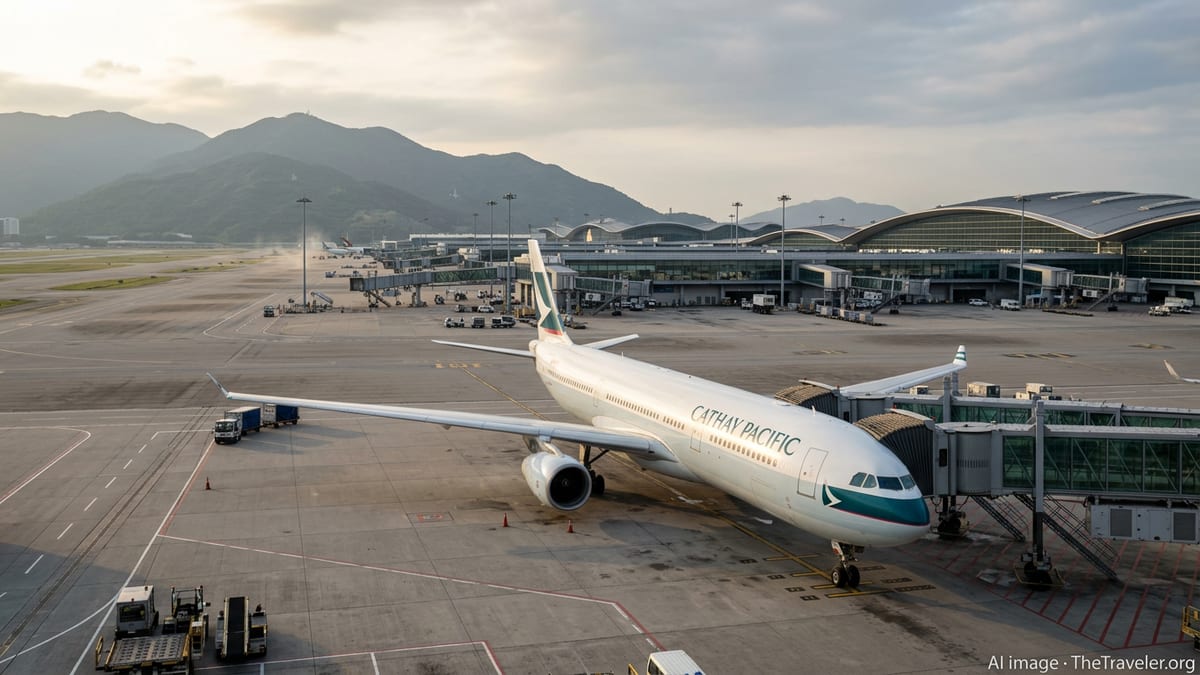
Cathay’s Reaffirmed 777X Timeline Shifts to 2027
Recent disclosures in Cathay Pacific’s 2025 annual and interim reporting indicate that the airline now expects its first Boeing 777-9 deliveries in 2027, a further shift from earlier guidance that had targeted the mid-2020s. Publicly available information from industry coverage shows that Cathay currently lists nine 777-9s as scheduled for delivery in 2027, with the remaining aircraft to follow from 2028 onward.
The revised schedule reflects broader delays affecting Boeing’s flagship 777X program. Updated guidance from the manufacturer indicates that the first customer deliveries for the type have slipped to 2027, following an extended certification process and a more cautious regulatory environment for new aircraft programs. This has required airlines such as Cathay to re-sequence fleet and cabin upgrade plans that were initially aligned with a much earlier service entry.
Despite the latest deferral, Cathay’s published fleet plans continue to position the 777-9 as the backbone of its future long-haul network. The aircraft is expected to replace the airline’s current Boeing 777-300ERs on trunk routes from Hong Kong to North America, Europe, and key Asia-Pacific markets, supporting both capacity growth and a step change in onboard product.
According to aviation industry reporting, Cathay is using the extended lead time to complete a comprehensive refurbishment of selected 777-300ERs and to further roll out its new-generation “Aria” business class and refreshed premium cabins, creating a staged transition until the 777-9s arrive.
Expanded Order Underscores Long-Term Bet on 777-9
Far from scaling back, Cathay Pacific has deepened its commitment to the 777X program over the past year. In August 2025, the airline exercised options for 14 additional Boeing 777-9s, raising its total firm order to 35 aircraft. Statements contained in group results and shareholder updates describe the deal as a central element of Cathay’s long-haul fleet renewal strategy through the next decade.
Industry analysis notes that the 35-strong 777-9 order broadly mirrors the size of Cathay’s existing 777-300ER fleet, signaling an intention to maintain similar capacity at the top end of its network while substantially improving fuel efficiency. The 777-9’s updated composite wing, new-generation engines and larger cabin are seen as aligning with Cathay’s ambition to strengthen its position as a premium hub carrier in Asia.
Reports from aviation data providers indicate that although Cathay previously expressed unease about the uncertainty surrounding the program’s schedule, the airline has ultimately chosen to double down on the type rather than diversify into alternative large widebody models. Publicly available commentary suggests this reflects confidence in the eventual performance of the 777-9 and a desire to preserve commonality with its existing Boeing widebody fleet.
At the same time, Cathay is pursuing a dual-source strategy at lower capacity tiers, with Airbus A350-900s and A350-1000s complementing the future 777-9 fleet. Analysts note that this mix gives the airline flexibility to match aircraft size and range to demand across a broad network, while still relying on the 777-9 for its densest and longest routes.
Certification Delays Reshape Global 777X Rollout
Boeing’s 777X program has encountered multiple schedule revisions, with delivery estimates pushed back several times since its initial target of 2020. Recent financial filings and industry reports indicate that the manufacturer now expects first deliveries in 2027, reflecting additional time required for flight testing and certification work.
The drawn-out timeline has affected a number of major customers, including Emirates, Lufthansa, Qatar Airways and Singapore Airlines, all of which had planned network and product strategies around earlier entry-into-service dates. Market commentary suggests that Cathay Pacific is among the carriers most exposed, having long intended to anchor a post-pandemic rebuild of its premium long-haul offering around the 777-9.
Observers note that the current certification environment is more demanding than in previous decades, following high-profile safety and regulatory reviews across the industry. This has contributed to more conservative scheduling for complex new aircraft programs and has limited Boeing’s ability to accelerate the 777X timeline, even as it seeks to stabilize production and shore up airline confidence.
Airline planners and industry analysts quoted in published coverage argue that, while the delays are operationally challenging, the extended gestation period may ultimately yield a more mature product at entry into service. For Cathay, that prospect appears to justify a continued wait, particularly given the scale of investment tied to its 777-9 order.
Network and Cabin Strategy Built Around the New Flagship
Publicly available network and fleet plans show that Cathay intends the 777-9 to serve as its future flagship, with a new first class and updated premium cabins designed to reinforce Hong Kong’s role as a global connecting hub. Specialist aviation outlets have reported that the carrier is “looking forward” to introducing the aircraft, highlighting expectations that the jet will debut an all-new first class suite concept.
Industry reports indicate that Cathay aims to align the 777-9’s arrival with a broader upgrade cycle for lounges, digital services and connectivity, creating a consistent premium experience from ground to air. The airline is also expected to leverage the 777-9’s range and payload to restore and expand ultra-long-haul routes, including services to the eastern United States and Europe that were curtailed or restructured during the pandemic years.
In the interim, Cathay is using its modern A350 fleet and refurbished 777-300ERs to rebuild frequencies and gradually reinstate capacity. Analysts describe this as a bridge strategy that keeps the network competitive while preserving flexibility to deploy the 777-9 on the highest-yield routes once deliveries commence.
Travel industry observers suggest that the introduction of the 777-9 could trigger another round of product competition on key long-haul corridors, particularly where Cathay faces rivals operating Airbus A350-1000s and refreshed Boeing 787 fleets. The airline’s decision to commit so firmly to the 777-9 indicates that it expects the new aircraft to deliver a clear step up in comfort, economics, or both.
Implications for Travelers and Hong Kong as a Hub
For passengers, the extended wait for Cathay’s 777-9s means that the airline’s existing 777-300ERs and A350s will remain the mainstay on many flagship routes for several more years. However, ongoing retrofit programs and incremental product enhancements are expected to narrow the gap between current offerings and what will eventually appear on the new jets.
Industry commentary suggests that, once introduced, the 777-9 is likely to concentrate on the most premium-heavy markets where Cathay can best monetize its new first and business class suites. Frequent flyers can therefore expect the aircraft to appear first on routes linking Hong Kong with major financial and political centers such as New York, London and key cities in North Asia.
From a hub perspective, Cathay’s reinforced order signals long-term confidence in Hong Kong’s role as a major connecting point between mainland China, Asia-Pacific and the rest of the world. Aviation analysts note that committing to 35 of the world’s largest twin-engined passenger jets is a strong statement of intent about future demand for high-capacity, long-range travel through the city.
While certification delays continue to test airlines’ patience, Cathay Pacific’s stance on the 777X indicates that the Hong Kong carrier is prepared to wait for what it views as a critical pillar of its next-generation fleet. For travelers and the region’s aviation landscape, the eventual arrival of the 777-9s promises to mark a new chapter in long-haul travel from one of Asia’s most prominent gateways.