

More news on this day
The Cathay Group has kicked off 2026 with a historic jump in passenger traffic, carrying more than 3.3 million travelers in January and setting fresh benchmarks for Hong Kong’s role as a global aviation hub connecting Asia, the Middle East and the rest of the world.
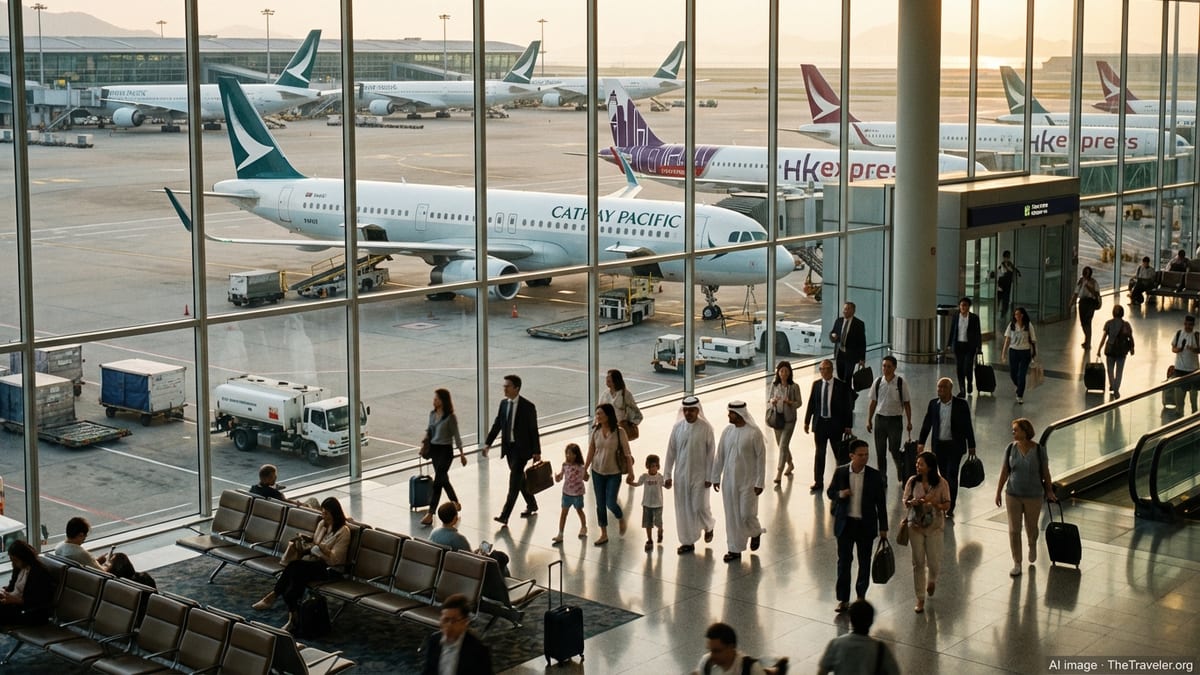
Record-Breaking January Caps Year-End Surge
The latest traffic figures, released this week by the Cathay Group, show that Cathay Pacific and low cost carrier HK Express together transported over 3.3 million passengers in January 2026, up 11 percent compared with the same month a year earlier. The performance confirms that the surge in demand seen over the 2025 year end holiday season has carried straight into the new year.
Cathay Pacific alone carried about 2.62 million passengers in January, an 11.5 percent year on year increase, supported by a 14 percent rise in capacity. HK Express added more than 710,000 passengers, reflecting the continued expansion of its regional network across Asia. Load factors remained above 80 percent for both carriers, indicating that most additional seats put into the market are being filled.
The strong January follows record breaking days at the turn of the year, when Cathay Pacific and HK Express together flew more than 126,000 passengers on 3 January 2026, the highest single day total in the group’s history. That milestone came just days after an earlier record of more than 125,000 passengers on 27 December 2025, highlighting the sustained momentum in leisure and family travel around the festive period.
In 2025, the group carried over 36 million passengers, a 27 percent increase on the previous year. Analysts say the January numbers show that this recovery is shifting from a post pandemic rebound to a more durable growth phase as Hong Kong consolidates its status as a preferred transfer point between North America, Europe, the Middle East and Asia.
Hong Kong’s Hub Rebound Boosts Global and Middle East Connectivity
Cathay’s latest results underscore how the full commissioning of the three runway system at Hong Kong International Airport has transformed the city’s capacity to act as a long haul connecting hub. Additional slots and more efficient runway operations have allowed Cathay Pacific to add frequencies and reopen destinations that are key to linking Hong Kong with North America, Europe and the Middle East.
For travelers from the United Arab Emirates and Saudi Arabia, that has meant more options and better connectivity to Northeast Asia, mainland China and beyond. Cathay has been rebuilding capacity into major Gulf gateways while also deepening partnerships with regional carriers, giving business and leisure passengers in Dubai, Abu Dhabi, Riyadh and Jeddah smoother one stop connections via Hong Kong to cities across Japan, South Korea and Southeast Asia.
Transit flows have grown in tandem. The airline group reported a significant increase in transfer traffic through Hong Kong in January, as corporate travelers resumed multi stop itineraries that were largely absent during the pandemic. The rebound in premium cabin demand, particularly on trunk routes from the Middle East and Europe into Hong Kong and onward to mainland China, has been singled out by Cathay executives as a key driver of revenue growth.
Tourism authorities in Hong Kong view the figures as evidence that targeted campaigns to revive inbound travel from the Gulf and broader Middle East are bearing fruit. Incentives for stopover stays, simplified visa procedures for some nationalities and expanded promotion of Hong Kong as a shopping and culinary destination have been timed to coincide with the airline’s capacity ramp up.
Business Travel and Premium Cabins Lead the Next Phase of Recovery
While the early January surge was supported by students and holidaymakers returning home, Cathay’s data shows that business travel picked up sharply as the month progressed. Company executives reported a noticeable improvement in premium cabin load factors compared with January 2025, suggesting that corporate travel budgets are loosening after several cautious years.
Key business routes connecting Hong Kong with financial and energy centers in the Gulf, Europe and North America have seen some of the strongest recoveries. From hubs in the UAE and Saudi Arabia, passengers are increasingly using Hong Kong as a one stop link into the Greater Bay Area, where cross border commercial activity has rebounded in sectors ranging from finance and technology to logistics and professional services.
Travel managers say the ability to combine long haul and regional sectors on a single carrier group, with aligned schedules and through checked baggage, has been essential in rebuilding confidence in multi leg corporate trips. Cathay’s investment in upgraded airport lounges, refreshed cabin interiors and enhanced digital services has also helped differentiate its offer at the premium end of the market.
The airline group is entering its 80th anniversary year emphasizing service quality as a competitive lever. Industry analysts note that as capacity across Asia normalizes, carriers able to attract high yield business and connecting traffic will be best placed to sustain profitability even if leisure demand softens later in the year.
Cargo Strength Complements Passenger Growth
Cathay Cargo also reported a solid start to 2026. The group carried more than 130,000 tonnes of freight in January, about 5 percent higher than a year earlier, even as the traditional post holiday lull weighed on global volumes. Available freight tonne kilometres rose by 3 percent, suggesting the carrier is deploying capacity cautiously to maintain yields.
Perishable goods and pharmaceuticals continue to underpin the cargo business. Shipments of cherries and seafood from Oceania into Hong Kong and on to major Asian cities helped drive demand for Cathay’s temperature controlled fresh product, while increased pharmaceutical movements from Europe and Central America supported its dedicated pharma service.
The cargo network’s breadth remains a strategic advantage for Hong Kong’s position as a logistics gateway linking mainland China with markets in the Middle East and beyond. High value freight such as electronics, machinery and healthcare products moves through the city on tight schedules, supported by the same expanded runway and terminal capacity that is facilitating growth in passenger traffic.
Executives expect cargo demand to strengthen through the remainder of the first quarter as factories resume full production after the Lunar New Year period. Should global trade conditions continue to improve, Cathay’s dual focus on passenger and freight growth is likely to provide a diversified earnings base across its key markets.
Route Expansion Sets the Stage for Further 2026 Growth
With passenger numbers recovering to and in some cases surpassing pre pandemic levels, Cathay Pacific is leaning into a strategy of selective route expansion and frequency increases. The carrier has been adding flights on high demand regional links within Asia while ramping up long haul services to North America, Europe and the Middle East that feed Hong Kong’s transfer hub.
Industry observers expect additional capacity into Gulf markets as Cathay targets both point to point traffic and connecting flows between the UAE, Saudi Arabia and destinations in Northeast and Southeast Asia. That strategy aligns with broader tourism ambitions in the Middle East, where cities such as Dubai and Riyadh are positioning themselves as global visitor magnets and are seeking deeper aviation ties with major Asian hubs.
Fleet planning will be central to sustaining the group’s growth trajectory. The gradual introduction of more fuel efficient widebody aircraft is intended to support longer routes while managing operating costs and emissions. At the same time, HK Express is using its narrowbody fleet to push deeper into secondary leisure markets in Japan, South Korea and Southeast Asia, feeding additional passengers into Cathay Pacific’s long haul services.
As 2026 unfolds, the group’s milestone of more than 3.3 million passengers in January stands as an early indicator of how far Hong Kong’s aviation sector has come in its rebuilding journey and how critical Cathay’s network has become for travelers moving between Asia, the Gulf and the wider world.