

More news on this day
Cathay Pacific is sharpening its focus on the invisible but critical payments layer behind every ticket, loyalty redemption and onboard purchase, refining a global payment ecosystem designed to lift authorisation rates, broaden customer choice and make every step of the travel journey feel more seamless.
Get the latest news straight to your inbox!
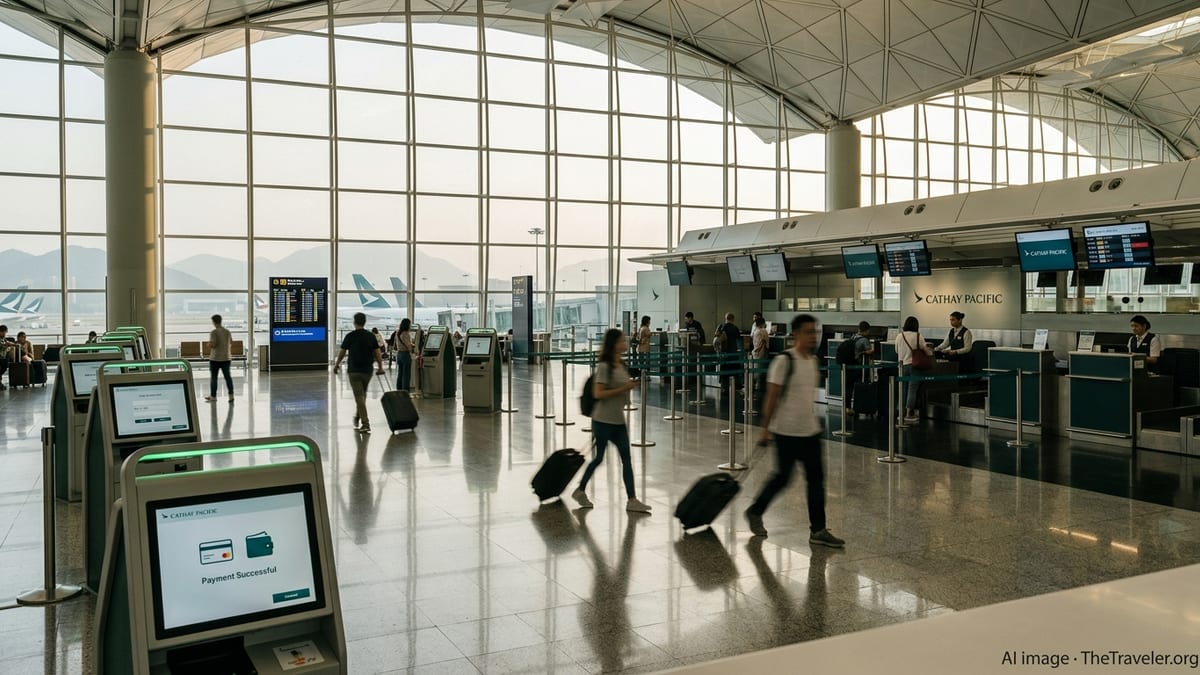
Building a Smarter Global Payment Infrastructure
Cathay Pacific has been progressively overhauling how payments are processed across its network, aligning with a wider trend in aviation where carriers invest heavily in payment orchestration and smart routing to reduce costly declines. Industry analyses of airline payments highlight that fragmented gateways, inconsistent fraud settings and rigid routing rules can depress authorisation rates and create friction at checkout. By contrast, modern orchestration platforms dynamically route transactions through the best-performing acquirers and methods in real time, increasing the chance that a booking is approved on the first attempt.
Publicly available investor materials and partner announcements indicate that Cathay Pacific is moving toward a more integrated model that connects card payments, alternative payment methods and loyalty-based transactions into a single ecosystem. This approach helps the airline standardise controls, manage risk centrally and respond faster to shifting regulations and issuer behaviours in key markets such as mainland China, Southeast Asia, Europe and North America. For travellers, the underlying complexity is hidden, but the impact is tangible in fewer failed payments and smoother online bookings.
The shift also reflects the growing financial stakes of payment performance in aviation. Industry research on ecommerce shows that even modest improvements in authorisation rates can translate into significant revenue gains when applied to large volumes of high-value transactions such as long-haul tickets and premium cabin fares. For a carrier of Cathay Pacific’s scale, incremental optimisation of the payment layer has become as strategically important as route planning or revenue management.
Linking Loyalty, Cards and Everyday Spending
A central pillar of Cathay Pacific’s payment strategy is the deep integration between its loyalty programme and the payment ecosystem. Company filings describe how co-brand credit cards and points conversion partnerships in multiple markets have become important revenue drivers, bringing together banks, card networks and the airline’s own digital channels. This network allows members to earn and redeem miles more flexibly, while also increasing the share of transactions that flow through known, high-performing payment instruments.
Recent developments in card-linked earning further tighten the link between everyday spending and travel. Partner communications show that Cathay Pacific has introduced card-linked technology that lets members earn miles automatically when they shop with selected brands, without needing to present a separate loyalty card or enter membership numbers. By mid-2025, the airline’s interim reporting pointed to dozens of participating retail and service partners in this ecosystem, suggesting a material expansion of payment-linked engagement beyond the traditional booking funnel.
This convergence of payments and loyalty supports stronger authorisation performance in several ways. When customers use co-brand or partner cards that issuers recognise as low risk and high value, approval rates tend to be higher. At the same time, richer transaction data and established relationships help the airline calibrate fraud controls more precisely, reducing unnecessary declines without compromising security. For travellers, the result is a more predictable experience in which earning miles, paying for flights and using points all feel like parts of a single, connected journey.
Expanding Choice with Instalments and Local Payment Options
Alongside core card payments, Cathay Pacific is broadening the types of payment options available to customers in key outbound markets. Announcements from payment providers indicate that the carrier has adopted buy-now-pay-later style instalment solutions in countries such as Australia, allowing customers to spread the cost of flights over weekly or monthly payments. These options are positioned to reduce the immediate financial burden of long-haul travel, which can be a decisive factor for families, students and small-business travellers planning trips across continents.
Instalment products do more than provide flexibility; they also shift some credit risk and underwriting to specialised providers that focus on assessing consumer affordability and fraud at the point of sale. This can support higher approval rates for transactions that might otherwise be declined on traditional credit lines, particularly in markets where younger or thin-file customers are significant segments. For the airline, integrating these services into a unified payment stack means it can offer tailored options by route and market while still maintaining consistent reporting and reconciliation.
Local payment methods and currency handling are also part of the optimisation effort. Industry reports on global ecommerce emphasise that travellers increasingly expect to pay with regionally familiar methods, whether that is a local wallet, domestic card scheme or alternative bank transfer service. By connecting to a broader set of payment partners and refining how currencies are presented and processed, Cathay Pacific aims to reduce cart abandonment triggered by unfamiliar options or unfavourable currency conversions, and to support a more trusted checkout experience for international customers.
Data, Authorisation Rates and Fraud Controls
Behind the customer-facing improvements lies a growing emphasis on payment data and analytics. Research into payment orchestration highlights how granular monitoring of issuer responses, soft declines, 3D Secure challenges and retry logic can lift success rates without adding friction. Although Cathay Pacific has not disclosed detailed metrics, its investment posture suggests an increasing use of these techniques, aligning with best practice among large global merchants.
By routing transactions based on live performance data across acquirers and regions, airlines can avoid bottlenecks at underperforming gateways and adapt quickly to shifts in issuer behaviour. For example, some markets may favour transactions authenticated via specific risk-based protocols, while others respond better to particular acquirers or message formats. A more intelligent routing layer allows Cathay Pacific to implement these nuances automatically, improving the probability that legitimate bookings are accepted on the first pass.
Security and compliance remain integral to this optimisation. The airline’s payment partners in loyalty and card-linked services emphasise certifications such as PCI DSS and SOC 2, underlining a focus on safeguarding customer data while enabling more sophisticated uses of transaction information. For passengers, a smoother payment experience does not come at the expense of privacy or security; instead, it is built on infrastructure designed to meet tightening regulatory standards in regions from Europe to Asia Pacific.
From Seamless Payments to a Better Travel Experience
As airlines rebuild and reshape their networks after the pandemic years, the role of payments in the overall travel experience has become more visible. Published coverage on Hong Kong’s aviation sector notes that Cathay Pacific’s broader recovery has been supported not only by capacity restoration and network expansion but also by improvements in digital touchpoints. Payments sit at the heart of this digital layer, influencing everything from pre-trip bookings to ancillary purchases and loyalty redemptions long after a flight lands.
A well-orchestrated payment ecosystem can help reduce customer frustration at critical moments such as flash sales, last-seat availability or tight booking windows ahead of major holidays. When authorisation rates are high and alternative options are clearly presented, travellers are less likely to experience last-minute failures that force them to restart searches or switch to competitors. This reliability can reinforce trust in the airline brand, particularly for premium and frequent flyers who book repeatedly across multiple channels.
The same infrastructure supports innovation at the edges of the journey. With more robust payment and loyalty plumbing, Cathay Pacific is better positioned to experiment with new offers, bundled products and dynamic pricing structures that depend on real-time payment capabilities. As global travellers demand greater flexibility, transparency and control over how they pay, the airline’s ongoing optimisation of its payment ecosystem is emerging as a quiet but important foundation for delivering a consistently superior travel experience.