

More news on this day
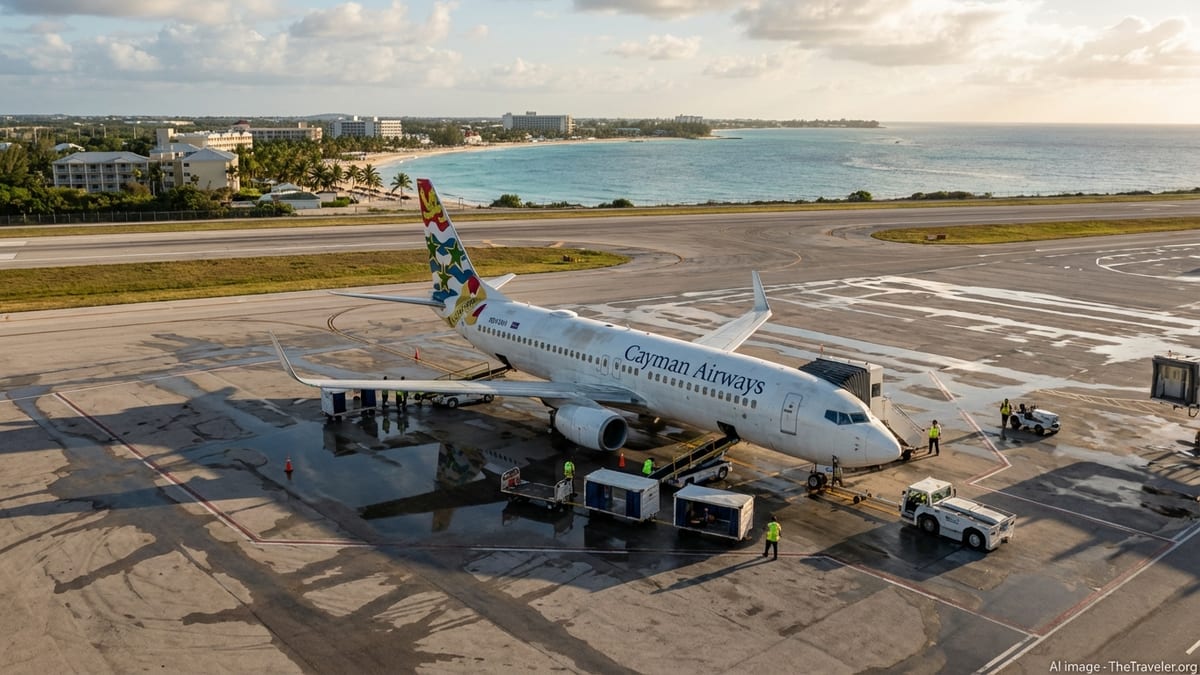
Cayman Airways will add extra Easter flights between Grand Cayman and Panama City in April 2026, reinforcing a growing air bridge that reflects surging regional mobility and strong advance bookings across Latin America and the Caribbean.
Expanded Easter Schedule Strengthens Regional Air Bridge
The Cayman Islands flag carrier has announced additional services between Owen Roberts International Airport in Grand Cayman and Tocumen International Airport in Panama City for the peak Easter travel period in 2026. The extra round-trip flights, scheduled for Thursday 2 April and Tuesday 7 April, are designed to absorb heightened holiday demand and provide more flexibility for both leisure and visiting-friends-and-relatives travel.
On 2 April, flight KX2852 is set to depart Grand Cayman at 1:00 p.m., arriving in Panama at 3:00 p.m., with the return service KX2853 leaving Panama at 4:30 p.m. and landing back in Grand Cayman at 6:30 p.m. The second additional rotation on 7 April brings an earlier daytime option, with KX2852 leaving Grand Cayman at 10:10 a.m. and KX2853 departing Panama at 1:40 p.m.
These operations supplement Cayman Airways’ regular year-round Panama service, which was relaunched in 2023 and has steadily grown in importance as a regional connector. By layering holiday flights onto the existing schedule, the airline is signaling both confidence in the route and a commitment to sustaining a long-term travel bridge between the Caribbean financial hub and Central America’s principal aviation crossroads.
The decision to expand capacity specifically around Easter also underscores how religious and school holidays continue to structure demand patterns in the region. For many travelers, the extended break provides one of the few opportunities to undertake longer journeys, encouraging bookings well in advance and justifying targeted boosts in airlift.
Strong Advance Bookings Reflect Rising Mobility
Airline and tourism officials report that advance bookings on the Panama route have been robust, mirroring broader trends of rising mobility across Latin America and the Caribbean. In the months leading up to Easter 2026, load factors on existing services between Grand Cayman and Panama have consistently tracked at high levels, driven by a mix of outbound Cayman residents, inbound leisure travelers and passengers connecting onward through Panama’s extensive hub network.
Industry analysts note that pent-up demand following the pandemic-era disruptions has given way to a more stable but still elevated appetite for regional travel. Travelers are showing a greater willingness to book early for peak periods, especially when holiday dates are fixed and school calendars are clearly defined. This behavior is particularly evident around Easter and Christmas, where capacity often fills weeks or even months before departure.
For Cayman Airways, strong forward bookings have given management the confidence to commit aircraft and crews to the extra Panama rotations. The airline’s use of its Boeing 737-8 fleet on the route allows it to maximize seat capacity while maintaining fuel efficiency and competitive operating costs. These jets also support consistent onboard service standards that are increasingly important as Cayman positions itself as a premium yet accessible Caribbean destination.
Higher booking curves also provide an important planning signal to hotels, tour operators and retailers in both markets. When air seats to key gateways sell briskly, tourism businesses can adjust staffing, inventory and promotional activity to capture incremental spend from visitors who are likely to stay longer and move beyond traditional resort zones.
Panama’s Hub Role Extends Cayman’s Reach
Panama City’s Tocumen International Airport serves as one of Latin America’s strongest connecting hubs, and its growing role is central to the Cayman–Panama travel bridge. With an extensive network of services throughout South America, Mexico and the Caribbean, Panama offers Cayman Airways passengers one-stop access to a wide range of emerging and established source markets that might otherwise remain out of reach.
Through carefully timed schedules, travelers from cities such as São Paulo, Buenos Aires, Mexico City and Bogotá can connect via Panama to Grand Cayman with competitive total journey times. At the same time, residents of the Cayman Islands gain enhanced access to shopping, medical services and business opportunities in Central and South America, reinforcing two-way flows rather than purely inbound leisure traffic.
Panama’s own flag carrier has invested heavily in positioning Tocumen as the “Hub of the Americas,” expanding frequencies and destinations across the hemisphere. Cayman Airways’ decision to lean into this connectivity by adding Easter flights indicates a strategic alignment with that hub strategy. For the Cayman Islands, tapping into Panama’s network is a cost-effective way to diversify beyond its traditional reliance on North American visitors.
The interplay between a smaller island carrier and a major regional hub also illustrates how cooperative scheduling and sensible bilateral agreements can unlock new demand. As more Latin American travelers become familiar with the Cayman brand and perceive the islands as both aspirational and reachable, the Panama bridge is likely to deepen.
Tourism Strategy: Diversifying Beyond North America
The expanded Easter operations come as the Cayman Islands continues to refine a tourism strategy that seeks greater diversification in visitor markets. The United States still accounts for the overwhelming majority of arrivals, but tourism planners have emphasized that deeper engagement with Latin America is essential for long-term resilience, particularly in the face of economic cycles and currency shifts in North America.
Direct air access is a prerequisite for meaningful market development. By investing in routes such as Grand Cayman–Panama, the Cayman Islands Department of Tourism is laying the groundwork for greater brand visibility in Spanish- and Portuguese-speaking markets. Trade campaigns in Panama and other Latin American cities have highlighted Cayman’s beaches, diving, financial services expertise and safety record, all reinforced by the convenience of a single connection through Tocumen.
Promotional initiatives have already included limited-time fare sales from Panama City and targeted outreach to travel agents and tour wholesalers. These efforts have sought to position Cayman as a sophisticated but welcoming alternative to more crowded Caribbean and Mexican beach destinations, with an emphasis on higher-spend travelers and extended stays.
Officials argue that a more geographically diverse visitor base will help cushion Cayman’s tourism sector from shocks such as airline consolidations, policy changes or economic downturns in any one source market. Strengthening the Panama bridge during a high-visibility period like Easter therefore carries both immediate revenue benefits and longer-term strategic value.
Infrastructure Upgrades Underpin Airlift Growth
The decision to boost Easter services between Cayman and Panama is also underpinned by ongoing infrastructure improvements in the Cayman Islands. Plans for a runway extension at Owen Roberts International Airport, targeted for completion by 2027, are central to a broader aviation development strategy that envisions more long-haul and high-capacity operations.
While the current Panama flights operate comfortably within existing runway limits, the upgrade will provide added performance margins and flexibility for airlines, particularly in challenging weather or with heavier payloads. More importantly, the extension is intended to support the introduction of additional long-range services that could interconnect with Panama’s hub, further enhancing the islands’ accessibility.
Airport investments are complemented by a pipeline of new and refurbished hotels, villas and mixed-use developments across Grand Cayman and the Sister Islands. Together, these projects are aimed at ensuring that increased airlift does not outpace on-the-ground capacity. For carriers such as Cayman Airways, confidence in the destination’s infrastructure and service standards is a key factor in justifying seasonal capacity additions such as the Easter Panama flights.
On the Panamanian side, ongoing enhancements at Tocumen, including expanded gates and upgraded passenger facilities, support the smooth handling of growing transfer traffic. As more Caribbean destinations plug into the hub, efficient processing times and reliable ground operations become crucial differentiators in travelers’ choice of itineraries.
Regional Mobility Trends Shape Holiday Travel
The reinforcement of the Cayman–Panama air bridge fits neatly into wider patterns of regional mobility reshaping travel in the Americas. Short- and medium-haul flights connecting secondary hubs and island destinations are becoming more prominent as passengers seek to avoid congested mega-hubs and time-consuming itineraries through North America or Europe.
Easter remains one of the most important travel peaks in predominantly Christian countries across Latin America and the Caribbean, combining religious observance with family reunions and leisure escapes. Airlines serving the region are increasingly fine-tuning their schedules to match these seasonal flows, adding frequencies where advance bookings indicate clear demand and assuming more conservative positions on weaker routes.
In this environment, the Cayman–Panama corridor stands out as a relatively short sector that unlocks broad network access on either end. For regional travelers, the ability to reach the Cayman Islands in a single connection via Panama often compares favorably with alternatives that require multiple stops through Miami or other U.S. gateways, particularly when factoring in visa requirements and transit complexities.
Travel consultants report growing interest from Latin American families seeking safe, high-quality beach destinations with strong air links and modern healthcare and banking services. The Cayman Islands, connected via Panama, increasingly ticks these boxes, encouraging airlines to protect and grow capacity even amid competitive pressures.
Opportunities for Trade, Finance and Diaspora Links
Although the extra Easter flights are tailored to a leisure-heavy period, stakeholders emphasize that the evolving Cayman–Panama link has significance beyond tourism. Both jurisdictions are regional financial and logistics centers, and improved air connectivity is expected to bolster business travel tied to banking, insurance, fund management and professional services.
Regular, well-timed flights make it easier for corporate executives, regulators and industry professionals to move between the two jurisdictions for meetings, conferences and training. This mobility supports the flow of expertise and capital across the Caribbean Basin and Central America, complementing longstanding ties with North American and European financial hubs.
There is also a growing recognition of Cayman’s small but expanding Latin American diaspora, including professionals working in law, finance and hospitality. Extra capacity during peak holiday periods such as Easter provides more affordable and convenient options for these residents to visit family in Central and South America, often routing through Panama to reach onward destinations.
For Panama, the strengthened air bridge enhances its role as a connector not only of cargo and commodities via the canal, but also of people, knowledge and services through its aviation network. As both economies continue to position themselves as sophisticated service hubs, reliable air links become a foundational element of their regional value proposition.
Airline Competition and Future Outlook
Cayman Airways’ decision to add Easter flights between Grand Cayman and Panama comes amid an increasingly competitive landscape for regional air travel. Major North American and Latin American carriers have expanded their Caribbean and Central American schedules, launching new city pairs and boosting frequencies on established routes as demand has recovered.
Rather than seeing this as a threat, Cayman officials frame the expanded Panama operations as part of a complementary ecosystem. Larger carriers channel high volumes through primary hubs, while smaller and mid-sized airlines such as Cayman Airways carve out specialist roles connecting niche destinations and offering culturally attuned service.
Looking ahead, aviation and tourism planners will be watching how the additional Easter services perform in terms of load factors, yield and onward connectivity. Strong results could pave the way for further seasonal adjustments or even incremental year-round capacity on the Panama route. Conversely, any softening in demand would likely prompt a recalibration, though industry observers currently see little sign of a slowdown.
For now, the 2026 Easter expansion stands as a clear signal that both the Cayman Islands and Panama are betting on sustained regional mobility and deeper economic linkages. As travelers increasingly crisscross the Americas for holidays, business and family ties, the air bridge between Grand Cayman and Panama City is set to play a growing role in shaping how and where they move.