

More news on this day
The Cayman Islands are entering 2026 with tourism on a firm upward trajectory, as recent figures and forecasts point to record-setting air arrivals and a marked rebound in cruise visitation following several years of pandemic disruption and sector realignment.
Get the latest news straight to your inbox!
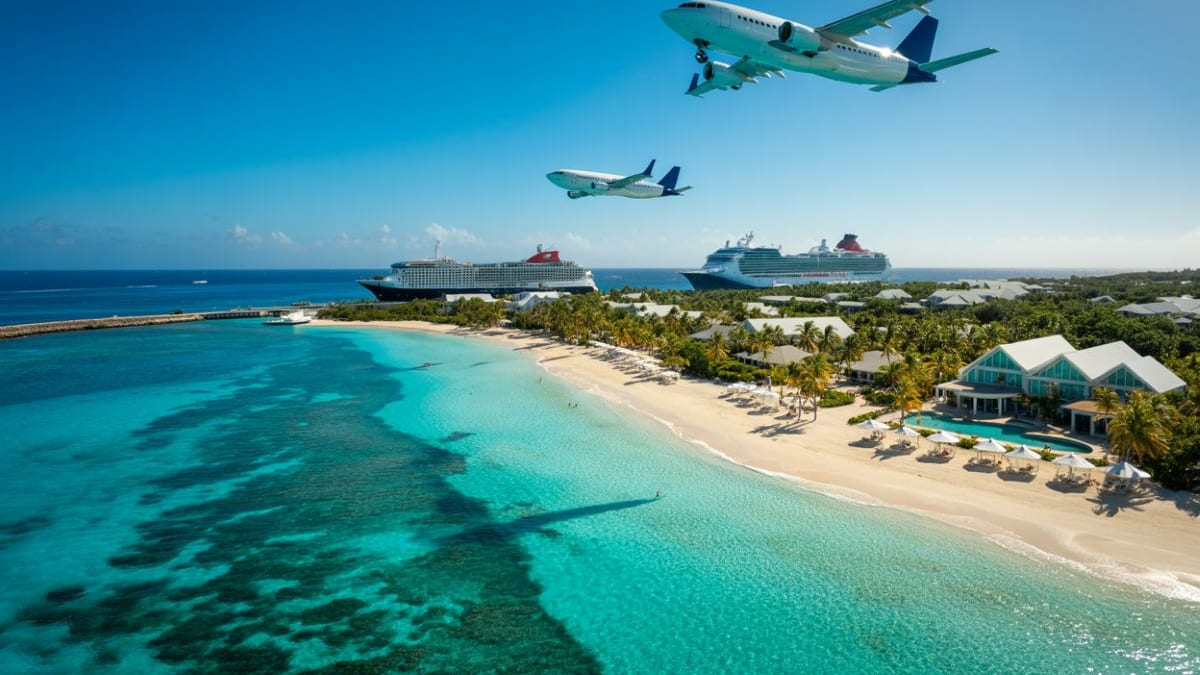
Image by Latest International / Global Travel News, Breaking World Travel News
Record Air Arrivals Build on a Strong 2025 Finish
Publicly available data from the Cayman Islands Department of Tourism shows that air arrivals have climbed sharply over the past three years, rising from just over 284,000 stayover visitors in 2022 to more than 429,000 in 2023 and approaching the half-million mark in 2025. Industry-focused coverage indicates that total air arrivals reached about 450,000 last year, putting the destination within reach of pre-pandemic performance and positioning 2026 for further gains.
According to recent tourism updates, the destination closed 2025 with record December visitation, supported by an expanded winter flight schedule and strong demand from the United States and Canada. Reports highlight that key source markets in North America continued to grow through the final quarter, helped by increased capacity from major carriers and improved connectivity from hubs such as Chicago and Washington.
Early 2026 indicators point to continued momentum. Commentary on the latest arrival figures suggests that January and February stayover numbers are tracking at or near historic highs, keeping the Cayman Islands on pace for a potential record year in air arrivals if current booking trends hold through the peak winter and spring seasons.
Economic reporting by the territory’s statistics office notes that this recovery in stayover tourism is occurring alongside steady growth in accommodation capacity. New and refurbished properties, particularly in the luxury and upper-upscale segments, are helping to absorb increased demand and support higher average visitor spending.
Expanded Airlift and Market Diversification Drive Growth
Travel industry analyses describe a deliberate emphasis on airlift expansion as a key pillar of the Cayman Islands tourism strategy heading into 2026. Schedules for the 2025 to 2026 winter season show added frequencies on existing routes from major U.S. gateways, as well as seasonal enhancements that increase overall seat capacity into Grand Cayman.
Reports indicate that airlines such as United have bolstered service from cities including Chicago O’Hare and Washington Dulles, complementing established routes from Houston and Newark. This broader network is designed to reduce bottlenecks in peak periods and open up new one-stop options from secondary markets across North America.
The tourism portfolio also appears to be diversifying beyond the core U.S. base. Recent economic documents show continued growth from Canada and modest but steady increases from European markets, as well as a small share of visitors from Latin America and other regions. Industry observers note that targeted marketing campaigns, partnerships with tour operators and the appeal of new luxury product are helping to extend the destination’s reach.
These airlift gains are particularly significant for the Cayman Islands, where stayover tourism is often described as more economically impactful than cruise visitation due to longer lengths of stay and higher per-capita spending. The current trajectory suggests that air arrivals will remain the primary engine of tourism growth through 2026.
Cruise Visitation Rebounds After Multi-Year Declines
While stayover tourism has led the recovery, cruise visitation is also showing signs of renewed strength in 2026 after several years of contraction. Previous reporting documented that the Cayman Islands welcomed around 1.27 million cruise passengers in 2023, a notable increase on 2022 but still well below the record levels of 2018 and 2019.
Forecasts compiled by the Port Authority of the Cayman Islands point to a more stable cruise schedule through 2026 and beyond. Projections cited in regional tourism analysis suggest that passenger volumes are expected to rise gradually over the next two years, with forecasts nearing 1.7 million cruise visitors by 2027 based on current bookings and ship deployments.
Local media coverage in late 2025 highlighted that a strong slate of ship calls in November and December was expected to push year-end cruise totals above 2024 levels. More recent reports from early 2026 indicate that, despite weather-related disruptions to some calls in January, cruise passenger numbers rebounded in February, posting one of the strongest performances for that month since before the pandemic.
Industry commentary characterizes this phase as a measured cruise revival rather than a return to the high-density model of previous years. With the global cruise sector shifting toward larger vessels that cannot easily tender at all ports, the Cayman Islands appear to be focusing on securing a sustainable share of regional itineraries while concentrating on the higher-yield stayover segment.
Economic Impact and Capacity Pressures on the Ground
The acceleration in both air and cruise tourism is feeding back into the broader Cayman Islands economy, where services account for a dominant share of gross domestic product. Economic reports referencing tourism contributions describe the sector, alongside financial services, as a central pillar of employment and government revenue.
At the same time, recent local reporting has drawn attention to capacity constraints linked to the tourism rebound. Coverage of labor market conditions in early 2026 notes that many tourism and hospitality businesses are operating below optimal staffing levels, in some cases between 10 and 25 percent under their desired workforce. Surveys cited in this coverage suggest that recruitment challenges and work permit processing backlogs are affecting the pace at which operators can scale up to meet visitor demand.
Government-focused reporting indicates that additional resources have been deployed to address work permit delays and clear application backlogs, with an emphasis on key sectors such as tourism. Parallel commentary on labor trends highlights changing patterns in the expatriate workforce, with new source countries emerging to fill roles across hotels, restaurants and tour operations.
These capacity issues are emerging just as air arrivals and cruise visitation climb, underscoring the importance of aligning workforce planning, housing availability and infrastructure investment with tourism growth. Observers in the regional tourism community have stressed that sustaining current momentum will depend on maintaining service standards and visitor satisfaction during this period of rapid expansion.
Strategic Focus on Sustainable, Higher-Value Tourism
Beyond headline arrival numbers, there is growing discussion about the long-term positioning of the Cayman Islands within the Caribbean tourism landscape. Industry analyses over the past two years have documented a gradual shift away from volume-driven cruise dependency toward a greater focus on higher-value stayover visitors and premium experiences.
Commentary from regional tourism analysts notes that cruise passenger spending patterns are evolving, with more revenue being captured onboard ships rather than onshore. Studies referenced in local opinion pieces point out that a relatively small share of cruise visitors express strong intentions to return for land-based stays, suggesting limited long-term conversion potential.
Against this backdrop, the Cayman Islands are emphasizing luxury accommodation, culinary tourism, wellness offerings and marine experiences that appeal to travelers who stay longer and spend more per trip. New hotel openings, resort refurbishments and upscale residential tourism projects described in recent coverage are consistent with this strategy.
As 2026 progresses, the combination of record air arrivals, a controlled cruise recovery and continued investment in higher-end tourism infrastructure positions the Cayman Islands as a destination aiming for sustainable, value-focused growth rather than sheer volume. The latest data indicate that, for now, visitor demand is aligning with that vision, even as policymakers and industry stakeholders navigate the operational pressures that accompany such rapid expansion.