

More news on this day
Fresh analysis of recent Centers for Disease Control and Prevention sanitation inspections reveals a reshuffled cleanliness leaderboard at sea, with nimble luxury brands and headline-grabbing mega ships quietly edging out some mass-market rivals.
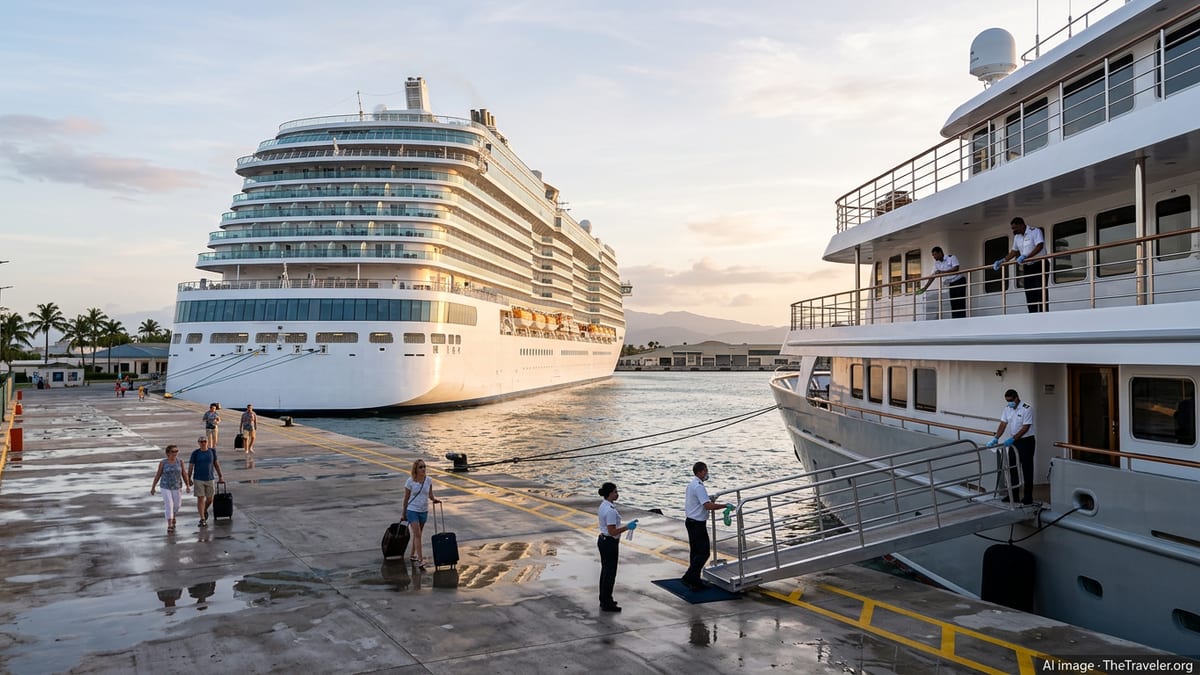
How the CDC Scores Cleanliness at Sea
The CDC’s Vessel Sanitation Program has become a de facto report card for major cruise operators, with unannounced ship inspections scrutinizing everything from galley food storage and pool chlorination to medical facilities and pest control. Ships are graded on a 100-point scale, and any score of 85 or below is considered a failure, forcing operators into rapid corrective action and follow up inspections.
In 2024 and into early 2025, the program’s database shows that a significant majority of ships comfortably clear that bar, clustering in the mid to high 90s. A smaller group stands out at the very top, however, consistently landing perfect 100-point scores on repeat visits. These outliers, drawn from both boutique luxury fleets and big-ship brands, are increasingly marketing their records as proof that onboard sanitation is now a frontline selling point, not a back-of-house concern.
Public health experts note that the inspections are not cosmetic. Inspectors disassemble ice machines, swab food-contact surfaces, inspect cabin ventilation and even quiz crew on procedures. That means the highest scoring ships are generally those where corporate policy, onboard culture and day-to-day execution are tightly aligned, whether the vessel carries 600 guests or more than 5,000.
Luxury Lines Turn Cleanliness into a Brand Asset
At the top of the latest aggregated rankings are several small-ship and upper-premium operators whose fleets post remarkably consistent results. An analysis of recent CDC data compiled by travel insurance comparison site Squaremouth shows Viking’s ocean and expedition divisions, along with Crystal Cruises, averaging about 99 points across their inspected vessels, effectively crowding the top tier of the leaderboard.
Other upscale brands are close behind. Oceania Cruises posts average scores in the high 90s, while Regent Seven Seas, Sea Cloud and several niche operators sit around 97. Even when not every ship reaches a perfect 100, the narrow band of high scores has become part of the value proposition for travelers paying a premium for smaller ships, more space per passenger and high crew-to-guest ratios.
The data also undercuts the perception that luxury automatically guarantees spotless operations. Some high-end and expedition-focused lines have appeared on the wrong side of the ledger in recent years, including a much publicized failing score for a luxury expedition ship after inspectors found problems with food handling and potable water systems. The ship subsequently passed a follow up inspection, but the episode highlighted that even elite brands are subject to the same unforgiving metrics as mainstream mega ships.
For would-be guests, the takeaway is that price alone does not predict performance. Instead, the CDC’s ship-by-ship inspection history reveals which upscale operators translate brand promises into documented sanitation practices across their fleets.
Mega Ships Prove Scale Is Not the Enemy of Sanitation
One of the most striking developments of the past year has been the arrival of ultra-large vessels at the very top of the sanitation tables. Royal Caribbean’s Icon of the Seas, among the world’s largest cruise ships, earned a perfect 100 during a CDC inspection in June 2025, a result that followed earlier scores in the mid to high 90s for the same vessel. Sister ships and other large-ship designs across the industry have also joined the club of 100-point performers.
Recent reporting from cruise industry outlets shows Norwegian Cruise Line emerging as a standout among the big brands. In 2024, Norwegian recorded perfect scores on seven different ships, from newer megaships such as Norwegian Bliss to older tonnage, according to analyses of CDC reports compiled by cruise news sites and travel publications. That volume of perfect scores, spread across multiple vessels and itineraries, has led some analysts to describe Norwegian as the cleanest mainstream line based on CDC metrics.
Rival giants are not far behind. Data aggregators that track the CDC database note that Royal Caribbean, Celebrity Cruises and Disney Cruise Line have each built rosters of ships with recent perfect scores, even as their fleets span tens of thousands of berths. The pattern suggests that, with sufficient investment in training, onboard public health teams and shipboard design, sheer size does not have to be a liability in maintaining spotless galleys and disease-resistant public spaces.
Still, the largest ships have the most to lose when things go wrong. A single low score on a 5,000-passenger vessel can command outsized headlines and social media attention, prompting operators to lean harder on continuous internal audits that mirror CDC criteria between inspections.
Who Is Quietly Winning the Cleanliness Race?
Looking across multiple recent analyses of CDC records, two distinct groups appear to be quietly winning the cleanliness race. At one end are boutique and luxury operators such as Viking and Crystal, whose small fleets consistently post near-perfect averages. At the other are mainstream brands like Norwegian that rack up the highest number of individual perfect scores across large fleets, showing that sanitation culture can scale when enforced from headquarters down to crew messes.
Third-party breakdowns of average scores by cruise line place Viking’s brands and Crystal at or near the top, with averages around 99. Not far behind are Oceania, Virgin Voyages and several specialist operators that maintain scores in the upper 90s. Among the largest contemporary lines, Norwegian, Celebrity, Royal Caribbean and Disney tend to post systemwide averages in the mid to high 90s, while Carnival, Princess and Holland America generally trail by a point or two but remain well above the passing threshold.
There are notable laggards. Publicly available score tables show a handful of operators with averages slipping into the low 90s or even high 80s, often driven by one or two problem ships that posted failing or borderline scores before improving on reinspection. In some cases, those outliers have spurred corporate retraining campaigns and new investments in food safety technology, handwashing infrastructure and real-time monitoring of pool and spa chemistry.
For consumers, industry analysts say the most useful approach is to look past marketing claims to the CDC’s own inspection archive, focusing less on one-off perfect scores and more on a pattern of high marks over time across multiple vessels in the same fleet.
What Travelers Should Watch in an Era of Fewer Inspectors
The Vessel Sanitation Program itself has become part of the story. In 2025, staffing cuts within the CDC raised questions about whether the agency could continue the same volume of cruise ship inspections. While federal notices and subsequent statements indicated that the program would continue, observers expect a leaner operation, with fewer officers responsible for covering a global fleet catering to millions of passengers each year.
That shift may subtly change the way travelers interpret the data. If inspections are less frequent, recent scores could represent a smaller sample of onboard operations, making long-term trends even more important. Cruise companies, for their part, have highlighted internal public health teams and private third-party audits as evidence that their commitment to sanitation does not depend solely on government oversight.
Passenger behavior also remains a critical variable. Public health officials stress that even on ships with flawless CDC records, simple habits such as frequent handwashing, using the hand sanitizer stations positioned at dining room entrances and staying isolated when ill can significantly reduce the spread of gastrointestinal and respiratory viruses at sea.
With another busy wave season on the horizon and new mega ships debuting in North America and Europe, the latest CDC sanitation records suggest an industry increasingly aware that cleanliness is both a safety imperative and a powerful marketing tool. For travelers, the quiet winners of the cleanliness race are those lines that can pair glossy brochure imagery with a sustained, verifiable record of 90-plus scores, year after year.