

More news on this day
A newly updated global polio advisory from the US Centers for Disease Control and Prevention is drawing international attention, as the agency highlights fresh transmission risks in 32 countries including the United Kingdom, Germany and Nigeria, prompting travelers and the tourism industry to reassess plans amid the disease’s unsettling resurgence.
Get the latest news straight to your inbox!
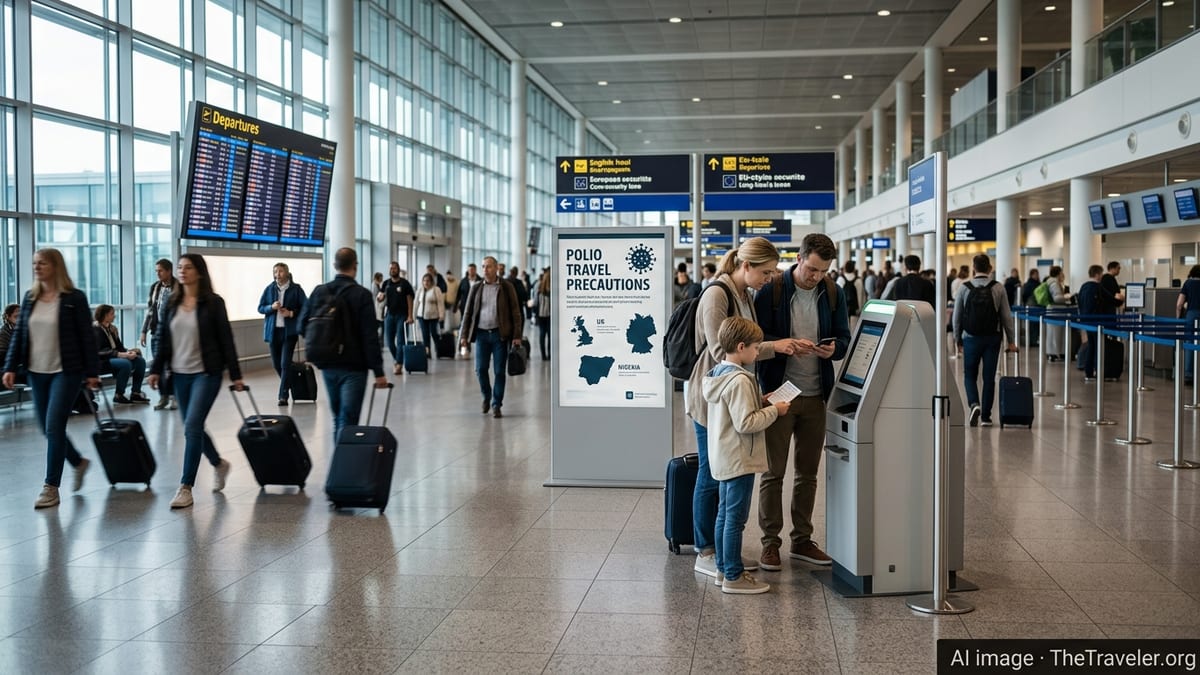
Expanded Advisory Highlights Renewed Polio Threat
The latest CDC travel health notice on poliovirus outlines an expanded list of countries where either wild poliovirus or vaccine-derived strains are circulating, or where the virus has been detected in wastewater and other environmental samples. The advisory, categorized as a Level 2 “practice enhanced precautions” alert by many public health and travel-medicine outlets, underscores that polio remains a current global health concern rather than a disease confined to history.
According to publicly available CDC travel health information, traditional hotspots such as Afghanistan, Pakistan and Nigeria continue to face endemic or recurrent transmission. However, the updated advisory also draws attention to non-endemic nations, including the United Kingdom and Germany, where detections in sewage systems indicate silent spread among under-immunized groups. Although these countries have not reported widespread paralytic cases, health agencies note that any circulation of poliovirus warrants added vigilance.
Specialist travel-vaccination platforms summarizing the CDC notice report that the advisory now encompasses a mix of low-, middle- and high-income destinations across multiple regions. This widening footprint serves as a reminder that even countries with sophisticated healthcare systems can experience renewed circulation when vaccination coverage dips or virus is imported from higher-risk areas.
The renewed warning arrives as global mobility rebounds following the COVID-19 pandemic, with many travelers returning to long-haul itineraries and multi-country routes. Public health experts quoted in recent coverage emphasize that high levels of population immunity remain the backbone of polio control, but that international travel can rapidly move the virus to new locations where immunity gaps exist.
Key Countries Named: UK, Germany, Nigeria and Beyond
Among the countries highlighted in recent summaries of the CDC advisory, the United Kingdom and Germany stand out because of their long-standing status as polio-free nations. Wastewater surveillance in both countries has identified poliovirus on several occasions, suggesting that asymptomatic or mild infections may be occurring in small pockets of the population. National authorities have responded with targeted immunization campaigns, yet the US advisory signals that the situation still warrants attention from visitors.
Nigeria, by contrast, has confronted poliovirus for decades and remains a focal point in global eradication efforts. Although major strides have been made in reducing wild poliovirus cases, sporadic detections and outbreaks linked to vaccine-derived strains continue to be reported in public health bulletins. The inclusion of Nigeria in the advisory is consistent with its long-recognized status as a higher-risk destination for unvaccinated or incompletely vaccinated travelers.
Reports compiling the full country list indicate that the advisory also extends to other European destinations, such as Finland and Spain, where environmental detections or imported cases have been documented in recent years. In these locations, high baseline vaccination coverage lowers the overall risk of large outbreaks, but health agencies stress that even a small number of infections can lead to severe outcomes among people who are unprotected.
Travel-medicine commentators point out that the geographic spread of listed countries now covers multiple major air hubs and stopover points used by travelers from North America, Europe, the Middle East and Asia. This configuration makes it more likely that even travelers who do not spend extended time in high-risk regions may briefly pass through airports or cities where poliovirus is circulating.
What the Advisory Means for International Travelers
For most travelers, the CDC’s updated notice does not prohibit travel but instead calls for heightened prevention measures. Central among these is ensuring that all routine childhood vaccinations, including the polio series, are fully up to date. Publicly available CDC guidance emphasizes that adults who have completed their primary polio vaccination in childhood generally retain strong protection against paralysis, but some may be advised to receive a single lifetime booster dose before visiting areas with evidence of ongoing transmission.
Travel-health clinics and primary care providers typically review an individual’s destination list, length of stay and planned activities before recommending a booster. Those who anticipate prolonged stays in higher-risk countries, close contact with local communities, or work in healthcare or humanitarian settings may fall into groups for whom a booster is particularly important. Recent commentary in travel medicine outlets notes that verifying vaccine records well in advance of departure can prevent last-minute appointment bottlenecks.
Beyond vaccination status, the advisory encourages travelers to remain alert to basic infection-prevention practices, even for diseases primarily spread by the fecal-oral route. Good hand hygiene, attention to food and water safety in regions with weaker sanitation infrastructure, and awareness of local health advisories can all reduce exposure. While poliovirus transmission is often invisible due to the high proportion of asymptomatic infections, the same precautions that guard against other gastrointestinal illnesses can provide added protection.
Travel insurers have also begun referencing the updated polio situation in their guidance notes, particularly for travelers heading to parts of Africa and South Asia. Policy summaries reviewed in recent media coverage indicate that standard comprehensive plans generally cover medical care for vaccine-preventable diseases, but may place conditions on coverage if travelers decline recommended vaccinations without medical justification. Travelers are therefore being advised to confirm both their health coverage and their immunization status at the planning stage.
Implications for Tourism, Aviation and Local Economies
The renewed polio advisory arrives at a sensitive moment for the global tourism sector, which has spent the past two years rebuilding capacity and consumer confidence. Destination marketing organizations in Europe and Africa are carefully monitoring public reactions, aware that even a small shift in perceived health risk can influence destination choice, especially for family travel and group tours.
Industry analysts commenting in recent travel trade coverage suggest that the advisory is unlikely to trigger the widespread cancellations associated with COVID-19-era restrictions, largely because vaccination offers a clear and readily accessible protective measure. However, they note that destinations explicitly named in health notices often experience short-term dips in bookings from risk-averse travelers, followed by stabilization once clear guidance is communicated and no large outbreaks materialize.
Aviation and airport operators in the affected countries are continuing routine sanitation and public-information campaigns that began during the pandemic. Airport displays promoting routine immunizations, hand hygiene and responsible travel behavior have become common in major hubs, particularly in Europe. The updated polio narrative is now being incorporated into those broader health-messaging efforts, reinforcing the idea that travel and vaccination planning should go hand in hand.
For local communities in countries confronting persistent poliovirus circulation, the heightened international focus can be a double-edged sword. On one hand, renewed attention often brings resources for immunization drives and surveillance; on the other, it can reinforce perceptions of health risk that deter visitors. Public health commentators writing in global health and development outlets argue that transparent communication about vaccination campaigns, combined with evidence-based travel guidance, offers the best path to protecting both residents and economies.
How Travelers Can Respond Proactively
Health agencies and travel-medicine experts emphasize that the updated polio advisory offers travelers an opportunity to refresh their understanding of vaccine-preventable diseases more broadly. Many destination pages in the CDC’s travel health library now highlight not only polio but also measles, mpox and other resurgent infections that have been linked to international travel over the past several years. For individuals who have not reviewed their vaccination history since childhood, the current moment provides a practical prompt.
Travel clinics recommend that prospective travelers schedule pre-trip consultations four to six weeks before departure whenever possible. This window allows time for any necessary vaccine series, including polio boosters, to begin taking effect before exposure. For last-minute trips, clinicians may still administer needed vaccines, but travelers should understand that full protection may not be immediate and should take extra care with hygiene and risk reduction.
Travelers can also monitor evolving health information for their destinations through national public health agencies, consular advisories and reputable news outlets, paying particular attention to any updates on polio or related vaccination campaigns. By combining up-to-date information with individual preventive measures, visitors can support both their own safety and broader global eradication efforts.
For now, the CDC’s expanded advisory serves less as a signal to stay home and more as a reminder that global eradication goals have not yet been met. As international travel normalizes, the resurgence of an old foe like poliovirus demonstrates how quickly progress can stall when immunity gaps are allowed to widen, and how central well-prepared travelers are to preventing the next wave of severe disease.