

More news on this day
The US Centers for Disease Control and Prevention has issued an updated Level 2 global polio travel advisory, urging anyone heading to 30 affected countries across Africa, Asia, Europe and the Middle East to take extra health precautions and ensure their vaccinations are fully up to date.
Get the latest news straight to your inbox!
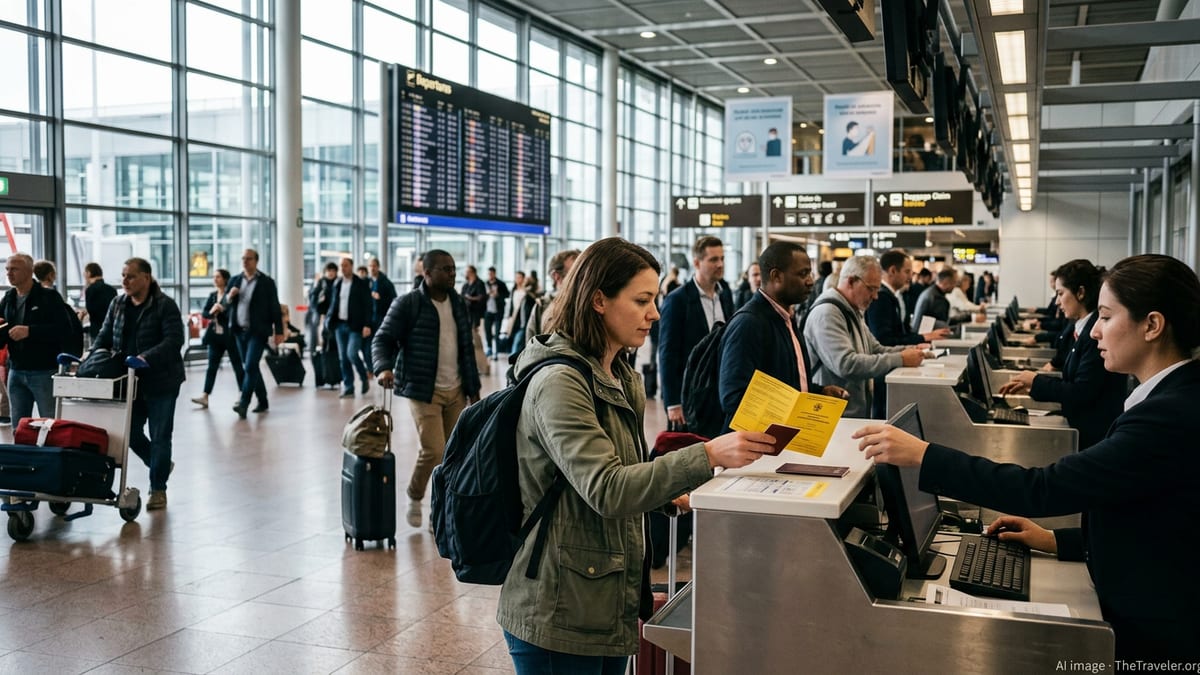
Updated Global Advisory Targets Growing Polio Hotspots
The renewed alert, published this week as part of the CDC’s Travelers’ Health notices, reflects ongoing circulation of poliovirus in dozens of countries through either human cases or environmental detections in sewage. Health officials say the advisory is not a call to cancel trips, but a warning that the risk of exposure to poliovirus is higher than in previous years and that travelers need to plan accordingly.
The Level 2 notice, labeled “Practice Enhanced Precautions,” covers 30 countries where wild poliovirus or circulating vaccine-derived poliovirus has been reported over roughly the past year. These nations include long-affected countries such as Afghanistan and Pakistan, but now also several destinations popular with US and European tourists, including parts of Western and Northern Europe where poliovirus has been detected in wastewater.
Officials stress that the advisory comes as international travel is returning to or surpassing pre-pandemic levels, raising the potential for poliovirus to move quickly between regions. Health agencies are particularly concerned about travelers who are under-vaccinated or who completed their polio shots decades ago and may not realize that a booster dose is recommended before visiting higher-risk destinations.
The alert mirrors recent assessments by global health bodies that the international spread of poliovirus remains a public health emergency of international concern, despite decades of progress and the near-elimination of wild poliovirus in most of the world.
Who Is Affected and What the CDC Recommends
The CDC’s guidance applies broadly to anyone considering travel to a country listed in the advisory, from short-term tourists to business travelers, aid workers and people visiting friends and relatives. For infants and children, the agency reiterates that the full four-dose inactivated polio vaccine schedule should be completed on time and, if necessary, accelerated before an international trip.
Adults who received their routine childhood polio series but have never had a booster are now being advised to get a single lifetime booster dose if they will travel to any of the affected countries. This booster strengthens protection against severe disease and also reduces the chances that travelers could silently carry the virus home and contribute to undetected spread.
For people who are unvaccinated, incompletely vaccinated or unsure of their vaccination history, the CDC recommends starting or completing a full inactivated polio vaccine series before departure whenever possible. Clinicians are being urged to review immunization records carefully during pre-travel consultations and to treat polio vaccination as a core part of travel preparation, on par with other routine and destination-specific vaccines.
Certain travelers, including those who will be living or working in affected areas for four weeks or longer, may also face exit requirements from local authorities. Some governments now require proof of recent polio vaccination recorded on the yellow International Certificate of Vaccination or Prophylaxis when departing the country, a measure designed to limit further international spread.
Thirty Countries on Alert as Virus Appears in New Regions
The CDC’s updated list highlights how the geography of polio risk has shifted. While cases and environmental detections remain concentrated in a core group of countries in South Asia and parts of Africa, new detections have been reported in several European countries and in parts of the Middle East, underscoring that poliovirus can reappear in places long considered polio-free.
Among the roughly thirty countries are Afghanistan and Pakistan, the last nations where wild poliovirus remains endemic, alongside others where circulating vaccine-derived poliovirus has been found. The advisory also includes several European states, such as the United Kingdom, Spain, Germany, Finland and Poland, where recent wastewater monitoring or isolated cases have signaled renewed circulation.
Public health experts say these detections are often linked to gaps in routine childhood immunization programs and to communities with historically lower vaccine uptake. Even when only vaccine-derived strains are detected, they warn, the threat is real: paralytic disease can occur when the virus circulates extensively in under-immunized populations.
Officials emphasize that most travelers will never see signs of polio in the communities they visit. Poliovirus circulation is typically silent, with the vast majority of infections causing no symptoms or only mild illness, which is why environmental surveillance and immunization coverage remain the backbone of global polio control.
What Travelers Should Do Before and During Trips
Health authorities are urging travelers to treat polio preparation as part of a broader pre-trip health checklist. Before booking or at least one month before departure, travelers are advised to speak with a healthcare provider or travel medicine clinic, bring any existing vaccination records and confirm whether a booster or a full course of inactivated polio vaccine is needed.
During travel, experts recommend practicing rigorous hygiene, especially in destinations where sanitation systems may be under strain. Because poliovirus spreads primarily through contact with the stool of an infected person and can contaminate food and water, careful attention to handwashing, safe drinking water and food choices can lower the risk of infection alongside vaccination.
Travelers who will be staying with family or in close-knit community settings are encouraged to ask about local vaccination campaigns and to be especially vigilant if visiting areas that have recently reported polio cases or environmental detections. Families traveling with young children, pregnant travelers and those with compromised immune systems are urged to seek individualized medical advice well ahead of departure.
Upon returning home, anyone who develops sudden weakness in an arm or leg or other unexplained neurological symptoms should seek prompt medical care and inform clinicians of their recent travel history. While such cases are rare, early recognition is crucial for both patient care and public health investigation.
Global Eradication Goals Under Pressure
The expanded advisory comes as the global campaign to eradicate polio enters a critical phase. International partners have set ambitious targets to halt the last chains of wild poliovirus transmission and to bring circulating vaccine-derived outbreaks under control, but recent detections highlight how fragile those gains remain.
Outbreaks tied to vaccine-derived poliovirus continue to be reported in parts of Africa and Asia, usually in areas where routine immunization rates have fallen and health systems are facing conflict, displacement or resource shortages. In parallel, wastewater detections in wealthier countries show that even regions with long-standing polio-free status are not completely insulated from global transmission.
Health experts say travelers have an important role to play in the final push toward eradication. By ensuring they are fully vaccinated and by following public health advice before, during and after trips, international visitors can help prevent poliovirus from crossing borders and seeding new outbreaks.
For now, officials stress that the message is one of vigilance rather than alarm. International travel to affected countries can continue, they say, but it should be undertaken with renewed attention to vaccination records, basic hygiene and timely medical consultation, particularly as more destinations are added to the CDC’s global polio watch list.