

More news on this day
Celestyal Cruises has cancelled all remaining sailings from Dubai, Doha and Abu Dhabi for the 2025–26 Arabian Gulf season, abruptly curtailing the region’s winter cruise boom and deepening uncertainty for Middle East tourism.
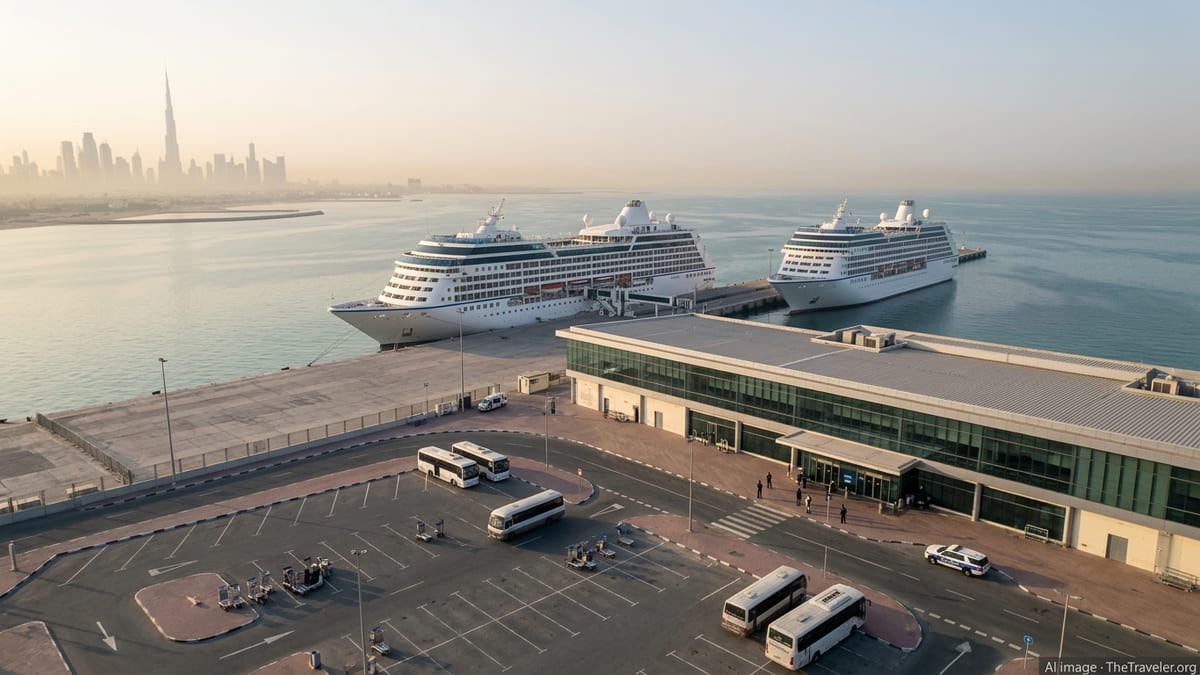
Sudden End to a Promising Arabian Gulf Season
The Athens-based line confirmed this week that it has brought its Arabian Gulf program to an immediate halt, scrapping all March 2026 departures and effectively ending its 2025–26 season several weeks early. The decision affects both Celestyal Journey and Celestyal Discovery, which had been operating short and weeklong itineraries linking Dubai, Abu Dhabi, Doha and surrounding ports.
The cancellations follow escalating regional tensions and a rapid deterioration in security conditions around the Strait of Hormuz, which have already forced multiple cruise lines to suspend operations. Celestyal’s two-ship deployment was central to its strategy of building a long-term presence in the Gulf, including a multi‑year homeporting agreement with Abu Dhabi. The early shutdown now leaves that plan in limbo.
According to industry reports, Celestyal has cancelled “Desert Days” cruises and other late‑season sailings that were due to depart from Doha on March 7 and 14 and from Dubai on March 9 and 16. Both ships remain alongside in the region while the company coordinates repatriation arrangements and final disembarkation for remaining guests.
Passengers Stranded as Ships Sit Idle in Key Ports
The immediate priority for Celestyal and other operators is getting passengers home. Celestyal Discovery is currently docked in Dubai, while Celestyal Journey is in Doha, with guests still on board as airspace and flight schedules across the Gulf remain heavily disrupted. Local authorities have imposed tight controls on air traffic, complicating efforts to secure timely flights out of Dubai, Abu Dhabi and Doha.
Guests have been advised that onboard services will continue while lines work with government and airline partners on repatriation plans. Celestyal has asked passengers on Celestyal Journey to disembark by March 7, with the ship set to cease carrying guests after that date. Similar timelines are being coordinated for those on Celestyal Discovery in Dubai, although airline capacity and shifting flight bans mean plans are being adjusted day by day.
Celestyal has pledged assistance with airport transfers once disembarkation windows are confirmed and is expected to offer a mix of refunds and future cruise credits to affected guests. However, with thousands of cruise passengers from several brands competing for limited outbound seats, many travelers face extended stays in hotels or on board ships that are going nowhere.
Wider Gulf Cruise Shutdown Hits Dubai, Doha and Abu Dhabi
Celestyal’s withdrawal is part of a broader shutdown of Arabian Gulf cruising that has developed at speed since late February. MSC Cruises has cancelled all remaining regional sailings on MSC Euribia, currently alongside in Dubai, while Saudi Arabia’s new Aroya Cruises has suspended its itinerary and remains docked in the emirate. German brand TUI Cruises has also halted departures, with Mein Schiff 4 in Abu Dhabi and Mein Schiff 5 in Doha.
The result is an unprecedented cluster of idle mega‑ships at the heart of the Gulf’s cruise infrastructure. Dubai, which has spent heavily to position itself as a winter cruise super hub, now finds its cruise terminals functioning primarily as temporary accommodation and logistics centers rather than gateways for new arrivals. Abu Dhabi and Doha, both keen to grow their share of regional cruise traffic, are facing a similar standstill.
For port authorities and tourism boards, the immediate concern is financial. Winter cruises bring a steady flow of high‑spending international visitors to city attractions, malls, desert excursions and cultural sites. The abrupt loss of sailings across multiple lines wipes out thousands of expected port calls and shore‑excursion days in March alone, undercutting forecasts for hotels, guides, transport operators and retailers that had geared up for a record season.
Tourism and Economic Fallout Across the Middle East
The cancellations are a sharp blow to regional tourism strategies that increasingly rely on cruise traffic as a high‑yield complement to air‑arrivals. Dubai, Abu Dhabi and Doha have all expanded cruise terminals, streamlined visa processes and invested in marketing campaigns to attract international lines and repeat cruisers, with Celestyal’s two‑ship deployment seen as a vote of confidence in the Gulf’s long‑term potential.
That momentum has now been checked. Hotel and destination executives report widespread re‑evaluations of staffing plans, inventory allocations and promotional budgets as the extent of the cruise shutdown becomes clear. Shore‑excursion providers, many of them small or mid‑sized businesses, face sudden revenue gaps as coach tours, dune safaris and city sightseeing itineraries tied to cruise calls vanish from the calendar.
Economists note that the wider Middle East tourism picture remains mixed. While air‑based leisure travel to some cities continues, disruptions to regional airspace and perceptions of heightened risk could weigh on bookings beyond the current crisis period. The cruise sector, which is especially sensitive to security advisories and insurance restrictions, may be slower to rebound, particularly on routes that pass near potential flashpoints.
What Affected Travelers and Future Cruisers Should Expect
For travelers booked on Celestyal’s cancelled Gulf departures, the key steps now are to monitor official communications from the line and coordinate closely with travel agents and insurers. Celestyal has indicated it will process refunds and future cruise credits for impacted guests, but processing times may be elongated given the large number of bookings and the operational pressures of repatriation.
Passengers still in the region are being encouraged to confirm flight details directly with airlines as schedules continue to shift. Many carriers are prioritizing those whose original travel dates have already passed, meaning later‑season cruise guests might remain in a holding pattern while earlier travelers are rebooked. Flexibility on routing, dates and even departure airports could improve the chances of securing a seat out.
Looking ahead, Celestyal is expected to refocus capacity on its core Eastern Mediterranean and Aegean programs once its ships reposition out of the Gulf. Prospective cruisers eyeing winter sun voyages in 2026 and beyond may find more options concentrated around Greece, Cyprus and neighboring destinations, at least until operators judge that political and security conditions in the Arabian Gulf are stable enough to support a full return.
For now, the abrupt end of Celestyal’s Dubai, Doha and Abu Dhabi sailings underscores how quickly the fortunes of a fast‑growing cruise region can change. What had been billed as a breakthrough Gulf season for the line has instead become a stark reminder that geopolitical risk remains a defining factor in Middle East tourism planning.