

More news on this day
Celestyal Cruises has scrapped the remainder of its Arabian Gulf season, abruptly cancelling March departures from Qatar and the United Arab Emirates as escalating tensions in the Strait of Hormuz trigger one of the most serious cruise disruptions to hit the region in years.
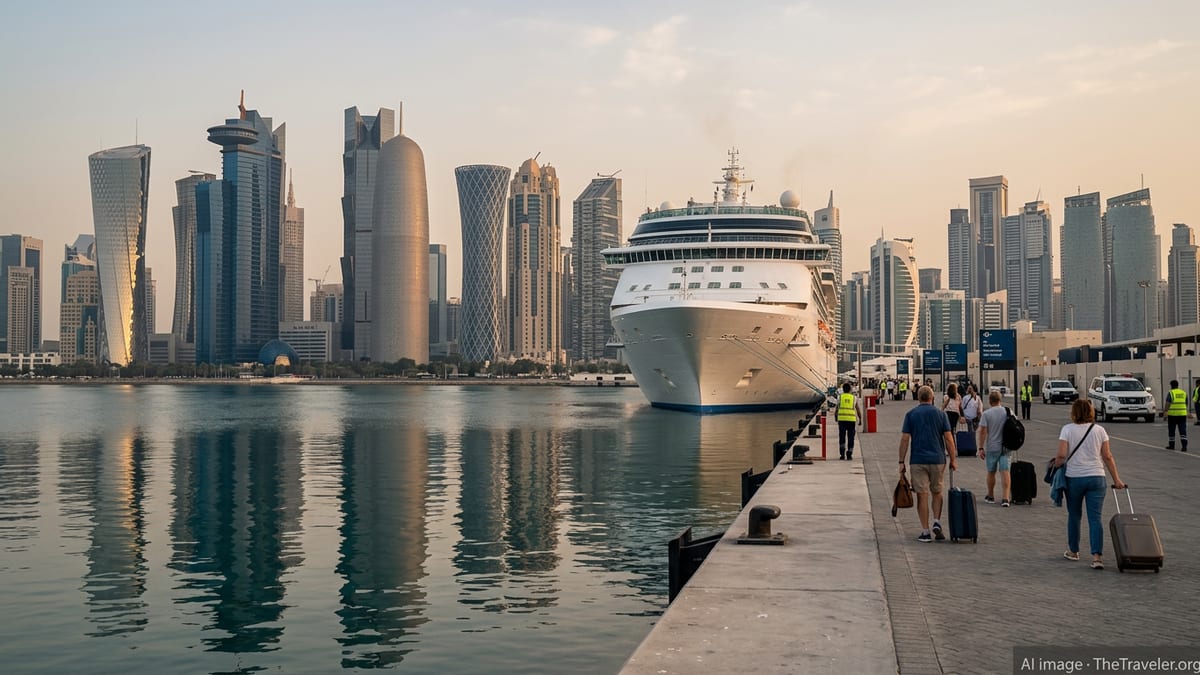
Last-Minute Cancellations Hit Doha and Dubai Sailings
The Greece-based cruise operator confirmed that all remaining “Desert Days” voyages in March 2026 have been cancelled, affecting departures scheduled from both Doha in Qatar and Dubai in the United Arab Emirates. The suspended sailings include March 7 and 14 departures from Doha and March 9 and 16 departures from Dubai, effectively bringing Celestyal Journey’s inaugural Arabian Gulf season to an early close.
The decision follows an earlier wave of cancellations around March 2 sailings from Dubai and Abu Dhabi, as the line reacted to rapidly deteriorating security conditions after new hostilities in the wider Middle East. With the latest move, Celestyal has now ended its entire late-winter Gulf program, leaving the 1,260-passenger Celestyal Journey docked in Doha while plans are finalized to reposition the ship.
Celestyal said guests booked on the cancelled voyages are being offered either a full refund or a future cruise credit. The company has also pledged on-the-ground support to assist those currently onboard with flight changes and transfers, coordinating with airports and local authorities in Doha and the UAE to get passengers home.
Industry observers note that while short-notice itinerary changes are not uncommon, the abrupt termination of an entire regional season underlines the severity of the current security concerns, which have closed off key shipping lanes and raised insurance and operational risks for cruise lines.
Qatar and UAE Ports See Sudden Cruise Slowdown
The cancellations are a blow to both Qatar and the UAE, which have invested heavily in cruise infrastructure as part of broader tourism diversification strategies. Doha’s Grand Cruise Terminal and Dubai’s Port Rashid and Dubai Harbour have been marketed as marquee homeports for winter sun itineraries, with Celestyal among several lines lured by competitive port fees and access to a growing fly-cruise market.
Instead of embarking new guests, ships are now largely focused on disembarkation and repatriation. Celestyal Journey remains in port in Doha while guests are gradually flown out, and sister ship Celestyal Discovery has also seen Gulf sailings scrapped. Cruise traffic into Abu Dhabi and other Emirati ports has similarly slowed as security analysts advise caution and insurers reassess exposure in and around the Strait of Hormuz.
Tourism stakeholders in Qatar and the UAE had counted on a strong late-winter season, with Gulf city-break packages and multi-day pre- and post-cruise stays in Doha, Dubai and Abu Dhabi. The sudden loss of calls means reduced hotel occupancy, fewer shore-excursion bookings and lower spend with local tour operators, retailers and restaurateurs at a time when both countries are positioning themselves as high-value cruise hubs.
While air travel into Qatar and the UAE continues, the absence of cruise arrivals removes an important stream of visitors, particularly from Europe, where Celestyal has a loyal customer base. Some travel agents report fielding a surge of calls from confused passengers seeking clarity on whether broader Gulf tourism remains safe despite the maritime-focused disruption.
Rising Tensions Ripple Across the Cruise Industry
Celestyal’s withdrawals come amid a wider industry retreat from the region. Other major brands, including MSC Cruises and regional newcomer Aroya Cruises, have also suspended Gulf deployments as conflict and heightened military activity around the Strait of Hormuz complicate navigation and raise security concerns.
Analysts say cruise lines face a particularly complex risk calculus in the Gulf. Unlike airlines, which can reroute around tense airspace, cruise ships are heavily exposed when operating in narrow waterways and near contested maritime corridors. Even with no direct threat to individual vessels, the perception of danger, combined with potential restrictions or closures, can make continuation of cruises commercially and operationally untenable.
The Gulf cancellations follow a pattern seen in the Red Sea over the past two years, where several lines, including Celestyal and others, rerouted or abandoned itineraries due to conflict-related risks and insurance costs. For many operators, the cumulative effect has forced a rethink of how to balance demand for exotic routes with the need for operational resilience and fast redeployment options.
For travelers, the upshot is mounting uncertainty around sailings that transit geopolitical flashpoints. Consumer advocates note that while refund and credit offers from lines such as Celestyal are largely in line with industry norms, short-notice cancellations can result in stranded passengers, nonrefundable flight costs and disrupted holiday plans, particularly for those combining cruises with independent land stays.
Repositioning to the Mediterranean and What Happens Next
Looking ahead, Celestyal plans to move its ships out of the Gulf and back toward more established Mediterranean programs once operational conditions allow. Travel trade updates indicate that Celestyal Journey and Celestyal Discovery are expected to reposition to Athens in time for their scheduled spring and summer itineraries, which include Greek island and Adriatic cruises.
For the company, the shift underscores the strategic advantage of having strong home bases in relatively stable regions such as the Eastern Mediterranean. Celestyal built its brand on Greek island cruises and can, at least in part, absorb the loss of its experimental Gulf season by focusing on core markets where demand remains robust and port infrastructure is long established.
Qatar and the UAE, meanwhile, are left to contend with the reputational and economic fallout. Officials in both destinations have emphasized that life continues normally ashore and that security measures at ports and tourist sites remain stringent. Yet they also acknowledge that maritime conflict beyond their direct control can quickly erode cruise line confidence, no matter how advanced local facilities may be.
Regional tourism planners are expected to revisit contingency strategies, including broader promotion of land-based tourism, incentives for future cruise redeployments, and closer coordination with security and maritime authorities to reassure operators. Whether Celestyal and its peers will return to the Gulf in the near term will largely depend on how quickly tensions ease and safe passage in and out of the Strait of Hormuz can be credibly guaranteed.
Travelers Seek Clarity as Bookings and Policies Shift
In the wake of the cancellations, travel agencies and online booking platforms have reported an uptick in calls from customers seeking clarity on their options, not only for Celestyal sailings but also for other lines operating in or near the region. Many travelers are weighing whether to accept future cruise credits, rebook onto Mediterranean itineraries, or request full refunds and postpone cruising altogether.
Advisers are urging passengers booked on upcoming Middle East voyages to monitor official cruise line communications closely and to review terms around cancellation, insurance coverage and credit validity. For some, flexible policies allow a switch to alternative itineraries in Europe without penalty, while others may find that separate, nonrefundable air and hotel arrangements remain at their own risk.
Travel experts say the episode could accelerate a broader shift toward more conservative destination choices among mainstream cruisers, at least in the short term. While a core group of experienced travelers remains willing to sail in politically sensitive regions, a growing number are expected to favor itineraries in the Mediterranean, Northern Europe, the Caribbean and Alaska, where the risk of last-minute geopolitical disruption is perceived to be lower.
For Qatar and the UAE, regaining cruise line and traveler confidence will likely require a combination of improved regional stability and renewed marketing once conditions normalize. Until then, Celestyal’s abrupt exit from the Gulf stands as a stark reminder of how quickly geopolitical tensions can reshape the global cruise map and leave both destinations and passengers navigating uncharted waters.