

More news on this day
Middle East cruise ambitions for Dubai, Doha and Abu Dhabi have been thrown into turmoil after Celestyal Cruises scrapped all remaining Arabian Gulf sailings for the 2025–26 winter season and began cancelling early Mediterranean departures, leaving ports, travel agents and thousands of passengers scrambling for alternatives.
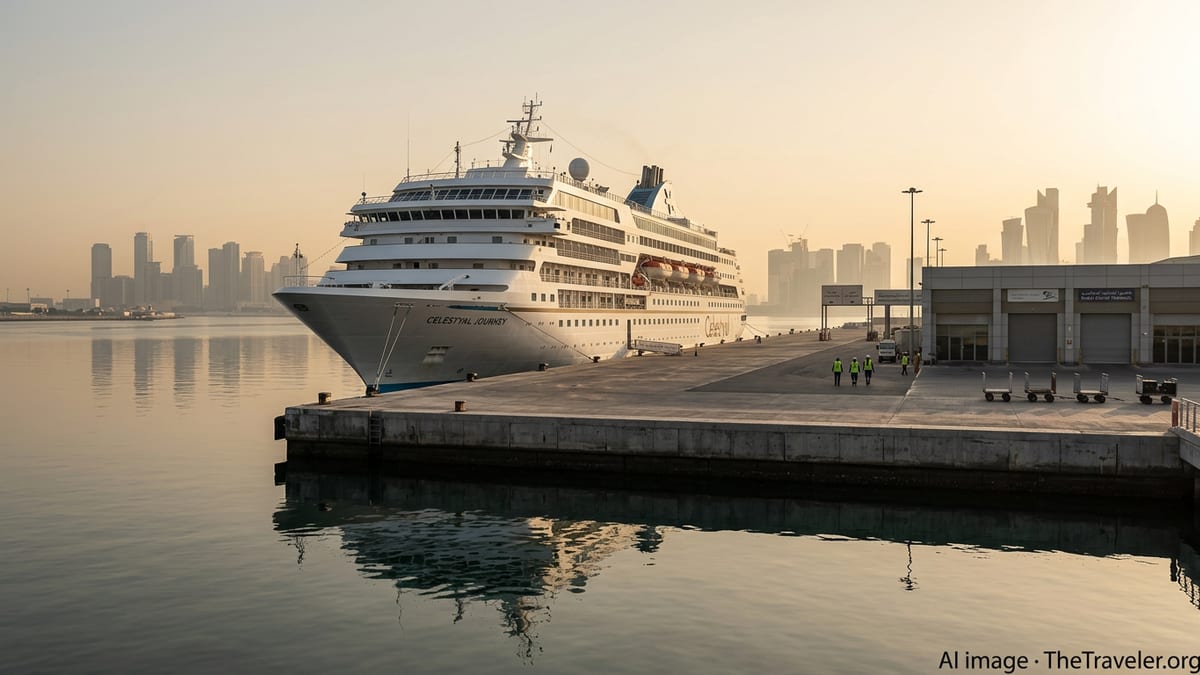
Gulf Cruise Season Cut Short As Ships Lie Idle in Dubai and Doha
Athens based Celestyal confirmed in early March that it had ended its inaugural two ship Arabian Gulf season weeks ahead of schedule, cancelling all remaining March departures from Dubai, Doha and Abu Dhabi for Celestyal Journey and Celestyal Discovery. The decision followed heightened regional tensions and fast changing security guidance that made it increasingly difficult to operate regular port calls.
Until last week, Celestyal Discovery was alongside in Dubai while Celestyal Journey remained in Doha, with authorities initially restricting disembarkation. The line has since completed the disembarkation of guests in Dubai and is finalising arrangements for those still onboard in Doha, while keeping core hotel services running on both vessels during the transition period.
Industry reports indicate that at least four voyages, two from Dubai and two from Doha, were cancelled in this latest wave, on top of earlier adjustments to repositioning sailings through the Red Sea. For Gulf tourism boards that had promoted new Celestyal itineraries as a key pillar of their winter cruise growth, the sudden halt represents a serious setback.
Tourism officials in the United Arab Emirates and Qatar now face the prospect of a prematurely quiet cruise season, with terminal capacity, shore excursion providers and seasonal hospitality staff left underutilised just as the region had hoped to cement its status as a winter sun alternative to the Caribbean.
Passengers Face Disruption, Refunds and Limited Alternatives
For thousands of Celestyal guests, the cancellations have translated into last minute travel chaos. Travellers who had already embarked found their Gulf itineraries curtailed as the ships remained dockside, while future passengers received notifications that their sailings would not operate, triggering an urgent need to rebook flights, hotels and tours.
Celestyal has said affected guests are being offered full refunds or future cruise credits, along with assistance for those who need help arranging flights, accommodation and airport transfers. Travel agents in key source markets such as the United Kingdom, Germany and North America are spending long hours reworking complex itineraries that combined Gulf cruises with land stays in Dubai, Doha or Abu Dhabi.
The disruption is particularly acute for winter sun travellers who planned multi destination trips around fixed annual leave. With many competing lines already heavily booked and other cruise brands also trimming Middle East operations, replacement sailings on similar dates are proving difficult to find, pushing some passengers to abandon cruise plans entirely for this season.
Consumer advocates are urging travellers to scrutinise their travel insurance policies and to keep written records of all out of pocket expenses, noting that while cruise lines may cover core elements such as the fare, ancillary costs like change fees, independent hotels and separately booked excursions can be harder to recover.
Knock On Effects for Dubai, Doha and Abu Dhabi Tourism
The collapse of Celestyal’s Gulf season lands at a sensitive moment for the region’s tourism strategies. Dubai, Doha and Abu Dhabi have invested heavily in dedicated cruise terminals, streamlined immigration facilities and new waterfront attractions, banking on a steady flow of winter cruise visitors to support restaurants, retailers and tour operators.
On a typical turnround day, thousands of cruise passengers move through port terminals, booking city tours, desert safaris, museum visits and shopping excursions. With Celestyal’s ships now out of service in the Gulf, local operators that geared up for the season report sharply reduced bookings and uncertainty over staffing levels for the rest of March.
The cancellations also weaken the region’s broader narrative of resilience and reliability. In recent years, Gulf destinations have sought to position themselves as safe, modern and dependable hubs for international cruising. A prominent European line suspending operations mid season due to regional instability reinforces perceptions of fragility that tourism boards have worked hard to counter.
Regional cruise development advocates warn that if volatility persists, some lines may prefer to redeploy capacity back to the Mediterranean or Caribbean where itineraries are less exposed to sudden geopolitical shifts, potentially slowing the long term growth trajectory of the Arabian Gulf cruise market.
Mediterranean Schedules Shaken as Celestyal Repositions Fleet
The fallout is not confined to the Middle East. As Celestyal works through disembarkation and operational planning in Dubai and Doha, the line has begun cancelling early season Mediterranean departures, including short “Iconic Aegean” itineraries in March that were due to be operated by Celestyal Discovery once repositioned from the Gulf.
The company has cited the time needed to safely reposition ships, secure new port slots and reconfigure itineraries in light of ongoing concerns around the Red Sea corridor. This has raised questions about the stability of Celestyal’s wider 2026 deployment plan, particularly for travellers booked on spring and early summer departures from Greek ports.
Mediterranean tourism stakeholders worry that a prolonged pause or further changes could dent confidence among travel advisors who rely on Celestyal for shorter Eastern Mediterranean cruises that pair well with city stays in Athens or island hopping holidays. With demand for the region expected to be robust again this summer, any significant schedule reshuffle could cascade through hotel and air booking patterns.
Rival cruise lines operating in the Eastern Mediterranean are monitoring the situation closely. Some may move to capture displaced demand by opening additional capacity or offering tactical promotions, but port congestion and tight berthing windows in marquee destinations such as Santorini and Mykonos limit how quickly capacity can realistically be expanded.
What Travellers and Agents Should Watch in the Coming Weeks
For now, Celestyal guests holding bookings in late March and April are being advised to monitor communications from the line and from their travel advisors closely, as schedule adjustments continue to filter through reservation systems. Industry analysts expect further fine tuning of Mediterranean deployment as the company locks in repositioning dates and alternative routings.
Travel trade organisations are pressing for clear, proactive updates from cruise lines whenever itineraries are at risk, arguing that faster, more transparent communication can significantly reduce the disruption travellers experience. Agents are also urging clients to consider flexible airfares and comprehensive travel insurance for complex cruise and stay itineraries in regions prone to sudden geopolitical shifts.
Looking ahead, Gulf tourism officials insist that the current crisis is a setback rather than a reversal. They are already in discussions with cruise partners about future seasons, emphasising long term growth potential once security conditions stabilise. Celestyal itself has indicated that it remains committed to the region over the medium term, even as it focuses on shoring up its core Mediterranean program in the near future.
For travellers, the chaos surrounding Celestyal’s cancellations is a stark reminder that cruise itineraries, particularly in geopolitically sensitive waters, are never guaranteed. Those planning voyages through the Gulf or Eastern Mediterranean in 2026 and 2027 are being encouraged to build in flexibility, stay informed about regional developments and maintain close contact with travel professionals who can respond quickly if plans unravel.