

More news on this day
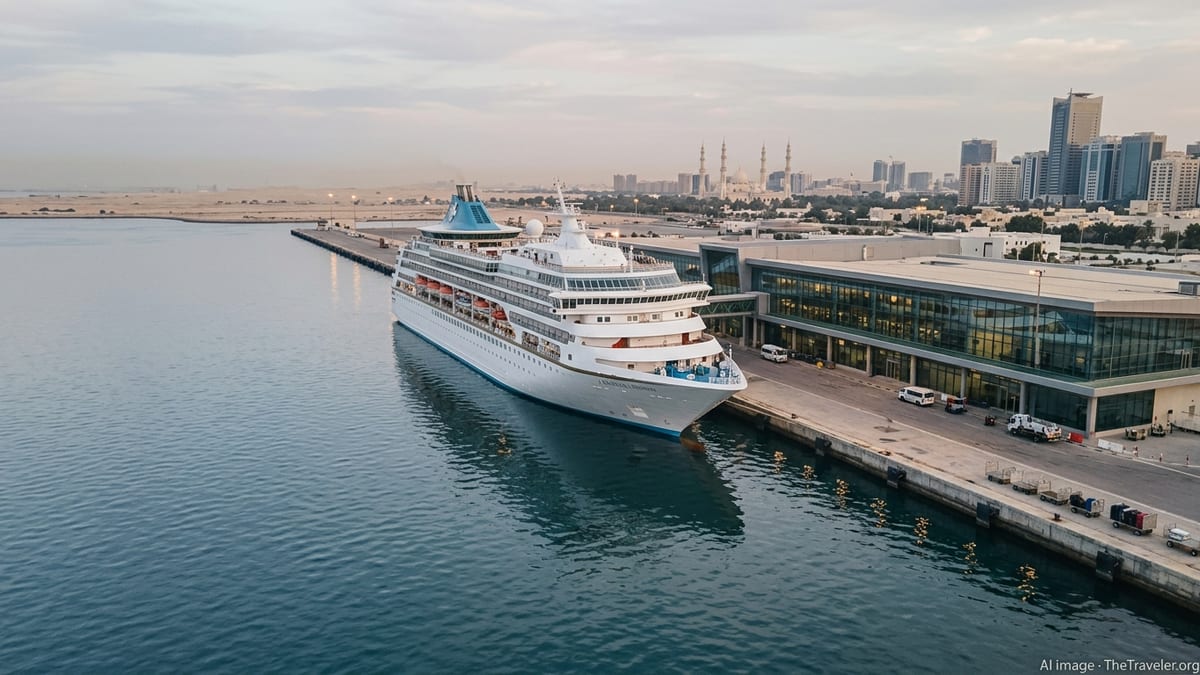
Celestyal Cruises has cancelled Celestyal Discovery’s March 2026 Arabian Gulf sailings from Abu Dhabi and Doha, as rapidly escalating tensions in the wider Middle East unsettle cruise deployments and leave travelers rethinking plans in the region.
Get the latest news straight to your inbox!
From Iconic Greek Islands to Arabian Gulf Ambitions
Celestyal Discovery was originally introduced to the fleet in 2024 to reinforce the company’s strong focus on Greek Islands and Eastern Mediterranean itineraries. The ship, a former AIDA vessel, replaced the veteran Celestyal Olympia and quickly became associated with high-frequency “iconic” short cruises to destinations such as Mykonos, Santorini and other Aegean ports, marketed as a gateway to classic Greek island-hopping experiences.
As Celestyal’s deployment evolved, the line announced a strategic pivot that would see Celestyal Discovery and sister ship Celestyal Journey split time between the Mediterranean and the Arabian Gulf. Publicly available brochures and trade releases showed Discovery scheduled to conclude its Greek and broader Mediterranean season in late 2025 before repositioning to the Gulf to join Journey for winter 2025–26 operations.
According to trade and cruise-industry coverage, Celestyal Discovery was slated to homeport in Abu Dhabi from December 12, 2025, offering three-, four- and seven-night “Iconic Arabia” itineraries. These cruises were scheduled to include calls at Dubai and Ras Al Khaimah in the United Arab Emirates, plus Doha in Qatar and Khasab in Oman, effectively mirroring the brand’s “iconic” short-cruise model in a new geography.
The winter season was further structured around a spring 2026 repositioning voyage. Published itineraries indicated that on March 6, 2026, Celestyal Discovery would depart Abu Dhabi on a 14-night sailing back to Athens, with transit calls in Egypt and the wider Red Sea region, returning the vessel to Greek waters in time for the core summer season.
Rising Tensions Disrupt Gulf Cruise Schedules
The decision to cancel Celestyal Discovery’s March 2026 sailings comes as the broader security climate across parts of the Middle East has deteriorated. International reporting points to heightened tensions following a significant flare-up in hostilities involving Iran in late February 2026, which has raised concerns over key maritime corridors and regional stability.
Coverage of the cruise and shipping sectors indicates that multiple cruise lines operating in and around the Arabian Gulf and Red Sea have re-evaluated deployments in response to the changing risk profile. Some itineraries transiting the Strait of Hormuz and Red Sea chokepoints have been curtailed or amended, with several vessels remaining alongside in ports such as Doha or Dubai for longer-than-planned layovers.
Recent accounts shared by passengers and crew online describe ships unexpectedly remaining in port and itineraries being adjusted or shortened, citing uncertainty around safe passage and evolving government travel advisories. In this context, Celestyal Discovery’s late-season Arabian Gulf cruises became increasingly exposed to operational and logistical disruption.
Publicly accessible industry summaries now indicate that Celestyal has cancelled remaining Gulf departures on both Celestyal Discovery and Celestyal Journey for the tail end of the 2025–26 season. That move effectively ends the line’s inaugural two-ship Arabian Gulf program several weeks earlier than originally scheduled and halts Discovery’s planned March 2026 repositioning cruise.
Impact on UAE and Qatar Tourism Partners
The early conclusion of Celestyal Discovery’s Gulf season carries knock-on implications for tourism stakeholders across the United Arab Emirates and Qatar. Cruise-focused analyses note that wintertime ship calls to Abu Dhabi, Dubai and Doha contribute a measurable share of seasonal visitor arrivals, with passengers often combining short cruises with pre- and post-stays in the region.
Travel-market commentary suggests that the cancellation of Discovery’s March 2026 departures, along with other curtailed Gulf itineraries, is likely to reduce visitor volumes to key ports just as the winter peak traditionally begins to taper. For cities such as Abu Dhabi and Dubai, which have invested heavily in cruise terminals and associated infrastructure, any reduction in calls translates into fewer hotel nights, excursions and retail spending generated by transit guests.
In Qatar, where Doha has been positioned as an emerging homeport and turnaround hub for winter Gulf cruises, the loss of late-season calls may weigh on efforts to build on the momentum of recent sporting events and cruise seasons. Analysts point to the broader regional narrative of diversification away from hydrocarbons, in which tourism and cruising are seen as pillars of future growth.
While the overall visitor economy in the UAE and Qatar is diversified across air arrivals, conferences and large-scale events, the abrupt reshaping of cruise schedules underscores the vulnerability of maritime tourism to geopolitical shifts. Local operators offering shore excursions, desert tours and cultural experiences tailored to cruise guests are among those expected to feel the immediate effects.
What It Means for Affected Passengers and Greek Island Plans
For passengers booked on Celestyal Discovery’s March 2026 Gulf sailings, the cancellations create fresh uncertainty only months before departure. Industry reports on similar schedule changes indicate that cruise lines typically offer a combination of full refunds, future cruise credits or rebooking options on alternative itineraries, although exact terms vary by company and booking channel.
Travel advisors following the situation note that affected guests may be offered the chance to switch to Celestyal’s core Greek Islands and Eastern Mediterranean cruises once Celestyal Discovery returns to the region for summer 2026. The ship’s established deployment in the Aegean, including short “iconic” itineraries from Athens to marquee islands and nearby Turkish ports, is expected to remain central to the brand’s program.
The disruption may also prompt some travelers to reconsider their timing or choice of destination altogether. With the Arabian Gulf cruise season now viewed as less predictable for late winter 2026, some travelers could pivot back to more familiar Mediterranean routes, as well as to itineraries in Western Europe or the Caribbean, which are perceived as less exposed to current Middle East tensions.
Consumer-facing travel commentary emphasizes the importance of monitoring operator notices and travel advisories closely, particularly for sailings that rely on narrow maritime passages or transit regions affected by security alerts. For Celestyal’s customer base, the changes serve as a reminder that even short “iconic” cruises can be subject to rapid alteration when geopolitical conditions shift.
Outlook for Celestyal and the Arabian Gulf Market
Despite the setback, publicly available statements from the cruise sector suggest that operators, including Celestyal, continue to view the Arabian Gulf as a promising long-term market. The region’s modern port infrastructure, warm winter climate and growing air connectivity remain key draws for cruise lines seeking to diversify beyond traditional Mediterranean and Caribbean circuits.
Cruise-industry reporting indicates that Celestyal is evaluating options to resume Gulf deployments in a future season once conditions allow. The company’s significant investment in tailoring itineraries such as “Iconic Arabia” and “Desert Days” to regional attractions, combined with its marketing of three- and four-night products attractive to new-to-cruise travelers, underscores the strategic importance of the market.
For now, attention is likely to refocus on the line’s Greek Islands and Eastern Mediterranean strength, where Celestyal Discovery and Celestyal Journey can be redeployed with greater certainty. Analysts note that demand for Aegean itineraries remains resilient, supported by strong air links to Athens and the enduring appeal of marquee islands and historical ports.
As tensions play out across parts of the Middle East, the experience of Celestyal Discovery’s curtailed Arabian Gulf season highlights both the opportunities and fragility of emerging cruise regions. The coming months will show how quickly operators, tourism boards and travelers regain confidence in itineraries centered on the UAE, Qatar and their neighbors once the security outlook stabilizes.