

More news on this day
Celestyal Cruises has canceled its first Greece sailings of 2026 after escalating conflict in the Middle East left its two-ship fleet stranded in the Arabian Gulf, forcing thousands of passengers to rethink spring travel plans to the Aegean.
What Has Been Canceled So Far
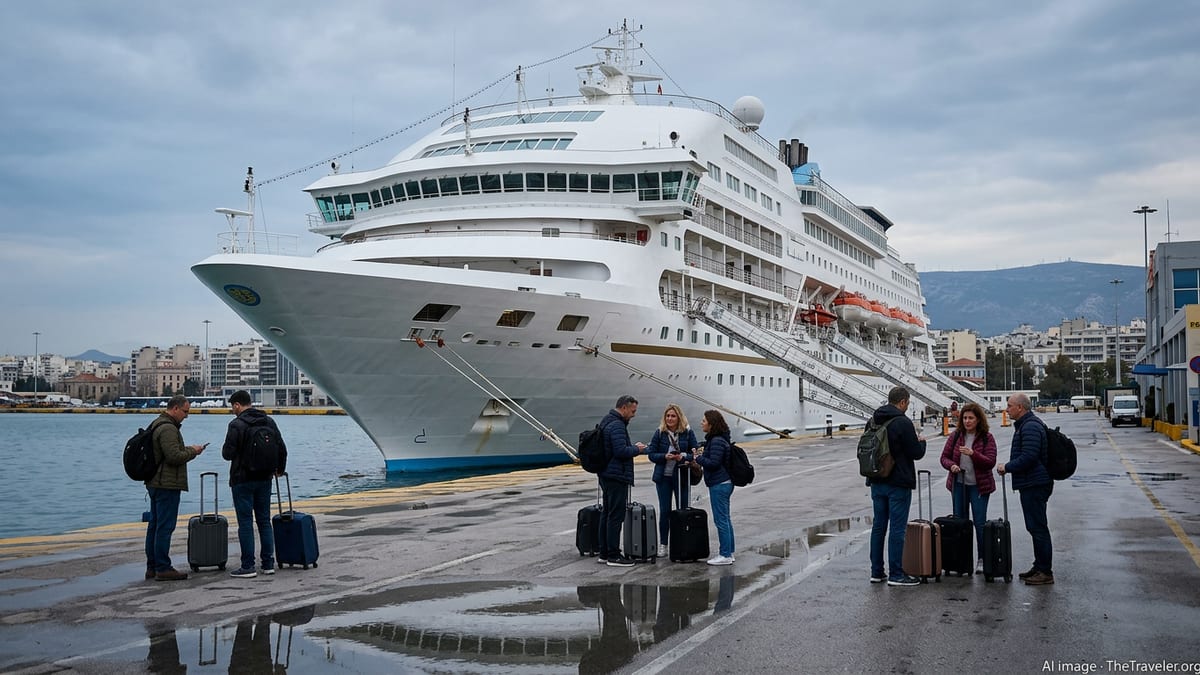
The Athens-based line confirmed on March 9 that the Celestyal Discovery will not operate its Iconic Aegean itineraries scheduled to depart Piraeus on March 20 and March 23, 2026. These short three and four night cruises were due to visit popular Greek islands at the very start of the company’s core Mediterranean season, making the disruption especially sensitive for both travelers and local tourism businesses.
The cancellations are a direct consequence of the Iran war and wider regional tensions that erupted in late February. Celestyal Journey remains alongside in Doha, Qatar, while Celestyal Discovery is still in Dubai, United Arab Emirates, after the line halted all remaining Arabian Gulf voyages days earlier for security reasons. With both ships stuck far from Greek waters, the company has no immediate way to start its Aegean program as scheduled.
Industry sources and trade publications report that Celestyal had already terminated the rest of its 2025 to 2026 Arabian Gulf winter season, scrapping all remaining departures from Dubai, Doha and Abu Dhabi following warnings over maritime security and airspace restrictions. The early end to its Gulf program has now spilled over into its much anticipated return to Greek island cruising this spring.
For now, Celestyal has only publicly confirmed the loss of the two March Greece departures, but it has not ruled out further changes. The company says it is “monitoring developments in the Middle East” and staying in close contact with regional authorities, leaving open the possibility that additional early season Aegean sailings could be affected if ships cannot be repositioned safely and on time.
Why Middle East Tensions Are Disrupting Greece Cruises
The immediate trigger for the disruption was a sharp escalation in the conflict involving Iran at the end of February, which rapidly transformed the security outlook for cruise operations in the Gulf and nearby waters. Cruise lines were forced to reassess itineraries that rely on key maritime chokepoints such as the Strait of Hormuz and on overflying conflict-affected airspace for turnaround flights and crew changes.
Celestyal is one of several operators that had bet heavily on a winter Arabian Gulf season using ships that would then reposition to the Eastern Mediterranean in spring. When hostilities intensified and war-risk assessments worsened, the line opted to end its Gulf program early, canceling multiple March cruises and beginning the task of disembarking guests in Dubai and Doha.
That decision avoided sailing through potentially hazardous waters but came at a cost. With the Gulf season cut short and regional logistics in flux, Celestyal has faced delays in securing safe passage and operational clearances to move its vessels back toward Greece. Until those repositioning voyages can take place, the ships cannot reach Piraeus to start the Aegean schedule, leaving the earliest Greece cruises vulnerable.
The disruption highlights how interconnected modern cruise deployment has become. A conflict more than a thousand kilometers from the Cyclades has nonetheless rippled into the Greek tourism calendar, as ships that double as Gulf and Aegean workhorses are caught on the wrong side of a fast-changing security map.
What Affected Passengers Are Being Offered
Celestyal has told travel partners and guests that those booked on the canceled March 20 and 23 Greece departures are entitled to compensation options similar to those offered to travelers on the scrapped Arabian Gulf cruises. Passengers can expect a full refund of the cruise fare or a future cruise credit, typically with an added incentive to rebook on later sailings once operations stabilize.
Travel agents report that the line is contacting impacted guests in booking-date order, prioritizing those with imminent departure dates. Many passengers had combined the short Aegean sailings with hotel stays in Athens or on the islands, and the timing of the announcement has left some scrambling to adjust air tickets, accommodation and transfers on short notice.
Because airline and hotel policies vary, Celestyal’s compensation will not automatically cover all ancillary travel costs. Travelers who built their own flight and land packages may need to rely on flexible airline fares or travel insurance clauses that address war-related disruptions and supplier cancellations. Those who booked bundled fly-cruise packages through the line or a tour operator should check whether alternative arrangements or partial refunds are being arranged on their behalf.
Consumer advocates recommend that passengers keep detailed records of all out-of-pocket expenses linked to the cruise cancellation and communicate in writing with both Celestyal and their booking agent. Under European and Greek consumer rules, cruise lines that cancel for safety reasons must, at a minimum, refund the unfulfilled cruise services, but any goodwill extras such as bonus credits, discounts on future sailings or help with rerouting flights remain at the company’s discretion.
Alternatives for Spring and Summer Aegean Sailings
For travelers still determined to cruise the Greek islands in 2026, a range of alternatives remain, although availability on peak spring and early summer dates is tightening. Larger international brands with ships already based in the Eastern Mediterranean have so far kept the bulk of their Greece programs intact, focusing instead on adjusting itineraries in and around Israel, Lebanon and other directly affected destinations.
Some Celestyal customers whose March cruises were canceled are shifting to later Iconic Aegean or seven night itineraries once the line’s vessels eventually reach Greece. Others are pivoting to land based island hopping using domestic ferries, particularly around the Saronic Gulf and Cyclades, where frequent sailings from Piraeus can partially replicate a cruise-style experience.
Travel advisors caution that, given the fluid geopolitical situation, flexibility is essential. They suggest favoring itineraries that stay squarely within Greek waters and that avoid longer repositioning voyages through contested zones. Booking refundable or changeable airfares, choosing hotels with lenient cancellation policies and purchasing comprehensive travel insurance that explicitly covers supplier default and war-related disruptions can all help reduce risk.
For those not yet booked, experts say there is no broad reason to avoid travel to Greece itself, where airports, ports and domestic sea routes are operating normally. The main uncertainty lies with ships and flights that must transit the broader Middle East, a factor that particularly affects cruise lines, like Celestyal, whose deployment straddles the Gulf and the Aegean.
What Could Happen Next for Celestyal and Greece Cruises
Looking ahead, industry analysts say much depends on how quickly security assessments improve and whether safe corridors can be established for cruise repositioning voyages out of the Gulf. If naval escorts or revised routing allow Celestyal’s ships to depart Dubai and Doha in the coming weeks, the impact on the broader 2026 Greek season could be limited to the already canceled March departures and possibly a small number of additional early sailings.
However, a prolonged conflict or further deterioration in regional security could force the line to reconsider its early spring schedule more broadly. In that scenario, Celestyal might opt to push back the start of its Aegean program, consolidate departures, or redeploy capacity elsewhere in the Mediterranean once ships finally reach safer waters.
The situation is also being closely watched by Greek tourism stakeholders, for whom Celestyal’s short island cruises play a distinctive role. These itineraries feed passengers into local tavernas, shops and excursion operators in multiple ports over a matter of days, supporting shoulder season business on islands such as Mykonos, Patmos and Rhodes.
For now, travelers booked on Greece sailings from April onward are being advised to stay in touch with their agents and monitor direct communications from Celestyal rather than making hasty decisions. While the cancellation of the first two Aegean cruises is a blow for early season travelers, there remains cautious optimism within the industry that, if security conditions allow, Greek island cruising can still proceed for much of the 2026 season.