

More news on this day
Celestyal has abruptly cancelled all remaining Arabian Gulf cruises for the 2025-26 winter season, a move that has stunned tourism officials in Dubai and Doha and rattled already anxious travelers across the region.
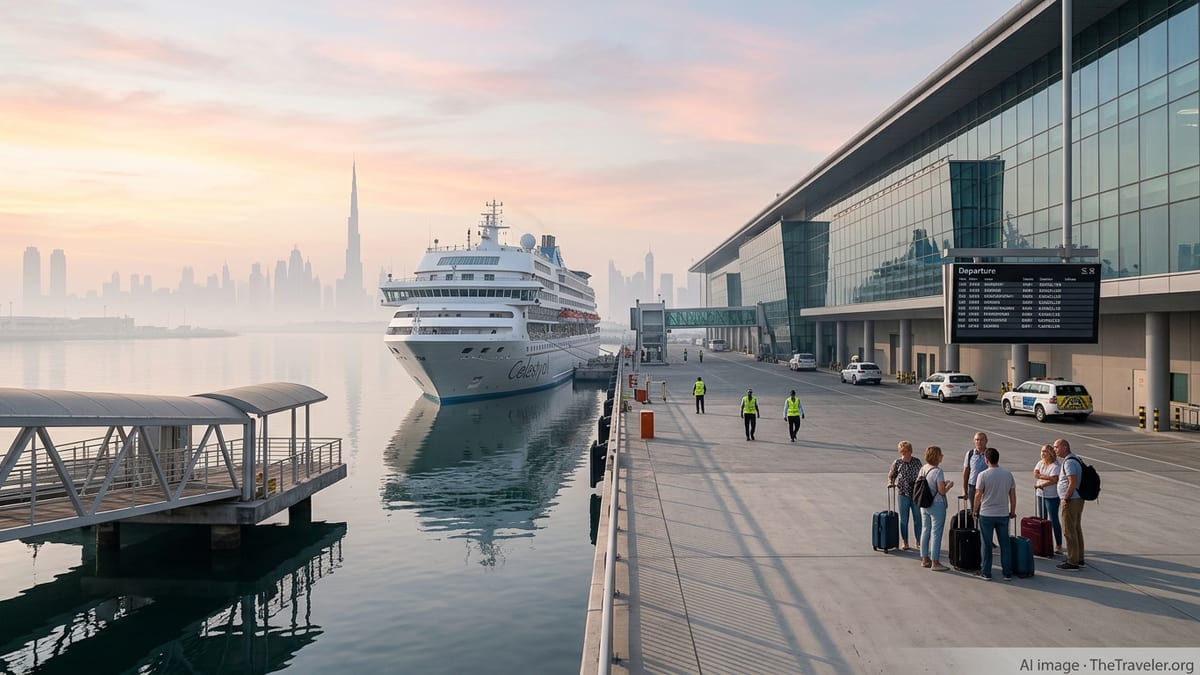
Conflict Fallout Forces Early End to Desert Days Season
The Athens-based cruise line confirmed this week that it is terminating its inaugural “Desert Days” Arabian Gulf program ahead of schedule, citing the worsening security environment following the Iran–U.S. conflict and instability around the Strait of Hormuz. The decision applies to all remaining departures in March 2026, effectively ending Celestyal’s Gulf season weeks earlier than planned.
The cancellations include Celestyal Journey sailings scheduled to depart Doha on March 7 and 14, as well as Dubai departures on March 9 and 16. These final cruises had been heavily marketed as a highlight of the line’s expanded winter offering in the Gulf, featuring overnight or extended calls in Dubai and Doha alongside stops such as Sir Bani Yas and Khasab.
Celestyal had already scrapped earlier voyages from Dubai and Abu Dhabi at the start of the month as tensions spiked. With the latest announcement, the company has now drawn a line under the entire 2025-26 Arabian Gulf season, joining a growing list of cruise brands that have pulled out of the region in recent days.
Travel industry analysts say the speed and scope of the cancellations underscore how quickly the security situation has deteriorated, catching both passengers and local tourism officials off guard just as the Gulf’s peak cruising period was hitting its stride.
Dubai and Doha Count the Cost of Lost Cruise Calls
The abrupt end to Celestyal’s season is a blow to the port cities of Dubai and Doha, which have invested heavily in cruise infrastructure and marketing to cement their status as winter homeports. Both cities had been banking on a strong finish to the 2025-26 season, with Celestyal’s program positioned as a fresh alternative to the larger international brands traditionally dominant in the region.
Port agents and shore-excursion operators in Dubai say they are now scrambling to reassess staffing and inventory for March, as not only Celestyal but also MSC Cruises and TUI Cruises have withdrawn remaining Gulf departures. Hoteliers and retailers in cruise-focused precincts such as Dubai Marina and Doha’s waterfront souqs report a sudden wave of cancellations and rebookings as passengers adjust their plans.
In Doha, the loss of two final Celestyal Journey turnarounds adds to pressure on a cruise sector that had been gaining momentum after years of incremental growth. Tourism insiders there note that smaller, destination-focused lines like Celestyal tend to deliver higher per-guest spending in port, thanks to longer stays and more immersive shore programs.
Officials in both cities are emphasizing that day-to-day life and most tourism operations continue as normal, but privately acknowledge that the cruise segment faces an uncertain outlook until maritime and airspace restrictions ease in the wider Gulf.
Passengers Offered Refunds and Credits as Repatriation Continues
Celestyal has said guests booked on the cancelled March departures will be offered a choice between a full refund and a future cruise credit. The policy aligns with steps taken by other lines exiting the Gulf this week, but many travelers remain frustrated at the disruption to carefully planned holidays built around sailings from Dubai and Doha.
Passengers currently onboard Celestyal Journey in Qatar have been informed that they must disembark by March 7, after which the line says it can no longer accommodate them in the region. The ship has remained alongside in Doha as the company coordinates onward travel and alternative arrangements for affected guests.
In Dubai, Celestyal Discovery has also been idling in port as the line works with authorities and travel partners on repatriation logistics. Travel agents report high call volumes from customers seeking clarity on flights, insurance coverage and whether land-based stays in the UAE or Qatar can still go ahead without the cruise component.
Consumer advocates are urging travelers to read the fine print of both cruise contracts and insurance policies, pointing out that many force majeure clauses give operators broad latitude in the event of geopolitical crises. For now, though, most major lines are offering relatively flexible options to maintain goodwill in a key growth market.
Celestyal Ships Head for Athens and a Swift Pivot to the Med
With the Arabian Gulf season now officially over, Celestyal plans to reposition both Celestyal Journey and Celestyal Discovery back to Greece to prepare for their scheduled Mediterranean programs. Subject to operational conditions, the ships are expected to return to Athens in time to begin spring and summer itineraries to the Greek Islands, Turkey, Croatia and nearby destinations.
The repositioning will mark a rapid pivot away from what had been one of the line’s most high-profile expansion bets. Celestyal only recently extended its Gulf deployment, touting strong early demand for shorter, inclusive sailings aimed at both regional residents and long-haul visitors pairing Dubai and Doha with classic Mediterranean cruises.
Industry observers say the company’s decision to retreat, while unwelcome, is in line with its historical focus on safety and operational flexibility. Celestyal has previously redeployed ships and reworked routes in response to regional tensions, and executives have been keen to stress that the brand’s core eastern Mediterranean program will proceed as scheduled.
The early end to the Gulf season may also concentrate demand for Celestyal’s Aegean and Adriatic itineraries, particularly among guests offered credits who want to travel later in 2026 once geopolitical risks are perceived to be lower.
Wider Gulf Cruise Market Reels as Multiple Lines Pull Out
Celestyal’s announcement comes amid a cascading series of withdrawals from the Arabian Gulf by international cruise brands. MSC Cruises has halted all remaining winter sailings in the region, while TUI Cruises has paused operations for ships that were scheduled to run itineraries from Dubai and Doha this month.
Collectively, the moves amount to a historic contraction in Gulf cruise capacity just as the sector was emerging from the shadow of the pandemic and earlier regional flare-ups. Thousands of passengers have been affected, with some reporting being stranded or facing complex rebooking scenarios as airlines adjust schedules in tandem with maritime security advisories.
For regional tourism authorities, the immediate priority is managing the fallout and assisting travelers, but attention is already turning to the longer-term question of how quickly confidence can be restored. Cruise lines typically finalize winter deployment plans many months in advance, meaning that uncertainty around the 2026-27 Gulf season could linger well beyond the current conflict.
For now, Celestyal’s early exit from Dubai and Doha stands as one of the clearest signs yet of how deeply the latest Middle East crisis is reshaping travel patterns, forcing even relatively small and agile operators to rethink their ambitions in one of the world’s most strategically sensitive waterways.