

More news on this day
Celestyal’s plans for a smooth start to the 2026 Mediterranean cruise season have been abruptly thrown off course, as the line’s two-ship fleet remains effectively trapped in the Arabian Gulf amid spiraling regional conflict and a partially choked-off exit route toward the Mediterranean.
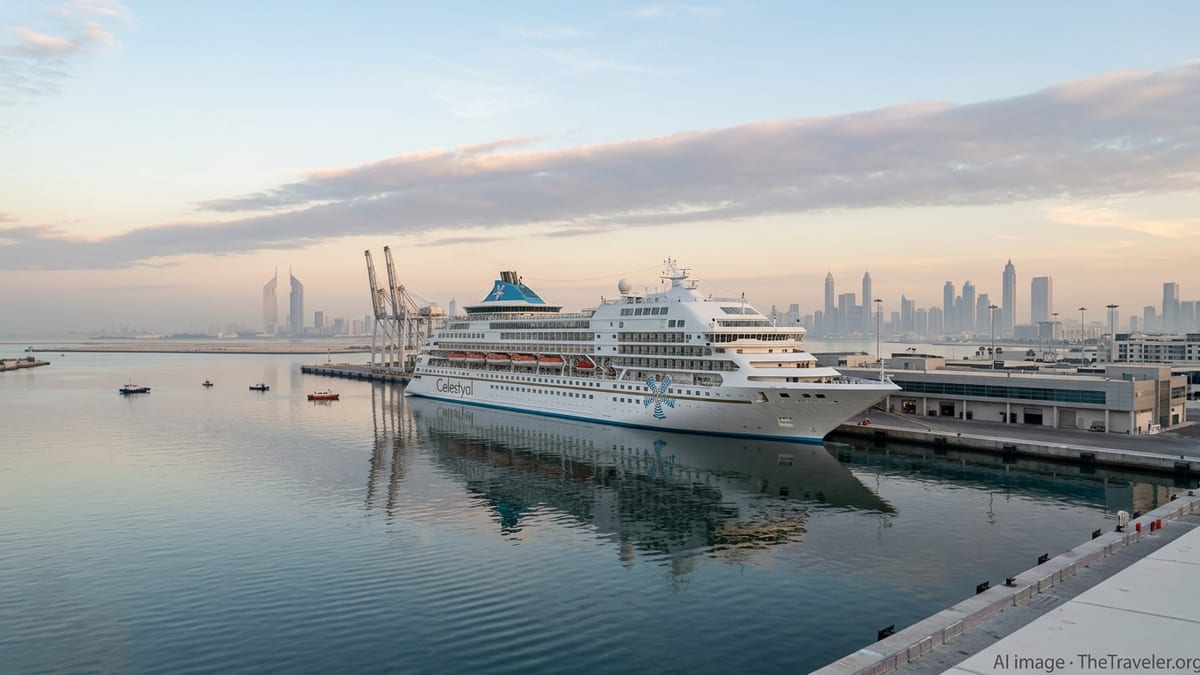
Fleet Stalled in the Gulf as Conflict Closes Off Options
Celestyal Discovery and Celestyal Journey, the Greek line’s two main ships, were supposed to be wrapping up a winter program in the Arabian Gulf and repositioning to Athens for spring and summer Mediterranean itineraries. Instead, both vessels are idling at Gulf ports after Celestyal cancelled the remainder of its March sailings, citing escalating military tensions and mounting operational barriers across the region.
The conflict that erupted after a joint offensive against Iran on February 28 has upended commercial travel patterns across the Gulf. Airspace restrictions, port advisories and cruise-specific security assessments have combined to make the normally straightforward passage out of the Gulf far more precarious, even though there has been no formal international closure of the Strait of Hormuz. Cruise lines, including Celestyal, are acting on internal risk assessments and the advice of local authorities, dramatically cutting or halting operations.
Industry reports indicate that Celestyal has already instructed guests on affected Gulf sailings in early and mid March to disembark in ports such as Doha and Dubai once local authorities give clearance. The priority now is to get remaining passengers safely home, then secure windows for the ships themselves to transit out of the region and head toward their European base.
Mediterranean Season in Question as Repositioning Window Narrows
The disruption in the Gulf lands just as Celestyal was preparing to pivot into its core Mediterranean business, including popular Greek Isles and Three Continents itineraries from late spring onward. Those deployments depend on precise repositioning schedules, with ships typically exiting the Gulf in March to allow for dry dock, provisioning and crew rotations ahead of European departures.
With the fleet still in the Arabian Gulf in early March and commercial shipping traffic sharply reduced, Celestyal faces a shrinking window to move the ships through the Strait of Hormuz and toward the Suez corridor. Any further deterioration in regional security or new navigational advisories could compound delays, raising the risk of late starts, trimmed itineraries or outright cancellations for early Mediterranean sailings.
Travel trade sources say Celestyal is working on contingency models that could include shortened seasons, modified embarkation ports or altered routes that avoid higher-risk chokepoints. However, until the company secures clear, safe passage out of the Gulf, its Mediterranean schedule for 2026 remains in flux. For travel advisors and guests, that uncertainty is already feeding a wave of rebooking requests and insurance claims.
Passengers Caught in the Middle of a Rapidly Shifting Crisis
The sudden halt in Celestyal’s Gulf operations has left thousands of guests scrambling to rework travel plans. Passengers booked on March departures from Doha, Dubai and Abu Dhabi were first warned of “itinerary refinements,” then informed that sailings would not proceed as planned. As airspace closures and flight cancellations rippled across the region, simply getting home became a logistical challenge for many travelers.
Celestyal has promised full refunds or future cruise credits to guests on cancelled voyages and is assisting those who were already onboard with disembarkation transfers and, where necessary, hotel arrangements while they await flights. The line must coordinate closely with local port and immigration authorities, who are juggling broader security priorities while managing thousands of stranded cruise passengers from multiple brands.
For would-be Mediterranean cruisers later this year, the fallout is less dramatic but still disruptive. Some guests are choosing to push their bookings into 2027 or switch to itineraries that are less dependent on sensitive sea corridors. Others are waiting for clearer guidance, hoping Celestyal can still salvage much of its Greek and Eastern Mediterranean program once its ships are free to move.
Wider Cruise Industry Turmoil Amplifies Mediterranean Uncertainty
Celestyal is far from alone in grappling with the sudden instability blanketing the Gulf and parts of the broader Middle East. Major lines have cancelled or curtailed sailings touching ports in the United Arab Emirates, Qatar, Saudi Arabia and Egypt, while some vessels remain effectively parked in Dubai and Doha as operators wait for a safer window to reposition.
Six large cruise ships, including Celestyal’s vessels and ships operated by European and regional brands, are currently reported to be idled or severely hampered in their movements. With airspace in several Gulf states temporarily closed or heavily restricted, companies must not only navigate maritime security but also secure viable air links for embarking and disembarking passengers and crew.
The cascading impact on Mediterranean deployment is significant. Many winter Gulf schedules are designed to dovetail into European seasons, particularly for lines like Celestyal that rely on fast turnarounds to meet demand for Greek Isles and Eastern Mediterranean itineraries. As more ships lose valuable repositioning days, pressure is building to compress schedules, reshuffle vessels between regions or scale back shoulder-season offerings.
Tourism Hubs Brace for Economic Fallout While Watching the Strait
The sudden standstill in Gulf cruising is already being felt in destinations that invested heavily to attract winter cruise business. Ports such as Dubai, Doha and Abu Dhabi had positioned themselves as major turnaround hubs, drawing travelers who often tacked on hotel stays and regional tours. The loss of Celestyal’s remaining sailings, on top of cuts by other lines, deals a sharp blow to local tourism businesses at a traditionally buoyant time of year.
In Europe, tourism officials are watching anxiously. Greek islands, Turkish coastal towns and Eastern Mediterranean ports depend on a reliable pipeline of cruise arrivals to support local economies each summer. If Celestyal and other operators are forced to trim or delay their Mediterranean programs because their ships remain stuck in the Gulf, the financial ripples could hit small businesses from Piraeus to the Dodecanese.
For now, much hinges on when security conditions and operational guidance allow cruise ships to safely exit the Arabian Gulf and resume longer repositioning voyages. Until then, Celestyal’s carefully laid plans for a renewed Mediterranean season remain on hold, emblematic of a cruise industry once again at the mercy of fast-moving geopolitical events.