

More news on this day
A reimagined 1970s villa on a leafy Nairobi hillside is fast becoming one of the city’s most talked‑about new stays, as Céline & Lolo draws travellers and locals with its relaxed design, intimate scale and distinctly Nairobi sense of style.
Get the latest news straight to your inbox!
A Midcentury Villa Turned Urban Oasis
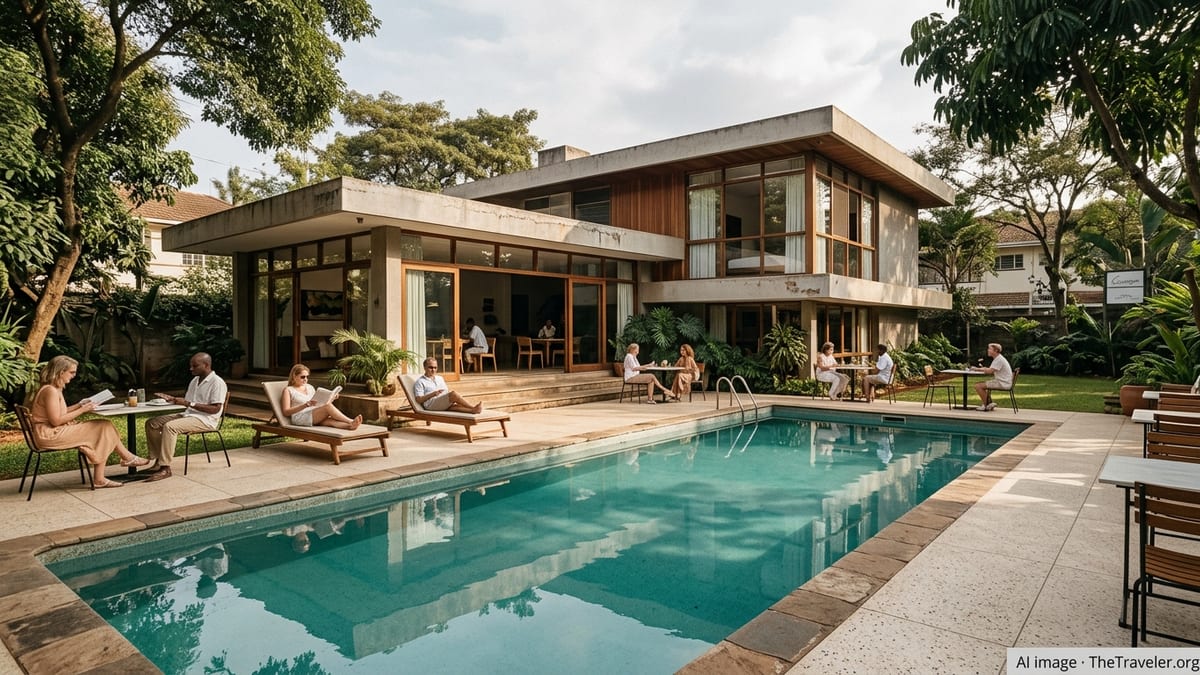
Céline & Lolo sits on Kabarsiran Avenue in Lavington, a residential pocket of Nairobi known for tree‑lined streets and proximity to key business districts. The hotel occupies a split‑level 1970s estate originally designed by Karl Henrik Nøstvik, the architect behind the city’s Kenyatta International Convention Centre, giving the property an immediate architectural pedigree that sets it apart from many newer builds.
Publicly available information shows that the team behind the project chose to preserve much of the villa’s structure and character, keeping the concrete lines, timber walls and terrazzo floors while layering in contemporary furnishings and artworks. The result is positioned as an “urban oasis” where midcentury details are paired with softer textures, tropical planting and a warm, residential feel rather than formal hotel polish.
The hotel is described as the creation of a small group of long‑time Nairobi residents who have combined design, travel and hospitality backgrounds. Their stated aim is to capture what they see as the city’s creative energy and informal warmth, offering a stay that feels more like being welcomed into a stylish local home than checking into a conventional business hotel.
This approach aligns with a wider trend in Nairobi’s high‑end hospitality market, where investors and developers are increasingly favouring smaller, design‑driven properties over large branded chains, according to recent regional hotel and tourism analysis.
Inside the Rooms: Character Over Uniformity
The hotel has 24 rooms across several categories, from compact “Petite” spaces aimed at solo travellers to larger “Oasis” and “Chic Chic” rooms overlooking gardens and the pool. Each category is framed as having its own mood and layout, but with a consistent emphasis on comfort, natural light and layered textures rather than overt luxury finishes.
Room descriptions highlight crisp bedding, locally framed art and custom furniture alongside playful names that underline the property’s informal tone. The emphasis is on spaces that feel personal and relaxed, with details such as reading nooks, generous bathrooms and views onto greenery designed to encourage guests to slow down between meetings or flights.
Recent marketing material suggests the rooms have been conceived as a “soft landing” for travellers arriving in Kenya, whether they are in transit to safari destinations or staying in the capital for work. That positioning reflects Nairobi’s growing role as both a business hub and a launch point for regional tourism, where travellers increasingly look for a more characterful stopover than an airport‑adjacent chain hotel.
Early promotional content and guest feedback shared publicly emphasise that the property avoids overt opulence in favour of “everything you need and nothing you don’t,” resonating with visitors who prioritise thoughtful design and ease over extensive on‑site amenities.
Bistro Lolo: A Neighbourhood Restaurant at the Hotel’s Heart
At the centre of the property is Bistro Lolo, a café‑bistro concept that doubles as the hotel’s social hub. The restaurant is described as a modern neighbourhood spot where “mornings begin and evenings have a habit of running late,” reflecting an all‑day rhythm that caters to guests and local residents alike.
The menu is presented as fresh and unfussy, with bright salads, a strong coffee offering, and dishes rooted in French bistronomy adapted to Kenyan produce. Reports indicate that ingredients are sourced from local growers and small‑scale producers, aligning the bistro with Nairobi’s expanding farm‑to‑table and specialty coffee scenes.
Visuals and descriptions of the space highlight terrazzo floors, garden views and plenty of natural light, with the outdoor pool terrace extending the dining area into the open air. Social media posts show the restaurant hosting breakfasts, long lunches, sundowner drinks and casual dinners under garden lighting, positioning it as as much a gathering place for locals as an amenity for overnight guests.
Bistro Lolo’s presence strengthens Céline & Lolo’s appeal for travellers who prioritise food and atmosphere when choosing accommodation, and it mirrors a broader regional shift in which hotel restaurants are being designed to stand on their own as destination venues.
A Strategic Base for Business and City Breaks
Céline & Lolo’s location between Lavington and Riverside places it within easy reach of major office clusters, embassies and shopping centres, while remaining tucked away from some of Nairobi’s heavier traffic corridors. Promotional materials indicate an estimated 25‑minute drive to Jomo Kenyatta International Airport in normal conditions, which is likely to appeal to time‑pressed business travellers.
Industry commentary on Nairobi’s hospitality market notes rising demand for smaller, flexible meeting and event spaces with character. Céline & Lolo appears to target this segment with a mix of indoor lounges, shaded terraces and semi‑private corners around the gardens and pool that can accommodate informal meetings, small gatherings and creative sessions rather than large conferences.
The hotel also leans into the growing popularity of “micro‑stays” and in‑city breaks among Nairobi residents. Special offers promote staycation packages that combine overnight stays with dinners, breakfasts and late check‑outs, marketed as an accessible escape without leaving town. This strategy seeks to diversify revenue beyond international arrivals and business travel.
The property’s communications emphasise a concierge‑style approach in which staff share recommendations for local cafés, galleries, rooftop venues and markets. This reflects a wider trend in which boutique hotels act as informal city guides, giving visitors access to experiences that might otherwise remain under the radar.
Design, Sustainability and a Sense of Place
Beyond its visual appeal, Céline & Lolo positions itself around conscious design and relatively low‑impact building choices. Information published by the hotel states that during the conversion of the original villa, the team reused existing timber, terrazzo and structural elements wherever possible, rather than opting for a full demolition and rebuild.
Furniture and décor draw heavily on locally made pieces and regionally sourced materials, supporting Nairobi’s creative and artisan economy. The hotel’s art collection has reportedly been assembled over years of travel and collaboration, then framed and installed in Nairobi, giving each corridor and room its own mix of colours and stories.
The gardens and pool area play a central role in the overall experience, with dense planting, mature trees and outdoor seating arranged to create quieter pockets around the property. These spaces are intended to offer a calm counterpoint to the city’s pace, and they contribute significantly to the hotel’s image as a “hidden gem” that reveals a more intimate side of Nairobi.
As Nairobi’s hospitality scene continues to expand, Céline & Lolo illustrates how smaller, design‑centred hotels are helping to redefine what a city stay can look like, pairing neighbourhood character and sustainability‑minded renovation with a social, food‑focused core.