

More news on this day
Winding between Switzerland’s Lake Maggiore and the Italian Piedmont, the Centovalli Express is set to headline Europe’s scenic rail renaissance in 2026, pairing freshly upgraded trains with a slow‑travel route that feels made for alpine dreamers.
Get the latest news straight to your inbox!
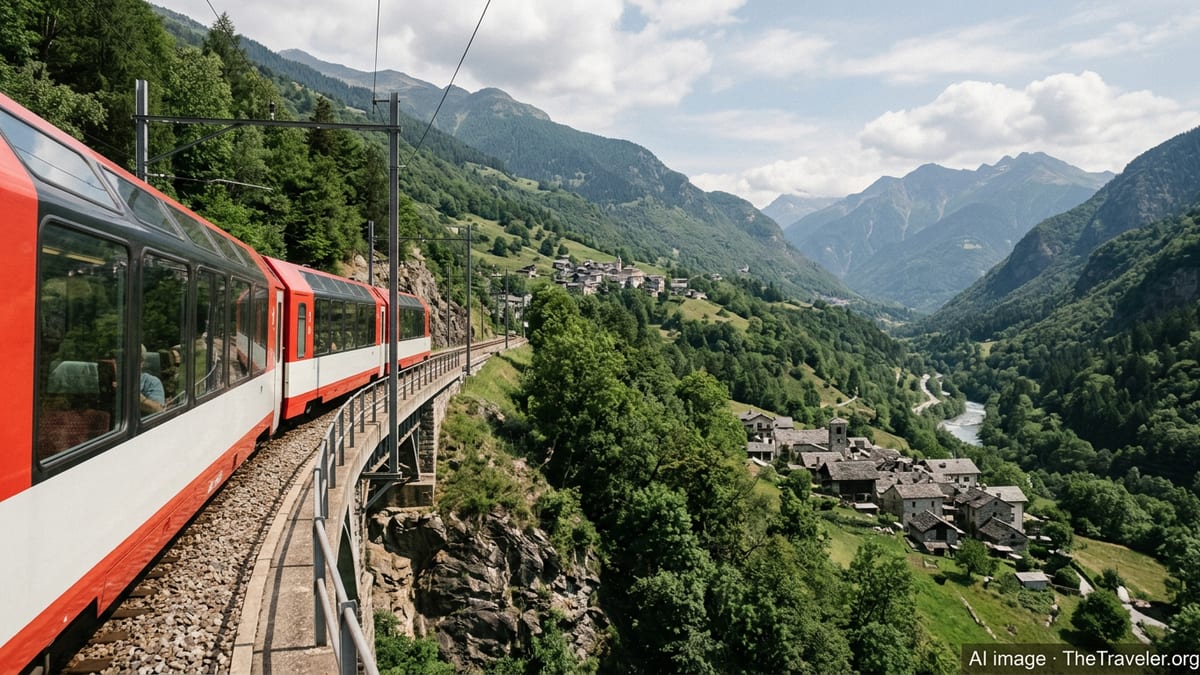
A Historic Alpine Route Enters a New Era
Stretching around 52 kilometers between Locarno in Switzerland and Domodossola in northern Italy, the Centovalli line has long been regarded as one of Europe’s great hidden rail journeys. The narrow‑gauge tracks slip through deep gorges, chestnut forests and hillside vineyards, crossing the Swiss–Italian border on a route that feels far removed from the continent’s high‑speed corridors.
In 2026 this historic line is being positioned as a flagship alternative to crowded motorways and short‑haul flights. Swiss and Italian regional transport authorities have spent recent years negotiating new performance agreements and funding packages to secure the railway’s long‑term future and modernise its infrastructure, with the 2025–2028 period earmarked for targeted investment in rolling stock, stations and digital systems.
For travelers, those policy decisions translate into a more reliable, more comfortable and more environmentally focused experience. Timetables are being fine‑tuned to connect more smoothly with InterCity and EuroCity services at Domodossola and with key Swiss routes via Locarno, effectively turning this once‑niche line into a scenic backbone for cross‑Alpine itineraries.
Operators and tourism boards on both sides of the border are now promoting the “Centovalli Express” branding more assertively in international campaigns, presenting the line as a quieter, more intimate counterpart to headline routes such as the Bernina Express and Gotthard Panorama Express.
New Trains, Panoramic Views and 2026 Upgrades
The most visible change for 2026 is the progressive deployment of a new fleet of low‑floor electric multiple‑unit trains, developed by Swiss manufacturer Stadler for the Centovalli corridor. Regional services on the Swiss side began operating with new rolling stock in 2025, and international trains are scheduled to be fully integrated across the route by late summer 2025, meaning 2026 travelers will encounter a largely renewed fleet.
The trains have been designed specifically for the tight curves and short platforms of the valley, while maximizing views. Large windows extend well into the roofline, seats are configured to open up sightlines down the gorge, and quieter traction systems reduce mechanical noise so that the sounds of waterfalls and rivers cutting through the valley are more noticeable as the train slows through open sections.
Inside, the refurbishment program emphasizes comfort without veering into luxury‑tour territory. Carriages feature improved suspension, climate control suited to hot Italian summers and snowy Swiss winters, power sockets at more seats and dedicated spaces for bicycles and strollers. Accessibility has been a core focus, with low‑floor entrances, wider doors and reservable spaces for passengers with reduced mobility.
On the Italian side, Società Subalpina di Imprese Ferroviarie is aligning its own fleet strategy so that cross‑border services feel seamless. By the 2026 summer season, operators expect a consistent standard of comfort and branding along the whole line, a marked shift from the patchwork of older trains that previously defined the route.
Slow Travel Through a Patchwork of Valleys and Villages
While the hardware is changing, the Centovalli Express remains faithful to its slow‑travel identity. Typical end‑to‑end journeys between Locarno and Domodossola take around two hours, with the train rarely rushing as it threads through 83 bridges and numerous tunnels. For many passengers, that unhurried rhythm is the attraction.
The line climbs gently from the palm‑fringed shores of Lake Maggiore into a landscape of stone villages, terraced vineyards and steep, forested slopes. Between stops the train passes waterfalls that plunge directly below the tracks, small chapels perched above ravines, and clusters of slate‑roofed houses that appear and vanish within seconds of a bend.
Stations such as Intragna, Verdasio and Santa Maria Maggiore have become mini‑hubs for day trips, with local tourism offices working alongside the railway to curate walking paths, winery visits and cable‑car excursions. On the Swiss side, short hops connect with aerial cableways climbing to car‑free hamlets and viewpoints, while in Italy the train opens up lesser‑known corners of the Val Vigezzo, sometimes called the “Valley of the Painters” for its historic landscape artists.
In 2026, regional authorities and destination marketing organizations are expected to deepen this integration, refining timetable coordination with mountain lifts, lake ferries and local buses. That could allow travelers to, for example, leave Zurich in the morning, cross the Alps via the Gotthard route, and by early afternoon be riding the Centovalli Express toward an agriturismo stay in rural Piedmont.
Tourism Demand Rises as Rail Travel Booms
The upgrade of the Centovalli Express comes amid a broader surge in regional rail use across southern Switzerland and northern Italy. Passenger numbers on cross‑border regional networks in the area have risen sharply since the late 2010s, reflecting a shift toward public transport for both commuting and leisure trips.
Tourism agencies have seized on that momentum, positioning rail as the default way to explore the Alps. For international visitors, the Centovalli line offers an appealing combination of simplicity and spectacle: no need to rent a car or navigate mountain roads, yet the sense of immersion in the landscape is as strong as on any road trip.
Seasonal campaigns have been particularly effective. Winter trains are marketed as a way to reach Christmas markets and snow‑dusted villages without traffic or parking headaches, while shoulder‑season offers encourage hikers and photographers to visit in spring and autumn, when foliage and light are at their most dramatic and car traffic is lighter.
With the new trains in full operation and infrastructure contracts in place through at least 2028, operators expect 2026 to deliver another step‑change in demand. Advance seat reservations, while not always mandatory, are being pushed more actively during peak holiday periods to manage crowding on the most scenic departures.
Practical Tips for Riding the Centovalli Express in 2026
For travelers planning a 2026 itinerary, the Centovalli Express is typically easiest to access via Locarno or Domodossola. From the Swiss side, frequent mainline trains connect Locarno with Bellinzona, which itself sits on the north–south axis linking Zurich and Basel with Milan. From Italy, Domodossola is served by regional and long‑distance trains from Milan and other major centers, although some periods of engineering work on the Simplon corridor can shift passengers onto replacement buses further south.
Ticketing remains relatively straightforward despite the border crossing. Most international rail passes accepted in Switzerland and Italy are valid for standard Centovalli services, though supplements may apply for specific panoramic or special‑event trains. Day‑trip tickets and seasonal offers are marketed through national rail operators and local transport networks, giving visitors the option to combine the Centovalli ride with urban transit in Ticino or onward regional travel in Piedmont.
Given the line’s growing popularity, especially with international tourists who now discover it via social media and travel media coverage, travelers in 2026 are advised to book ahead for the busiest windows: spring holidays, high summer and December weekends leading up to Christmas. Early morning or late‑afternoon departures can be quieter, with softer light that many photographers find ideal.
Whether used as a scenic detour between Swiss lakes and Italian cities or as the spine of a dedicated alpine holiday, the Centovalli Express in 2026 offers a blend of upgraded comfort and timeless landscape that few European rail routes can match.