

More news on this day
A major disruption on Mumbai’s Central Railway Central line left thousands of commuters stranded after a Kasara-bound train was halted near Kalyan due to a signal failure, triggering cascading delays across the suburban network and highlighting the vulnerability of one of India’s busiest commuter corridors.
Get the latest news straight to your inbox!
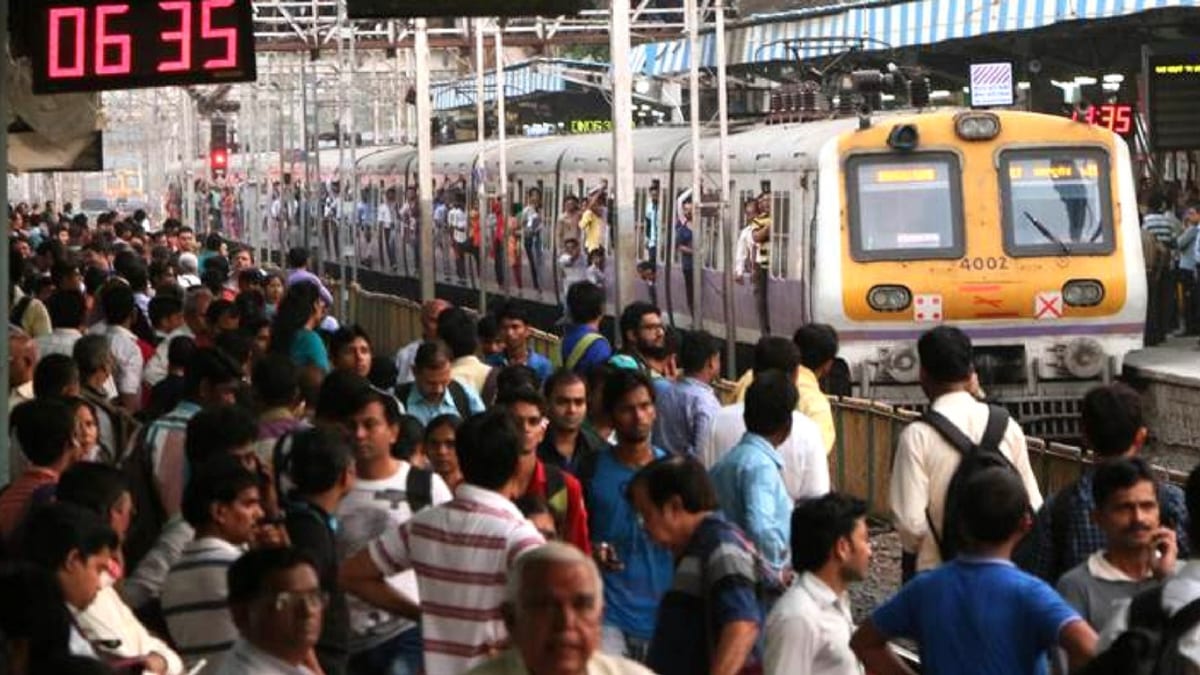
Signal Snag Near Kalyan Brings Kasara Service to a Halt
Published reports and social media updates indicate that a technical fault in the signaling system near Kalyan on the Central line forced a Kasara-bound suburban train to halt on the main corridor, bringing services in the section to a near standstill. The affected train, operating on the crucial CSMT Kasara axis, reportedly remained immobilized as control staff worked to trace and isolate the fault.
Initial information suggests that the failure occurred in the approach to Kalyan, a junction where multiple suburban and long-distance routes converge. With one train stuck and signals held at danger for following services, traffic quickly backed up on both the up and down lines, affecting trains headed toward Kasara, Asangaon and beyond, as well as services bound for Chhatrapati Shivaji Maharaj Terminus in south Mumbai.
While there were no immediate reports of injuries, the disruption significantly slowed the morning flow of trains through the bottleneck, forcing operators to run services at restricted speed and in a staggered pattern until the signaling issue could be stabilized. Commuters reported extended halts between stations and unusual route congestion as controllers attempted to re-sequence services around the stalled rake.
Signal-related disruptions have periodically affected the Central line in recent years, and rail observers note that even a short-lived failure at a key node such as Kalyan can ripple far beyond the immediate area, particularly during peak periods when the line already operates close to its capacity.
Thousands of Commuters Stranded Across the Central Line
The immediate impact of the Kalyan-area signal failure was felt by passengers on the stranded Kasara train, many of whom were forced to wait in packed coaches with limited information about when movement would resume. With the rake occupying a vital section of the main line, multiple following services were held at stations upstream, leading to platform crowding at Kalyan, Thane, Dombivli and other busy suburban stops.
Commuter accounts circulating online described platforms overflowing as scheduled services failed to arrive on time, with crowds building on footbridges and concourses. Some passengers reportedly abandoned their rail journeys and turned to road transport, only to find increased congestion on highways and arterial roads running parallel to the rail corridor.
According to publicly available information from recent Central Railway performance summaries, the CSMT Kasara stretch routinely carries heavy volumes of long-distance, suburban and freight traffic. When one section of this line is blocked, controllers must hold or divert multiple trains, compounding delays for passengers who are already accustomed to tight transfer windows and dense crowding during peak hours.
Although services were gradually restored as the signal fault was rectified and the immobilized train moved ahead, residual delays continued to affect the timetable for some time. Trains ran out of schedule, with longer-than-usual headways, and rakes arriving at terminal stations late often caused knock-on delays to subsequent departures.
Safety, Crowd Management and Passenger Experience in Focus
The latest disruption has renewed attention on safety and crowd management along the Central line, particularly in the Kalyan Kasara section where platforms and foot overbridges are frequently packed during rush hours. Past incidents in the Mumbai suburban network have shown how quickly service interruptions can escalate into serious crowding risks when passengers are left waiting in confined spaces.
Transport experts and commuter advocacy groups have long pointed to the combination of intense demand, aging infrastructure and limited redundancy as a core challenge. When a signal failure or overhead equipment fault occurs at a junction such as Kalyan, options for rerouting are constrained, leaving operators to rely on controlled halts and manual interventions that extend passenger wait times.
In recent years, Central Railway has announced a series of capacity enhancement projects, including additional lines, yard remodeling and signaling upgrades, aimed at improving resilience and reducing the likelihood that a single fault can freeze large sections of the network. The current incident is likely to feed into ongoing debates about how quickly these upgrades can be completed and how effectively they are being implemented on the ground.
Passenger accounts following the Kalyan disruption also highlighted communication gaps during live incidents. While some commuters reported receiving updates via station announcements and social media posts, others described long periods with little clarity about the nature of the fault, estimated restoration times or alternative travel options.
Operational Response and Calls for Infrastructure Upgrades
According to published coverage of similar disruptions on the Central line, standard operating practice during a significant signal failure involves temporarily suspending or slowing movements in the affected block while technical teams inspect trackside equipment, signal cabins and interlocking systems. Once the fault is identified, controllers often introduce temporary speed restrictions or altered routing patterns to clear the backlog of stranded services.
In the Kalyan Kasara case, reports indicate that trains beyond Kalyan were delayed or held, and that services approaching the junction were regulated to prevent further congestion. As operations gradually normalized, additional time was required to realign rakes to their scheduled paths and restore adherence to the timetable, a process that often extends well beyond the technical resolution of the original fault.
Railway planners and analysts have repeatedly emphasized the importance of modern signaling, better diagnostic systems and higher levels of automation to reduce such breakdowns. Upgrading to more advanced interlocking and train protection systems, they argue, can not only cut failure rates but also allow services to recover more quickly when a fault does occur.
The latest incident is likely to reinforce public pressure for faster execution of these upgrades on Mumbai’s suburban network. For Central Railway’s millions of daily users, delays linked to infrastructure issues have become a recurring part of the commute, and episodes like the Kasara train stranding near Kalyan underscore how closely the region’s daily rhythm depends on the reliability of the Central line.