

More news on this day
Aerolíneas Argentinas has cancelled 255 flights across its domestic and regional network as a nationwide strike led by Argentina’s powerful CGT labor federation paralyzes air travel on February 19, stranding more than 31,000 passengers and rippling into Brazil, Paraguay and Chile.
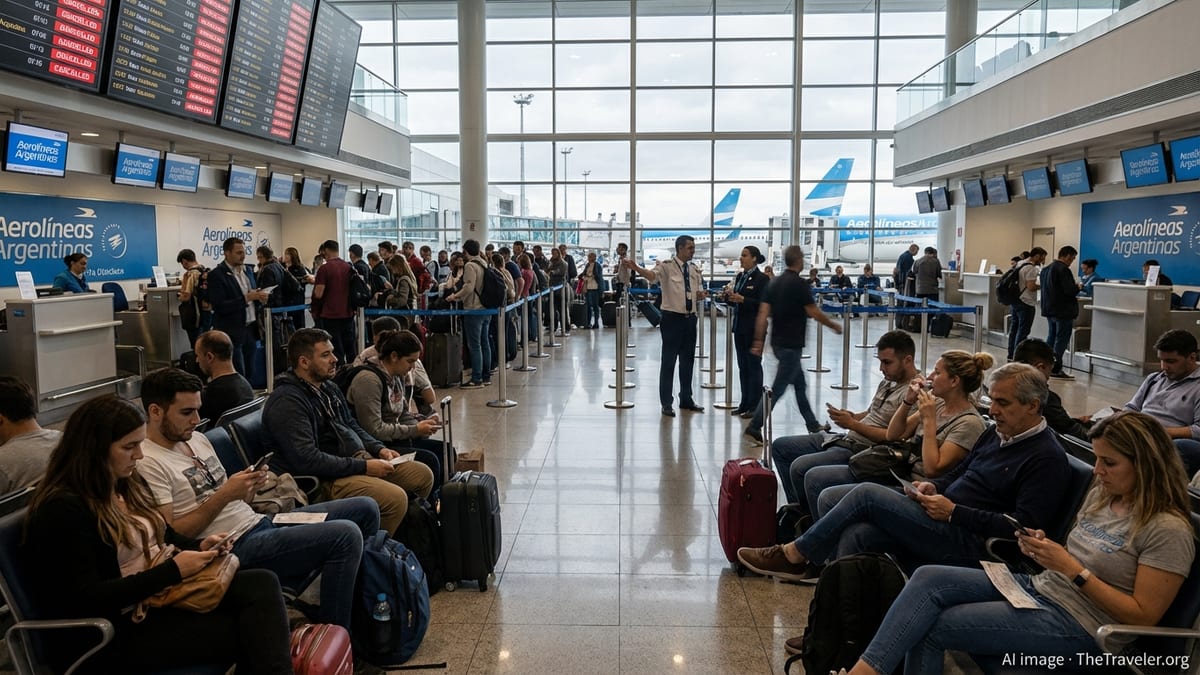
Nationwide Labor Showdown Halts Argentina’s Skies
The 24-hour general strike, called by the General Confederation of Labor in protest against President Javier Milei’s labor reform bill, has hit Argentina’s transport system at every level, with aviation among the hardest affected. The state-owned flag carrier confirmed that it would suspend 255 services in a single day, an extraordinary disruption for a network that connects some of the country’s most remote tourist and provincial destinations with Buenos Aires.
According to company figures, 219 of the cancelled flights are domestic, 32 are regional within South America and four are long-haul international. The airline estimates that more than 31,000 travelers will see their plans upended, while the financial impact of lost revenue and operational changes is projected at around 3 million dollars. Industry sources note that the scale of the cancellations places this strike among the most disruptive aviation labor actions in Argentina in recent years.
The CGT-led stoppage coincides with a crucial session of the lower house of Congress, where legislators are debating a labor reform package previously approved by the Senate. Union leaders argue that the changes would weaken job security and collective bargaining rights, while the government insists reforms are needed to reduce costs and attract investment. With both sides refusing to back down, airports have become a visible stage for a broader political and economic confrontation.
From Buenos Aires to Ushuaia: Key Hubs Brought to a Standstill
The heart of the disruption is in Buenos Aires, where Aeroparque Jorge Newbery and Ezeiza International Airport usually handle the bulk of Aerolíneas Argentinas’ domestic and international operations. At Aeroparque, commercial activity has been largely suspended, with more than two hundred flights listed as cancelled and only private and non-scheduled operations able to move. Ezeiza, the country’s main international gateway, is also reporting scores of cancellations, as ground handling services and airline staff join the strike.
Beyond the capital, the impact is radiating across Argentina’s vast geography. Flights linking Buenos Aires with Ushuaia at the southern tip of Tierra del Fuego, San Carlos de Bariloche in the Patagonian lake district, and northern cities such as Resistencia and other provincial capitals have been scrubbed from departure boards. For many communities that rely on the national carrier for year-round connectivity and tourism inflows, the one-day strike is effectively cutting them off from the rest of the country.
Travel agents in Patagonia report that passengers heading to iconic destinations such as the Beagle Channel, Nahuel Huapi National Park and other Andean resorts have been forced to postpone or completely abandon itineraries. Hoteliers in Bariloche and Ushuaia say they are fielding last-minute cancellations and rebooking requests, particularly from Brazilian and Chilean travelers who often combine regional flights with domestic legs operated by Aerolíneas Argentinas.
Regional Ripple Effect Reaches Brazil, Paraguay and Chile
The strike is not confined within Argentina’s borders. With 32 regional routes suspended for the day, services that normally link Buenos Aires with major South American cities in Brazil, Paraguay and Chile have also been heavily disrupted. Flights between Buenos Aires and hubs such as São Paulo, Rio de Janeiro, Asunción and Santiago are either cancelled or operating at sharply reduced frequencies, depending on the availability of non-striking ground services and alternative carriers.
Airlines from neighboring countries have scrambled to adjust. LATAM Airlines Group has acknowledged changes to its Argentina-bound operations, warning that some flights may operate on altered schedules or dates. While many of these services are not fully cancelled, passengers are being urged to check updated departure times and rebooking options as airport staffing levels shift throughout the day. In some cases, connections onward to Brazil, Paraguay and Chile are being re-routed through alternative hubs to avoid the worst of the disruption.
Regional tourism boards are closely watching the fallout. February remains a busy travel period for cross-border leisure trips, particularly between Argentina and southern Brazil and Chilean Patagonia. Industry analysts caution that even a 24-hour shutdown can dent traveler confidence, especially among international visitors who may be unfamiliar with the frequency and scale of Argentine labor actions. For some foreign passengers, the strike is their first encounter with the country’s volatile union landscape, experienced not in the halls of Congress but in airport terminals.
Passengers Stranded, Rebookings and Refunds Under Strain
For thousands of passengers, the strike has translated into long queues at check-in counters, crowded customer service desks and jammed call centers. Aerolíneas Argentinas is offering changes of date without penalty or fare differences for those scheduled to travel on the affected day, extending flexibility windows into mid-March for many routes. Travelers who booked through agencies are being instructed to work through their intermediaries, while direct customers are urged to use the airline’s app and online self-service tools to avoid congested airport lines.
Nonetheless, the sheer volume of cancellations means that rebooking every passenger within a reasonable timeframe is a daunting task. With school holidays and late-summer travel demand still strong, seats on flights immediately before and after the strike date are scarce on key domestic and regional routes. Some travelers have been forced to accept significantly altered itineraries, overnight stays in intermediate cities or transfers to flights on other carriers where interline agreements allow.
In Buenos Aires, images from Aeroparque and Ezeiza show families camped out on terminal floors, backpackers checking for last-minute bus tickets and business travelers recalculating schedules as meetings are postponed or moved online. Ground staff and supervisors, many of whom are themselves union members, have become de facto mediators between frustrated passengers and a labor dispute over which they have little direct control.
Why the CGT Strike Targets Transport and Aviation
The CGT’s decision to heavily target transport services is rooted in the sector’s strategic importance. Disruptions in aviation, long-distance buses, urban trains and subways quickly translate into visible pressure on the government, and in the case of Aerolíneas Argentinas they also touch a politically sensitive symbol of national identity. The state-owned airline has been at the center of debates over privatization and public spending, making it a natural focal point for unions opposed to the current administration’s economic agenda.
Aviation unions representing pilots, cabin crew, mechanics and ground personnel have been among the most vocal critics of the proposed labor reform. They argue that changes could erode seniority protections, increase employer flexibility in scheduling and hiring, and weaken collective bargaining frameworks built up over decades. In past disputes, mandatory conciliation ordered by labor authorities has helped avert stoppages, but union leaders contend that in this case a show of force is necessary to influence the legislative debate.
For the government, the disruption in the skies provides ammunition of a different kind. Officials close to the administration frame the strike as evidence of what they describe as an entrenched corporatist system unwilling to accept modernization. Supporters of the reform argue that rigid labor rules and recurrent strikes deter investment, particularly in capital-intensive sectors such as aviation, and contribute to high fares and limited competition in domestic air travel.
Tourism Industry Faces Fresh Blow in a Key Travel Season
The timing of the strike is especially painful for Argentina’s tourism sector. The southern hemisphere summer season, which runs through February, is traditionally one of the busiest periods for both domestic and inbound travel. Destinations such as Ushuaia, San Carlos de Bariloche and the wider Patagonian corridor rely on a steady flow of visitors arriving on Aerolíneas Argentinas flights from Buenos Aires, Córdoba and other major cities. A sudden halt in air service means empty hotel rooms, unused excursion slots and lost revenue for local businesses.
Tourism operators report that the uncertainty surrounding the labor dispute has compounded existing challenges, including inflationary pressures, shifting currency rules and higher operating costs. Many smaller agencies and independent guides say that while they sympathize with workers’ concerns, repeated strikes and transport disruptions make it harder to market Argentina as a reliable destination, particularly to first-time visitors from abroad. Some are now pushing for clearer contingency protocols and communication channels between airlines, airports and local tourism authorities.
In urban centers such as Buenos Aires and Córdoba, where cultural events, conferences and festivals attract both domestic and regional visitors, organizers have had to make rapid adjustments. Some events have proceeded with reduced attendance, while others have been postponed to avoid leaving participants stranded. For travel planners, the message is clear: contingency planning for labor-related disruptions is no longer optional when designing itineraries that depend heavily on air connections within Argentina.
Competing Carriers Seek to Keep Limited Operations Going
While Aerolíneas Argentinas is bearing the brunt of the cancellations, other airlines are also navigating the strike’s fallout. Low-cost carrier Flybondi has moved part of its operation to Ezeiza, seeking to maintain at least a limited schedule despite the shutdown at Aeroparque and the broader withdrawal of ground services. The company has warned passengers that its ability to continue flying is tied to fuel availability and other airport services that remain vulnerable to strike participation by third-party providers.
International carriers serving Argentina, including regional and long-haul operators, have mostly opted for mixed strategies of schedule reductions, retimed flights and, in some cases, outright cancellations. Much depends on whether they self-handle ground operations or rely on Intercargo and other service providers whose workers are participating in the strike. For passengers, this patchwork approach means that two flights to the same destination on the same day can face very different outcomes, depending on the airline and the airport.
Analysts note that the episode underscores the strategic advantage enjoyed by carriers with more flexible operating models and diversified ground-handling arrangements. However, they also point out that in a highly interconnected aviation ecosystem, few companies are entirely insulated from a nationwide labor action that affects fuel supply, airside access and air traffic control staffing levels, even when some of those services legally must maintain minimum operations.
What Travelers Should Expect After the Strike Ends
Although the CGT has framed the action as a 24-hour stoppage, the operational consequences are likely to extend beyond the formal end of the strike. Airlines typically require several hours to reposition aircraft, refuel, rest crews and clear backlogs before normal schedules can resume. Industry sources indicate that a return to regular operations may not occur until the early hours following the strike day, and residual delays and isolated cancellations could persist into subsequent days as airlines work through the disrupted rotations.
Passengers with upcoming trips are being advised to monitor their flight status closely, even if they are scheduled to travel after the strike date. Where possible, travelers are encouraged to allow additional connection time, especially for itineraries that combine international and domestic segments in Argentina or link Buenos Aires with regional destinations in Brazil, Paraguay and Chile. Flexible booking policies, which many airlines introduced to manage the immediate crisis, may continue for a limited period as carriers seek to rebuild goodwill.
For now, Argentina’s aviation sector faces a familiar but increasingly urgent question: how to balance workers’ demands and political struggles with the need to provide consistent, reliable service in a country where air connectivity is vital for tourism, business and everyday mobility. As travelers stranded in Buenos Aires, Ushuaia, Resistencia, Bariloche and beyond wait for flights to resume, the cost of that unresolved tension is measured not just in lost millions, but in disrupted journeys across the Southern Cone.