

More news on this day
Singapore’s Changi Airport is reclaiming center stage in the global hub race, with new rankings and passenger trends indicating that high-end layover traffic is pivoting away from Doha and back to the Lion City in 2025 and into 2026.
Get the latest news straight to your inbox!
Changi Back At Number One In Global Airport Rankings
Singapore Changi Airport has re-emerged as the world’s leading hub after topping the 2025 Skytrax World Airport Awards, according to publicly available results released in April 2025. The survey of global passengers placed Changi ahead of Doha’s Hamad International Airport, which had taken the crown in 2024. The reversal restores Singapore’s long-running dominance in the awards, adding another win to a tally that already made Changi one of the most decorated airports in the world.
Published coverage of the 2025 rankings shows Changi not only securing the overall “World’s Best Airport” title but also sweeping multiple key categories, including Best Airport in Asia and recognition for its dining and washroom facilities. Hamad International, meanwhile, retained a strong second place and continued to lead in airport shopping, underscoring how tight the competition remains at the very top of the league table.
Analysts note that the Skytrax results are closely watched by airlines, tourism boards and airport investors, because they capture how passengers perceive service, comfort and ease of transit. Changi’s return to the summit in 2025, after Doha’s win in 2024, is being read as a signal that premium travelers are once again gravitating toward Southeast Asia’s marquee hub for long-haul layovers.
From Desert Hub To Garden City Stopover
As recently as 2024, industry coverage highlighted Doha’s Hamad International as the world’s top airport, reflecting Qatar’s heavy investment in its hub ahead of and after the FIFA World Cup. The airport’s vast Al Mourjan lounges, luxury retail and art installations helped establish Doha as a preferred transfer point on Europe to Asia routes, especially for passengers flying with Qatar Airways.
The latest ranking cycle, however, indicates that momentum has swung back toward Singapore. Changi’s 2025 win is supported by steady growth in international passenger volumes through Singapore and a broader reopening of Asian markets. Available aviation data for 2023 and 2024 shows Changi among the busiest global airports by international traffic, while Doha’s volumes, though expanding rapidly, remain lower in absolute terms.
Travel industry observers point out that the competition is no longer just about punctuality and connections, but about which hub can offer the most rewarding stopover experience. In that contest, Changi benefits from being integrated with a mature urban destination. Passengers who choose to leave the terminal can reach central Singapore in around 20 to 30 minutes, turning even a mid-length layover into a realistic opportunity for sightseeing, dining and shopping in the city itself.
Jewel, Pools And Pay-Per-Use Comfort Driving Transit Appeal
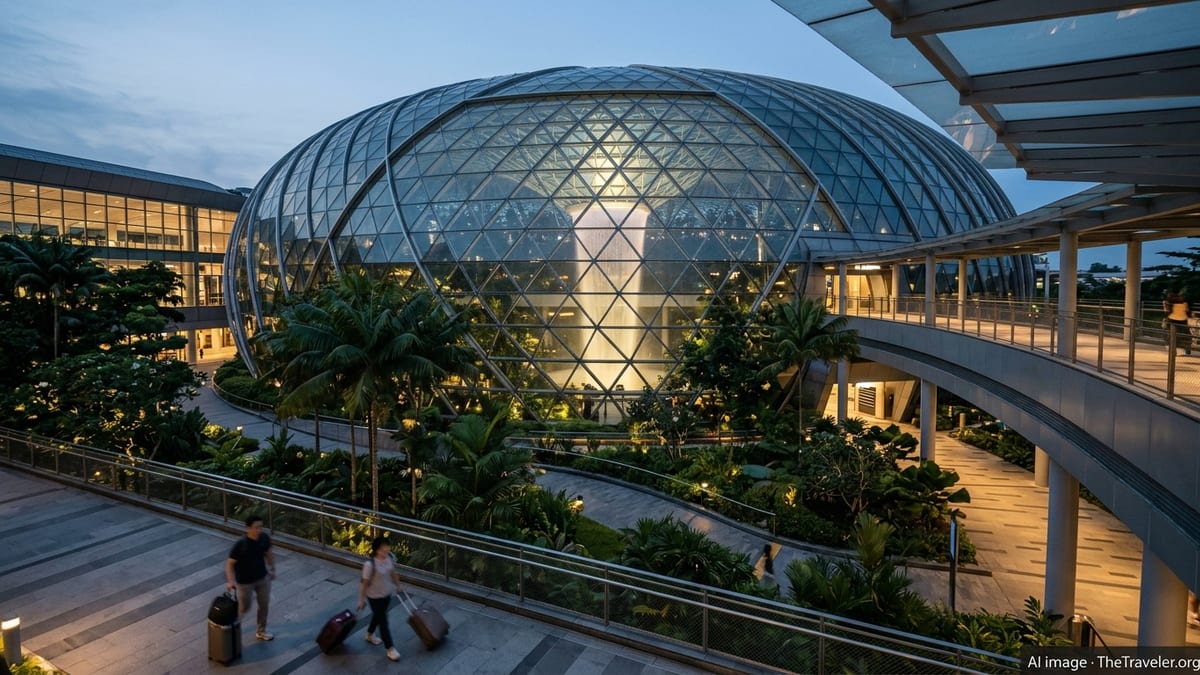
Changi’s allure for luxury layovers rests heavily on its amenities, which continue to expand and be refined. The Jewel complex, connected to the terminals, combines an indoor forest, retail, dining and the world’s tallest indoor waterfall under a single glass dome. Public information from Changi Airport shows that Jewel is positioned as both a shopping and leisure destination, accessible to transit passengers and local residents alike, with facilities ranging from pay-per-use lounges to attractions open late into the night.
Inside the secure transit area, Changi offers a mix of traditional airline lounges and independent pay-per-use spaces, allowing premium and non-elite travelers to access showers, quiet zones and buffet dining for a fee. Airport materials and travel advisories highlight additional comfort-focused amenities, including a rooftop swimming pool in the transit hotel, spa services and themed gardens that give long-haul passengers a way to relax between flights.
Recent updates shared by airport operators and partner hotels show continued investment in airside and landside accommodation, including rooms with direct pool access and packages that blend overnight stays with retail or attraction vouchers in Jewel. For travelers planning extended layovers, these products position Changi as a resort-style hub where the airport itself becomes the destination, rather than a place to be endured.
Doha Holds Its Ground With Retail, But Faces Tougher Competition
Doha’s Hamad International Airport has not faded from the luxury layover map. Reports on the 2025 Skytrax awards indicate that Hamad continued to dominate in specific categories, most notably airport shopping, where it has now retained a leading position for several consecutive years. The hub’s central “orchard” garden, high-end boutiques and growing duty free footprint remain a core part of Qatar’s strategy to keep Doha relevant to high-spend transit guests.
However, the loss of the overall top ranking to Singapore in 2025 underscores the narrowing gap between the two hubs. Industry commentary suggests that while Doha excels in its integrated airline-airport model, Singapore’s broader ecosystem gives it an edge for travelers seeking flexibility. Those passing through Changi can choose between staying within a highly equipped terminal environment or briefly entering a city known for fine dining, luxury hotels and efficient public transport.
In practical terms, this means premium travelers now compare Doha and Singapore not only on the quality of lounges or retail, but on what a six to twelve hour stopover can realistically offer. For some, that might be a spa treatment and designer shopping steps from the gate in Doha. For others, it might be a quick visit to Singapore’s hawker centers, rooftop bars or waterfront attractions before returning to Changi’s quiet zones and transit hotels.
What The Shift Means For Airlines And Transit Travelers In 2026
As 2026 progresses, the repositioning of Singapore at the top of the airport rankings is likely to influence how airlines and travelers design their itineraries. Network planners at full-service carriers are using passenger satisfaction metrics to decide where to funnel long-haul connections, particularly for higher-yield cabins such as business and first class. Publicly available analyses of route networks already highlight Southeast Asia, and Changi in particular, as a key connection point between Europe, North America and Australasia.
For travelers, the implications are more tangible. Itineraries that previously routed through Doha for a premium layover may now be repriced or restructured via Singapore, especially on airlines that maintain strong partnerships or joint ventures with carriers based at Changi. Online booking data in early 2026, together with anecdotal reports from frequent flyer communities, point to growing interest in building intentional “stopover holidays” in Singapore, taking advantage of visa policies and dense hotel inventory across the city.
The broader regional context also matters. Other Asian hubs, including Tokyo Haneda, Seoul Incheon and major Chinese and Middle Eastern airports, are upgrading terminals and amenities in an effort to capture their share of the layover market. Yet the latest rankings suggest that for now, the most coveted luxury connection is shifting back to the Lion City, where Changi’s mix of design, efficiency and resort-style features is setting the pace for what a modern stopover can be.