

More news on this day
Once a necessary inconvenience, the international layover is fast becoming a destination in its own right as Singapore, Dubai and Atlanta race to turn transit time into high-value leisure for airlines, hotels and travelers.
Get the latest news straight to your inbox!
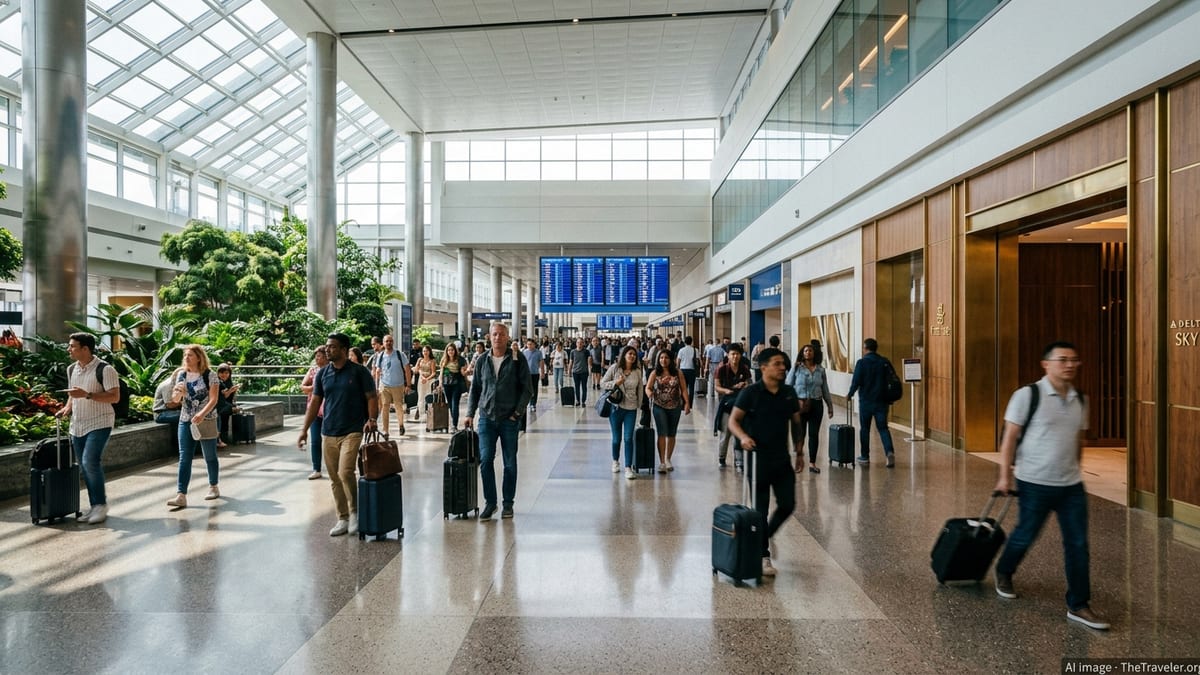
Transit Hubs Compete to Become Mini-City Destinations
Singapore Changi Airport, Dubai International Airport and Hartsfield–Jackson Atlanta International are intensifying a global competition to capture connecting passengers from carriers such as Singapore Airlines, Emirates and Delta Air Lines. Publicly available data shows that all three airports handled tens of millions of travelers in 2024 and 2025, and are investing heavily in amenities intended to keep transit customers spending longer in-terminal.
Industry reports indicate that these hubs are moving beyond traditional duty-free retail and fast-food outlets, positioning themselves as compact cities where passengers can eat, sleep, shop and relax without leaving the secure area. Airport operators and partner airlines are adding spa-style showers, family zones, co-working spaces, fitness rooms and expanded premium lounges aimed at turning idle hours into high-margin revenue.
The strategy is closely linked to network carriers that rely on connecting traffic. Singapore Airlines increasingly markets Changi as a seamless stopover gateway between Australasia, Europe and North America, while Emirates uses Dubai as a one-stop bridge between Europe, Africa, Asia and the Americas. Delta, anchored at Atlanta, uses the world’s busiest passenger airport to funnel domestic and international flows across the United States and beyond.
Analysts note that as aircraft become more efficient and long-haul point-to-point routes grow, hub airports are under pressure to justify connections by dramatically improving the experience during layovers. For Changi, Dubai and Atlanta, the response is clear: invest in attractions that make travelers willing, and even eager, to break their journey.
Singapore Changi Turns Layovers Into Lifestyle Experiences
Singapore’s Changi Airport has spent more than a decade building a reputation as a destination in itself, and recent initiatives show no sign of slowing. Coverage of the airport’s performance in 2025 highlights its continued recognition in global airport rankings, with Jewel Changi’s indoor forest, waterfall and high-end shopping acting as a magnet for transit passengers.
Airport publications and tourism reports describe a growing range of curated experiences designed specifically for travelers with several hours between flights. These include dedicated gaming zones, themed gardens, movie theaters and rest areas that blur the line between airport and urban attraction. In mid-2025, new offerings such as complimentary sightseeing excursions for eligible travelers, including tours to Sentosa, were promoted as a way of turning layovers into a short city break without complex planning.
Singapore Airlines is aligning its own ground strategy with these developments. The carrier announced a multi-year, multi-million-dollar refurbishment of its lounges in Changi’s Terminal 2, with plans for upgraded SilverKris and KrisFlyer Gold facilities that emphasize privacy, spa-style showers and dining more typical of an upscale hotel than an airport. The move follows earlier enhancements in Terminal 3 and signals the airline’s intent to make its home hub a core part of its premium brand.
Future expansion will further embed the layover model. Work is under way on Changi’s Terminal 5 and associated transport links, while planning documents reference additional on-site hotels, including a new branded property slated for the late 2020s. For transit passengers, this points to an ecosystem where airline, airport and hospitality partners are integrated into a single, resort-like environment.
Dubai International Leans on Emirates and Luxury Hospitality
Dubai International Airport continues to build on its status as one of the world’s busiest international hubs, with passenger data placing it at or near the top of global rankings. Emirates, based next door at Dubai’s Terminal 3, uses the airport as the linchpin of a long-haul network that routes travelers from cities across Europe, Africa and Asia through the United Arab Emirates on the way to the Americas and Oceania.
Recent coverage of Dubai’s aviation and tourism sector highlights efforts to enrich the layover stay with a combination of airline-run and third-party services. Premium-class and frequent-flyer customers are offered expansive lounges with hot buffets, showers, quiet zones and workspaces, while a growing ecosystem of independent lounges targets economy passengers willing to pay for upgraded comfort. Travel trade publications describe a focus on international cuisine, wellness services and flexible access packages intended to appeal to travelers on longer itineraries.
Dubai Airports, the operator of DXB, has also positioned the hub as a test bed for inclusive and accessible travel. In Terminal 2, the opening of an Assisted Travel Lounge introduced a dedicated space for passengers with reduced mobility and hidden disabilities, with plans for similar spaces in other terminals. This complements broader investments in wayfinding, service training and technology aimed at smoothing the transit journey for a diverse global customer base.
Hotel and tourism partners in the city are deeply intertwined with the layover model. Stopover programs promoted by local tourism bodies encourage passengers to turn an extended connection into a short stay, with airport hotels and downtown properties offering special packages. For Emirates and Dubai International, this approach helps tie aviation growth to the emirate’s wider ambition of becoming a global tourism and business hub.
Atlanta’s Mega-Hub Modernizes for Delta’s Connecting Passengers
Hartsfield–Jackson Atlanta International Airport, the primary hub for Delta Air Lines, remains one of the world’s busiest airports by passenger volume. City of Atlanta disclosures and airport planning documents outline a multi-billion-dollar capital program known as ATLNext, which aims to expand capacity, refresh aging infrastructure and improve the experience for passengers who change planes in the sprawling complex.
A key part of that effort is the expansion and modernization of Concourse D, where engineering publications describe the use of modular construction to widen and update one of the airport’s original concourses. The approach is intended to add gate capacity and larger hold rooms while limiting operational disruption, directly benefiting transit passengers who spend much of their layover time at the gate area.
On the premium side, Delta has continued to grow its Sky Club network across the airport. Coverage in local media in 2025 highlighted the opening of a new, larger Sky Club in Concourse D, joining existing clubs across multiple concourses. Features reported include panoramic airfield views, expanded food and beverage options and work-friendly quiet zones, reflecting Delta’s stated goal of making lounge access a core part of its value proposition for frequent travelers.
Retail and dining upgrades are also reshaping Atlanta’s layover offering. Recent business coverage notes new concessions that showcase local culture, including shops themed around the city’s civil rights history and Historically Black Colleges and Universities. For global passengers connecting between domestic and long-haul Delta flights, these additions help distinguish the experience from a generic transfer and keep more spending within the airport perimeter.
Airlines, Hotels and Cities Monetize the New Layover Economy
The evolution of Changi, Dubai and Atlanta underscores how layovers have become an important part of aviation and tourism economics. Airport authorities, airlines and hotel investors are increasingly treating connecting time as a revenue stream, building business cases for new lounges, transit hotels and attraction-style amenities on the basis of higher per-passenger spending.
Reports from airport operators and city agencies suggest that non-aeronautical income, which includes retail, food and beverage and real estate, now accounts for a large share of revenue at major hubs. By enticing transit passengers to stay longer and use more services, hubs such as Changi and Dubai can offset pressure on aeronautical fees, while airlines like Singapore Airlines, Emirates and Delta can differentiate their products without relying solely on in-flight upgrades.
Hospitality groups are moving in tandem. New on-airport hotel projects announced around Changi and additional branded properties attached to terminals in Dubai and Atlanta show how global brands view the transit traveler as a distinct customer segment. Flexible check-in times, hourly room rates and wellness-focused facilities are increasingly tailored to passengers arriving at odd hours or staying only one night between flights.
For destination marketers in Singapore, the United Arab Emirates and the United States, this shift offers both opportunity and challenge. Successful layover ecosystems can convert connecting passengers into repeat visitors who later return for longer stays. At the same time, as airports become more self-contained and attraction-rich, they risk encouraging travelers to remain airside rather than venture into the surrounding city, prompting ongoing debate about how to balance airport-led development with broader tourism strategies.