

More news on this day
Air travelers across the United States are facing some of the longest security lines in recent memory as Transportation Security Administration staffing strains deepen, with record callout rates and more than 500 officers reported to have quit since the current Department of Homeland Security shutdown began.
Get the latest news straight to your inbox!
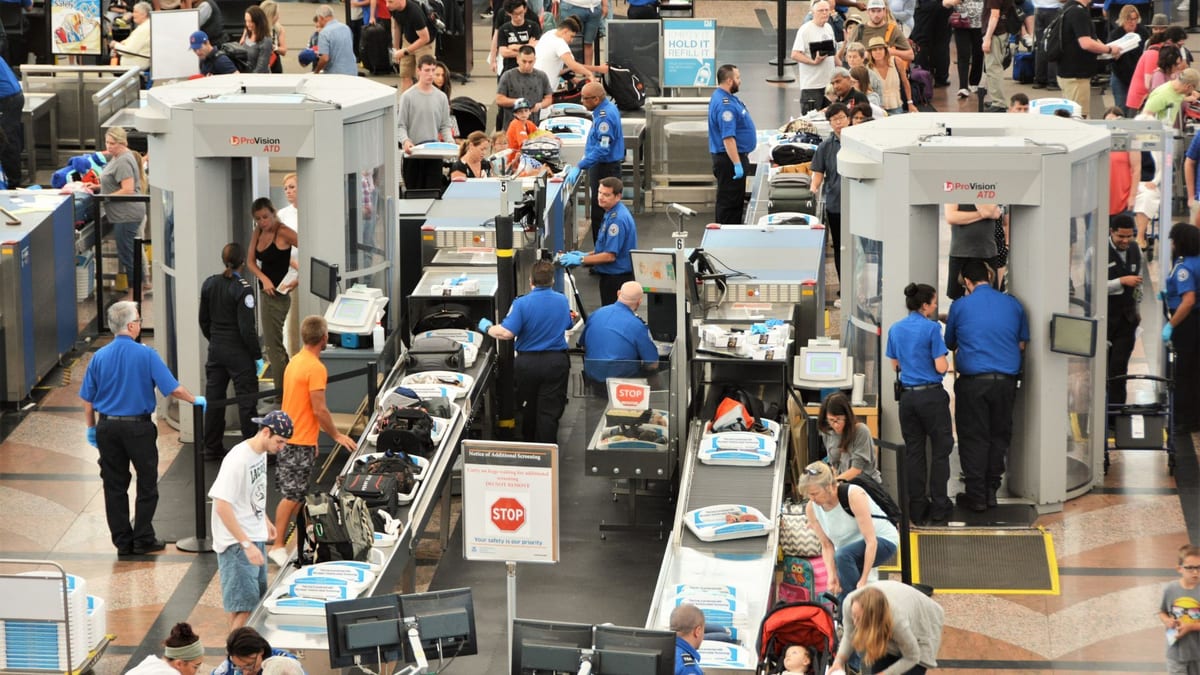
Image by Simple Flying
Record Sick Calls and Resignations Converge
Publicly available data from recent days indicate that TSA callout rates have climbed to their highest levels since the partial shutdown of the Department of Homeland Security began in mid-February. At some large hubs, more than a third of scheduled screeners have been absent on peak days, forcing security managers to consolidate lanes and periodically close checkpoints.
Coverage from multiple outlets points to a cumulative tally of more than 450 TSA officers having resigned or otherwise left their posts by earlier this past week, with subsequent statements and local reports suggesting the number has now pushed past 500 as the shutdown drags into its seventh week. While TSA has long contended with high turnover, observers note that the current wave of departures is occurring on top of unusually elevated daily sick calls, compounding the strain on remaining staff.
Nationally, reported daily callout rates in the low double digits translate into thousands of absent officers on a single day, given a workforce of more than 60,000 employees. Aviation analysts warn that even a small percentage drop in front-line staffing can sharply reduce throughput at security checkpoints, especially during the morning and late afternoon peaks when passenger volumes surge.
The situation has been described by travel industry groups as a slow-moving crisis rather than a one-off disruption. They emphasize that the combination of record callouts and accelerated resignations is occurring just as overall passenger numbers are rising ahead of the busy spring and summer travel periods.
Travelers Face Extreme Waits and Rolling Closures
Reports from major airports including Atlanta, Houston, Chicago, and New York describe security lines stretching deep into terminal corridors, with some travelers warned to arrive three or even four hours before departure. In several cities, airports have intermittently shuttered security checkpoints during off-peak hours to concentrate limited staff in fewer lanes, only to see long queues reappear when volumes rise again.
Local and regional news coverage highlights particularly acute absenteeism at Houston’s Hobby Airport and at Hartsfield-Jackson Atlanta International Airport, where callout rates have recently exceeded 30 to 50 percent on certain days. Those spikes have translated into wait times that vary wildly from one hour to more than two hours, depending on the time of day and terminal.
Some smaller and mid-sized airports have begun to warn that partial or full closures to commercial passenger traffic are possible if staffing levels fall further. Transportation analysts note that such closures would disproportionately affect rural communities and regional business travelers, who often lack easy alternatives when nonstop flights are reduced or rerouted to larger hubs.
Even where lines remain moving, the lack of predictability has become a defining feature for travelers. Airlines and airport operators are issuing repeated advisories urging passengers to build in additional buffer time and to use any available expedited screening options, though these measures offer limited relief when the underlying constraint is a reduced number of screeners.
Shutdown Pay Standoff Fuels Workforce Strain
The current staffing crisis is unfolding against the backdrop of a protracted funding impasse that has left tens of thousands of TSA officers working without pay. Publicly available government documents and news reports indicate that the Department of Homeland Security shutdown has now stretched beyond 40 days, surpassing a previous record for a full federal closure and leaving TSA personnel reliant on back pay promises and short-term financial workarounds.
Over the past week, the White House has moved to authorize stopgap measures aimed at restoring pay for TSA employees even as the broader funding dispute remains unresolved. Administration statements suggest that officers could begin seeing paychecks as early as the start of next week, but workforce advocates caution that the damage to morale may already be significant, with many officers having turned to credit cards, loans, or second jobs to cover basic expenses.
Union statements and testimonies to Congress in recent years have repeatedly warned that prolonged lapses in appropriations risk destabilizing the TSA workforce, which is already known for relatively low starting wages and demanding schedules. The current shutdown appears to be amplifying those structural vulnerabilities, as officers weigh the certainty of regular pay in other sectors against the uncertainty of remaining in federal service.
Policy experts also point to the financial cost of attrition. Training a new transportation security officer can take four to six months, and federal budget materials indicate that onboarding each new hire requires several thousand dollars in direct costs. High turnover, therefore, not only disrupts immediate operations but also locks in higher expenses and potential experience gaps down the line.
ICE Deployment Raises Operational and Safety Questions
In an effort to relieve pressure on TSA checkpoints, the administration recently directed Immigration and Customs Enforcement officers to deploy to several major airports, including hubs in Atlanta, Chicago, and Phoenix. Public reports describe ICE personnel in tactical gear circulating near terminal checkpoints, tasked with supporting security operations while TSA staffing remains constrained.
The move has prompted intense debate among aviation unions, civil liberties groups, and some travel industry representatives. Union leaders representing TSA officers argue in public statements that ICE personnel are not specifically trained or certified in aviation security procedures, suggesting that their presence at checkpoints may create a different kind of vulnerability if they are asked to perform tasks normally reserved for TSA-certified screeners.
Some passengers interviewed in local media have also expressed discomfort with the heightened presence of immigration enforcement in domestic airport terminals. Travel advocates warn that the visual of heavily armed officers near security lines may discourage some would-be travelers and further raise tensions in already stressful environments, particularly for immigrant communities and international visitors.
Operationally, experts note that while ICE officers can assist with certain support duties, such as managing queues or providing general law enforcement presence, they cannot fully substitute for trained TSA screeners. This distinction limits the extent to which the deployment can offset record callouts and resignations, reinforcing concerns that the measure is a stopgap rather than a long-term solution.
Rising Demand Meets a Fragile Security Workforce
The current turmoil at airport checkpoints is colliding with an air travel system that has been steadily marching back to and beyond pre-pandemic passenger volumes. Industry data and trade group materials suggest that TSA screened around 3 million passengers on multiple peak days last year, and forecasts anticipate that such record volumes will occur far more frequently in coming years.
That growth trajectory heightens the stakes of the present staffing crunch. Analysts warn that, without a more stable funding environment and a concerted effort to improve pay, working conditions, and career paths for TSA officers, the agency may struggle to recruit and retain enough personnel to keep pace with rising demand. The recent spike in resignations during the shutdown is being viewed by some observers as an early warning of broader workforce instability.
Travelers, meanwhile, are left grappling with uncertainty. While a resumption of pay could help slow the rate of callouts and stem further resignations, rebuilding staffing levels and experience may take months even under favorable conditions. For now, the advice from airlines, airports, and travel experts converges on a simple message: check security wait time estimates frequently, arrive earlier than usual, and be prepared for a security experience that remains unpredictable as the staffing crisis at TSA unfolds.