

More news on this day
Massive delays and cancellations at Hartsfield-Jackson Atlanta International Airport are rippling across the United States, leaving thousands of travelers stranded as the world’s busiest airport struggles to recover from a severe weather shock and a cascading breakdown in flight operations.
Get the latest news straight to your inbox!
Severe Weather Triggers Ground Stops and Widespread Disruption
In recent days, Hartsfield-Jackson Atlanta International Airport has experienced intense thunderstorms and hail in the Atlanta area, conditions that reports indicate led to temporary ground stops and sharply reduced arrival and departure rates. The weather forced inbound aircraft to divert to surrounding cities and left others circling in holding patterns while airport operations paused or slowed significantly.
According to publicly available flight tracking data and airline operations updates, the sudden storms created an almost immediate gridlock in the air traffic system around Atlanta. Aircraft that did land often waited extended periods for gates, while departures were pushed back repeatedly as crews and equipment were repositioned. The resulting congestion turned what is already the nation’s busiest hub into a chokepoint affecting flights nationwide.
Coverage of recent winter and severe weather events has repeatedly highlighted Atlanta as particularly vulnerable to fast-changing conditions. During a major winter storm in late January 2026, for example, more than 1,000 flights were canceled at Hartsfield-Jackson in a single day, underscoring how quickly operations at the airport can seize up when storms roll through the Southeast.
While the latest disruption is centered on thunderstorms and hail rather than snow and ice, the operational pattern is similar. A short burst of dangerous weather has cascaded into hours of delays, diversions and rolling cancellations that continue even after skies begin to clear.
Thousands of Flights Affected and Schedules in Tatters
Flight status boards at Atlanta and across the country show waves of delays and cancellations tied to the hub’s congestion. Publicly available data from tracking services indicate that hundreds of flights touching Atlanta have been delayed by several hours, with a significant number canceled outright as airlines attempt to reset their networks.
Because Atlanta functions as a central connection point for major carriers, particularly Delta Air Lines, disruptions there radiate across the domestic network. Travelers departing from or heading to cities as far apart as Los Angeles, New York, Chicago and smaller regional airports are experiencing schedule changes, missed connections and unplanned overnight stays as aircraft and crews fail to arrive where they are needed.
Recent analyses of U.S. flight disruption patterns show that Atlanta routinely ranks among the top airports for volume of delayed and canceled flights simply due to its size and role as a transfer hub. When severe weather hits, the normal buffer in the system tends to evaporate quickly. What might be a modest thunderstorm event at a smaller airport can translate into hundreds of affected flights when it strikes a high-throughput operation like Hartsfield-Jackson.
Airlines are publishing rolling updates as they rework schedules, but the knock-on effects are expected to linger into upcoming travel days. Even as operations gradually resume, aircraft and crew imbalances mean travelers can continue to face changes long after the initial storm has passed.
Travelers Face Long Lines, Crowded Concourses and Limited Options
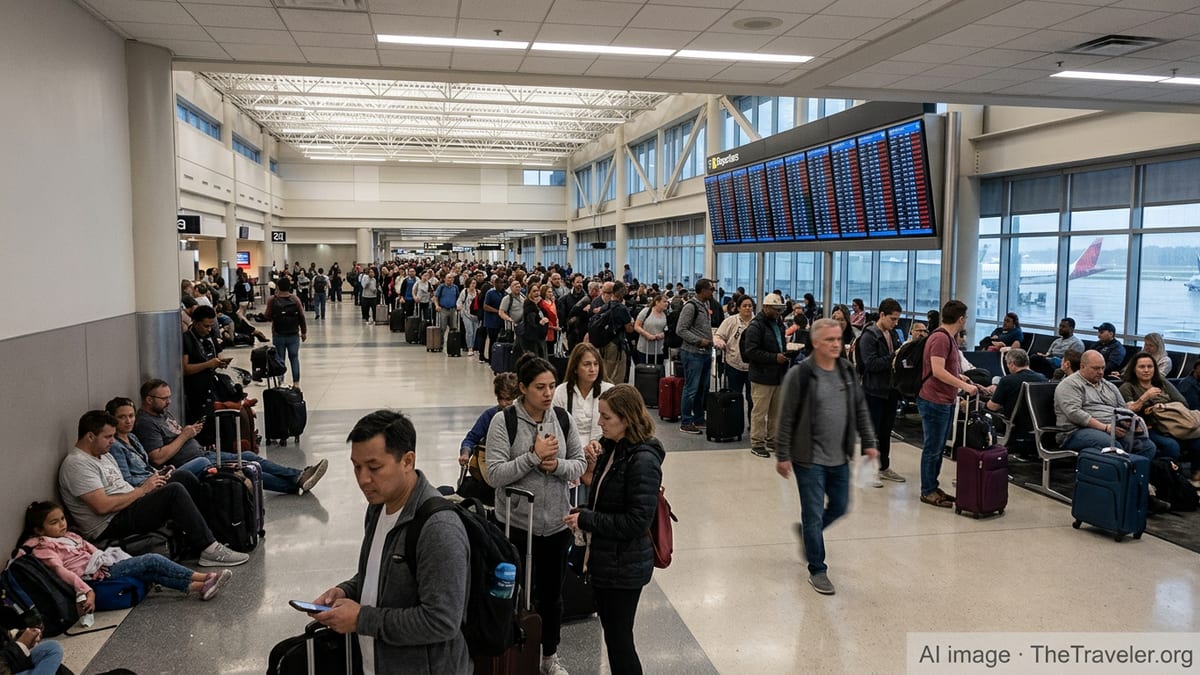
Social media posts and traveler reports from inside the terminal describe packed concourses, long lines at customer service desks and scarce seating as passengers wait for revised itineraries. Many travelers connecting through Atlanta arrived late from diverted or delayed inbound flights only to learn that onward legs had already departed or been canceled.
With hotels near the airport filling up quickly during the height of the disruption, some passengers report sleeping in terminal chairs or on the floor while waiting for morning rebookings. Others are seeking alternative routings through different hubs or even opting to fly into nearby cities and travel the final leg by car after missing multiple connection opportunities.
Available information from airline travel advisories suggests that change fee waivers and flexible rebooking policies are being applied for itineraries involving Atlanta during the affected period. However, limited seat availability on remaining flights is constraining options, particularly for travelers who need to reach smaller regional destinations that rely heavily on Atlanta as a feeder hub.
The strain is also visible in ground services. Baggage delivery, catering and ramp operations are all affected when thunderstorms and lightning force work stoppages on the airfield. Once the weather eases, workers face a backlog of aircraft to service, which can further delay boarding and turn times for already late departures.
Why Disruptions in Atlanta Hit the Whole Country
Hartsfield-Jackson’s status as the world’s busiest airport by passenger volume means that even a brief operational slowdown can have outsized consequences. The airport serves as a central node in the U.S. air network, with banks of arriving and departing flights carefully timed to facilitate tight connection windows.
When a ground stop or severe restriction is introduced, that carefully choreographed pattern begins to unravel. Inbound flights may be held at origin, diverted or forced into holding; outbound flights lose their departure slots or their inbound aircraft; and connecting passengers miss flights that can no longer wait for late arrivals. The result is a chain reaction that touches dozens of cities that may be experiencing clear skies and normal local conditions.
Recent disruption reports on U.S. aviation performance have noted that hub-and-spoke systems are particularly vulnerable to this kind of cascading failure. Atlanta’s high throughput allows airlines to offer extensive connectivity, but also concentrates risk. When things go wrong, the impact is not limited to the Southeast; it becomes a nationwide issue for schedules, staffing and aircraft rotation.
Operational documents published by the airport describe contingency plans for managing long tarmac delays and irregular operations, including procedures for coordinating with airlines and federal agencies. Even with such plans in place, the volume of traffic moving through Atlanta on a typical day means that any extended pause can take many hours to unwind fully.
What Travelers Can Do if Their Plans Run Through Atlanta
With Atlanta’s disruptions affecting flights around the country, travel experts and consumer advocates are emphasizing preparation and flexibility for anyone with upcoming itineraries involving the hub. Publicly available guidance suggests monitoring flight status frequently through airline apps and flight tracking tools, paying attention not only to departure times but also to any changes in aircraft assignment or connection times.
Travelers are also encouraged to consider earlier departures or longer layovers when routing through Atlanta during active storm seasons, as tight connections are more likely to be missed when thunderstorms or ground stops occur. Booking nonstop flights when possible, or routing through alternate hubs if schedules allow, can reduce exposure to cascading delays centered on a single airport.
For those already affected, documentation of expenses and disruptions can be important. While U.S. regulations do not require airlines to compensate passengers for weather-related delays, some carriers provide meal vouchers, hotel accommodations or travel credits during severe irregular operations. Trip insurance policies and premium credit card benefits may also include trip delay coverage that reimburses for lodging, meals and ground transportation when delays exceed a specified threshold.
As airlines work to restore regular operations at Hartsfield-Jackson, travelers across the United States are being reminded that the performance of one major hub can determine whether journeys run smoothly or turn into unplanned extended odysseys. With storms becoming a recurring disruptor at the world’s busiest airport, advance planning and real-time monitoring are increasingly essential parts of flying through Atlanta.