

More news on this day
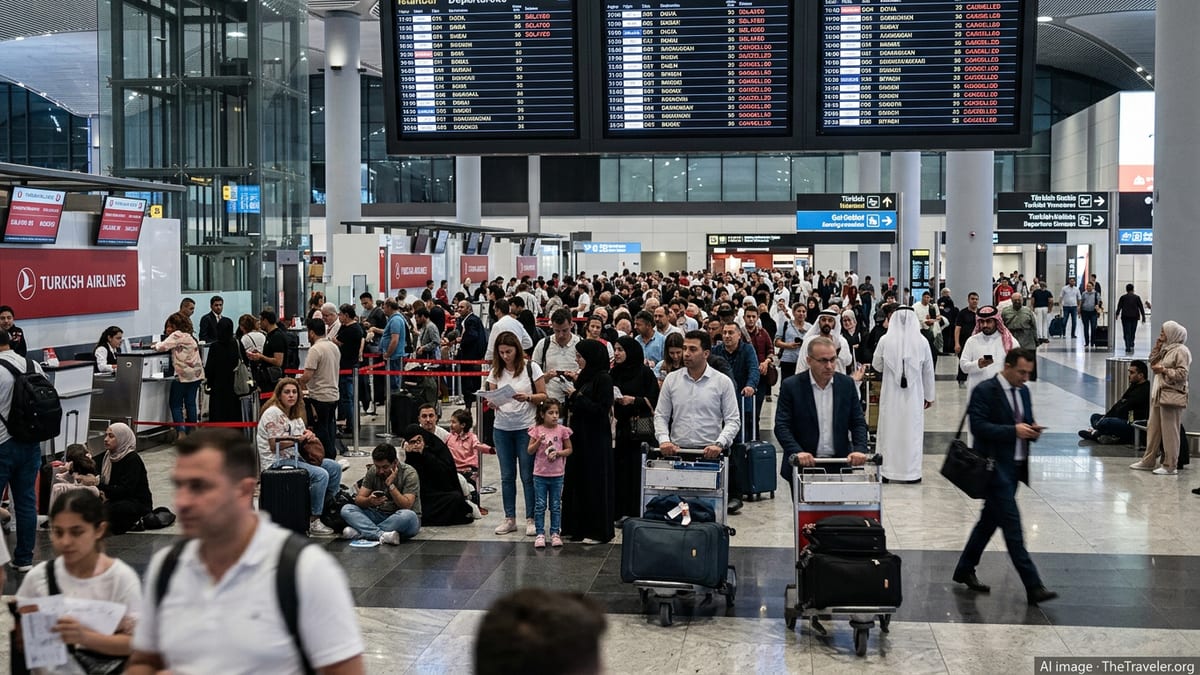
Passengers at Istanbul Airport faced mounting disruption on March 6 and 7 as a fresh wave of cancellations and delays linked to Middle East airspace closures left flights scrapped, connections severed and travelers from Qatar, the UAE and Saudi Arabia stranded across the terminal complex.
Regional Airspace Closures Ripple Into Istanbul
The latest spell of disruption follows Turkey’s decision to extend flight suspensions to several Middle Eastern countries in response to the escalating regional security situation. Turkish transport officials confirmed that carriers including Turkish Airlines, AJet, Pegasus and SunExpress have halted services to Iran, Iraq, Syria, Lebanon and Jordan until at least March 9, with additional one-day suspensions targeting Gulf routes such as Qatar, Kuwait, Bahrain and the UAE.
Though Istanbul Airport remains fully open, these policy moves have had an immediate knock-on effect for international traffic. Airport operations data for Friday indicates that at least four flights were fully cancelled and around 46 were delayed in and out of the hub during peak hours, as airlines adjusted routings, sought new overflight permissions and coped with aircraft and crew displaced across the region.
The result for passengers was visible throughout the day: long queues at rebooking desks, crowded seating areas around the international gates and departure boards filled with rolling delay estimates. Many of those affected were not flying directly to the conflict-affected countries but had itineraries connecting through the Gulf or wider Middle East, leaving them unexpectedly grounded in Istanbul.
For travelers from Qatar, the UAE and Saudi Arabia, Istanbul’s role as an alternative connecting hub has been both a lifeline and a pressure point. As Gulf airspace and schedules remain constrained, more passengers are attempting to route via Turkey, intensifying strain on already fragile operations.
Major Carriers Scramble to Rebook Stranded Passengers
Flag carrier Turkish Airlines has been at the center of the disruption, given its vast network linking Europe, Asia and the Middle East through Istanbul. While the bulk of its schedule is still operating, the airline has had to suspend flights to multiple regional destinations and temporarily halt operations to select Gulf cities on certain days, forcing last-minute cancellations and extended delays for onward connections.
Qatar Airways passengers have also been hit hard. The carrier is already managing a backlog of travelers after days of regional airspace closures and rolling schedule changes. In recent days it has offered affected ticket holders date changes and, in some cases, refunds, but many travelers arriving in Istanbul or attempting to connect through the city reported short-notice cancellations and limited same-day alternatives as aircraft and crews remain out of position.
FlyDubai, which normally feeds substantial traffic between Gulf cities and Istanbul, has similarly adjusted operations amid the wider regional shutdown. While some services continue to run, others have been pulled from the schedule or significantly delayed as the carrier works around airspace restrictions and capacity constraints at its home base.
Across the three airlines, the pattern is consistent: selective cancellations of services touching the most affected countries, longer flight times on rerouted services that must avoid closed airspace, and heavy pressure on any remaining seats via less-affected corridors. For many passengers, that means being rebooked days later or rerouted via secondary airports far from their original plans.
Who Is Most Affected by the Istanbul Disruptions
The turmoil at Istanbul Airport has been felt most acutely by transit passengers whose journeys depend on a series of tightly timed connections. Travelers flying from Europe or North America to cities in the Gulf, Levant or wider Middle East via Istanbul have seen itineraries unravel as regional legs are cancelled or heavily delayed, even when their long-haul segments are running close to schedule.
Citizens and residents of Qatar, the UAE and Saudi Arabia are particularly exposed. With many direct services to their home airports reduced, suspended or rerouted around closed airspace, they are relying on a shrinking pool of viable connecting options through Turkey, Egypt and parts of Saudi Arabia. When just a handful of flights out of Istanbul are scrapped or delayed, it quickly cascades into missed onward connections and overcrowded rebooking queues for these travelers.
Business travelers and workers heading to or from Gulf construction projects, energy sites and financial centers have reported multi-day delays as they scramble to find seats on remaining flights. Families returning from holidays or visiting relatives across Europe and Asia have also found themselves marooned overnight in Istanbul’s hotels, with some being told there are no available alternatives for 24 to 48 hours.
Even passengers whose final destinations lie outside the Middle East have not been immune. Flights between Europe and South or Southeast Asia routed via Istanbul are being affected when aircraft are late arriving from disrupted regional sectors, pushing departure times back and compressing already slim connection windows.
What Travelers Through Istanbul Airport Should Do Now
With flight schedules changing by the hour, the most important step for anyone due to travel through Istanbul in the coming days is to monitor their booking closely. Airlines including Turkish Airlines, Qatar Airways and FlyDubai are urging passengers to check flight status on official channels before leaving for the airport and to ensure contact details in their reservations are up to date so they can receive cancellation or delay notifications.
Experts recommend building in additional buffer time for any connections that still route through the Middle East, particularly if itineraries touch countries where flights have been partially suspended. Where possible, travelers are being advised to opt for routes that avoid the most heavily affected airspace, even if that means longer journeys via alternative hubs or different alliances.
Passengers whose flights are cancelled should be prepared for long lines at service desks and call centers. Travel specialists suggest documenting all communications with airlines, keeping boarding passes and confirmation emails, and asking specifically about rebooking options on partner carriers when a same-day alternative on the original airline is not available.
Those already stranded at Istanbul Airport are encouraged to contact their airline before seeking independent alternative travel, as unapproved changes can complicate refunds and future claims. Travelers should also check the terms of their travel insurance policies, as some plans provide compensation for extended delays, missed connections and unexpected accommodation costs during extraordinary disruption events.
How Long Will the Disruptions Last?
For now, Turkish authorities and airlines across the region are assessing the situation on a day-by-day basis. The current suspension of flights from Turkey to several Middle Eastern destinations is formally in place until March 9, but officials have indicated that further extensions cannot be ruled out if regional airspace remains unstable or if new security concerns emerge.
Industry analysts caution that even once formal suspensions are lifted, it will take time for full schedules to normalize. Aircraft and crews are scattered after days of cancellations and diversions, and carriers must rebuild rotations, reopen sales on affected routes and work through the backlog of passengers waiting to travel.
In the short term, Istanbul Airport is likely to remain both a pressure valve and a pinch point. As one of the few major hubs still able to operate relatively normally, it offers a crucial bridge between Europe, Asia and parts of the Middle East, but that role also makes it highly sensitive to any fresh wave of cancellations or delays linked to the regional crisis.
Travelers planning to transit Istanbul over the next week should therefore remain prepared for last-minute changes and extended journey times. Flexibility with dates, routes and even destination airports within the same country could make the difference between moving on and being caught in the next round of passenger chaos on the departure boards.