

More news on this day
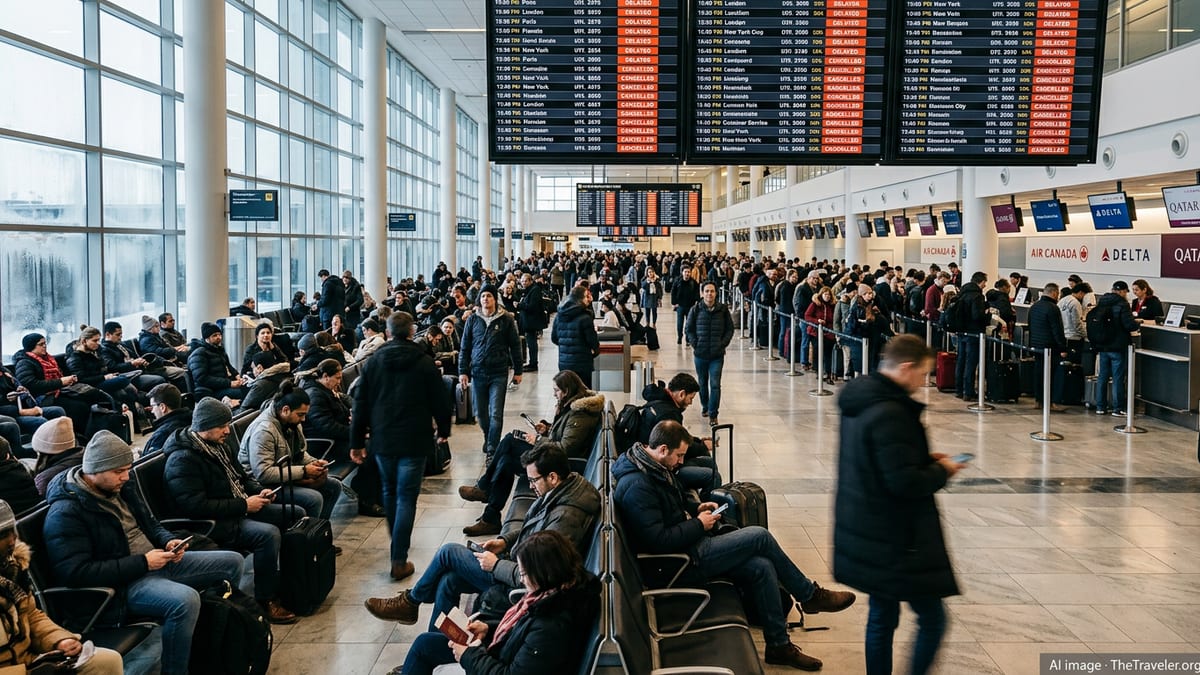
Hundreds of passengers were left stranded at Montreal–Trudeau International Airport on Sunday after at least 65 flight delays and 18 cancellations upended travel plans on key transatlantic and transborder routes operated by Air Canada, Qatar Airways, Delta Air Lines and other carriers.
Widespread Disruption on Transatlantic and U.S. Routes
The disruption at Montreal–Trudeau, one of Canada’s busiest international gateways, hit some of the airport’s most popular long haul and cross border services. Airport departure boards showed repeated delay notifications for flights to Paris, London and New York, along with major U.S. hubs including Boston, Chicago and Atlanta, as operations slowed through the day.
Flag carrier Air Canada bore a significant share of the disruption as it juggled long haul operations from Montreal with knock on effects from weather and congestion across its wider Canadian network, where airports in Toronto, Vancouver, Edmonton and Halifax also reported elevated levels of delays and cancellations over the weekend.
Delta Air Lines and other U.S. carriers saw schedules to New York area airports, including John F. Kennedy, LaGuardia and Newark, squeezed by the combination of inbound aircraft arriving late from the United States and tightened turnaround windows. Short haul transborder flights to cities such as Boston and Washington were pushed back as airlines prioritized limited slots and available crews.
Qatar Airways, which relies on timed connections at its Doha hub, was among the international carriers forced to adjust services as wider disruptions across Europe and the Middle East earlier this week continued to ripple through long haul networks. That added further pressure on Montreal’s already strained departure and arrival banks during peak evening hours.
Knock On Effects from Canada Wide Travel Turmoil
The latest turbulence at Montreal came as part of a broader pattern of travel turmoil across Canada in recent days. Data compiled on Sunday pointed to nearly 100 cancellations and around 500 delays nationwide, affecting major Canadian gateways as well as smaller regional airports that feed traffic into Montreal and other hubs.
Operational pressures have built over several consecutive days of disruption, leaving airlines with little slack in aircraft rotations and crew schedules. Flights that arrived late into Montreal on Friday and Saturday contributed to a cascade of delays on Sunday, particularly on routes where aircraft and crews are scheduled to operate multiple legs in quick succession.
At Montreal–Trudeau, that translated into rolling delays for departures to key U.S. cities and popular European gateways, as aircraft needed for evening transatlantic services were still completing earlier North American legs. Airlines were forced to decide whether to operate flights significantly behind schedule or cancel services outright to reset their operations.
Industry analysts note that once disruption of this scale takes hold, it can take days to unwind. Passengers booked on later flights may still feel the effects as carriers reassign aircraft and reserve crews, and as airports adjust staffing at gates, security and ground handling to cope with irregular operations.
Passengers Face Long Lines, Confusion and Limited Options
Inside the terminal, the operational problems translated into long check in lines, congested security checkpoints and crowded gate areas filled with anxious travelers staring at departure boards dominated by the words “delayed” and “cancelled.” Many passengers reported receiving multiple schedule changes through airline apps before eventually being told their flights would not operate.
Travellers bound for Paris and London described scrambling to rebook onto later services or rerouting through other hubs such as Toronto, New York or European cities that still had available seats. For some, the combination of fully booked alternative flights and crew duty time limits meant overnight stays in Montreal and multi day delays in reaching their final destinations.
On transborder routes to New York and other northeastern U.S. cities, business travelers and weekend visitors alike faced similar uncertainty. With some flights delayed by several hours and others cancelled outright, options for same day rebooking quickly dried up, particularly on routes dominated by a small number of daily frequencies.
Ground staff for affected airlines struggled to keep up with demand at customer service counters as passengers sought meal vouchers, hotel accommodation and new itineraries. While many carriers deployed additional staff and directed customers toward digital tools for rebooking, the sheer volume of disrupted itineraries left some travelers waiting in queues for extended periods.
Airlines Cite Weather, Congestion and Network Strain
Airlines operating at Montreal–Trudeau pointed to a combination of factors behind Sunday’s wave of delays and cancellations. Severe and shifting winter weather in other parts of Canada and the United States over recent weeks has left schedules fragile, with aircraft often out of position and crews approaching regulatory duty limits by the time they reach Montreal.
Carriers are also contending with ripple effects from earlier disruptions in Europe and the Middle East, where storms and airspace constraints have complicated long haul operations. Flights from hubs such as Paris, London and Doha feed into Montreal’s schedule, and even modest upstream delays can cascade by the time those aircraft are due to turn around for their next departures.
Operational constraints at airports, including congestion on taxiways, de icing backlogs and tight gate availability during peak periods, have further squeezed airlines’ ability to recover from setbacks. In some cases, carriers opted to cancel a limited number of flights in order to protect the integrity of the remainder of the schedule and minimize wider knock on disruption.
Analysts say the situation underlines how interconnected modern airline networks have become. A storm or airspace restriction thousands of kilometers away can quickly translate into missed connections, stranded passengers and cancelled departures in cities like Montreal, even when local weather appears relatively benign.
What Stranded Passengers Can Expect and How to Respond
For travelers affected by Sunday’s chaos at Montreal–Trudeau, the immediate priority has been securing alternative travel arrangements and basic support such as meals and accommodation. Under Canadian air passenger protection rules, airlines are required in many cases to rebook passengers on the next available flight, including on partner carriers when necessary, and to provide care during long waits.
Consumer advocates recommend that passengers document all communications with airlines, keep boarding passes and receipts, and ask for written confirmation of the reason for a delay or cancellation. That information can be crucial when determining eligibility for compensation or reimbursement, particularly when disruptions are linked to issues within an airline’s control rather than unavoidable safety or weather events.
Travel experts also urge passengers to make use of digital tools, including airline mobile apps and text alerts, which can sometimes offer rebooking options faster than waiting in line at the airport. At times of widespread disruption, however, inventory for popular routes such as Paris, London and New York can disappear quickly, making flexibility on dates and routing an important asset.
With operational stress persisting across Canadian and international networks, airlines and airports are warning that schedules may remain vulnerable in the coming days. For passengers planning to travel through Montreal–Trudeau, checking flight status frequently, allowing extra time at the airport and preparing for potential changes has become an essential part of navigating the peak winter travel season.