

More news on this day
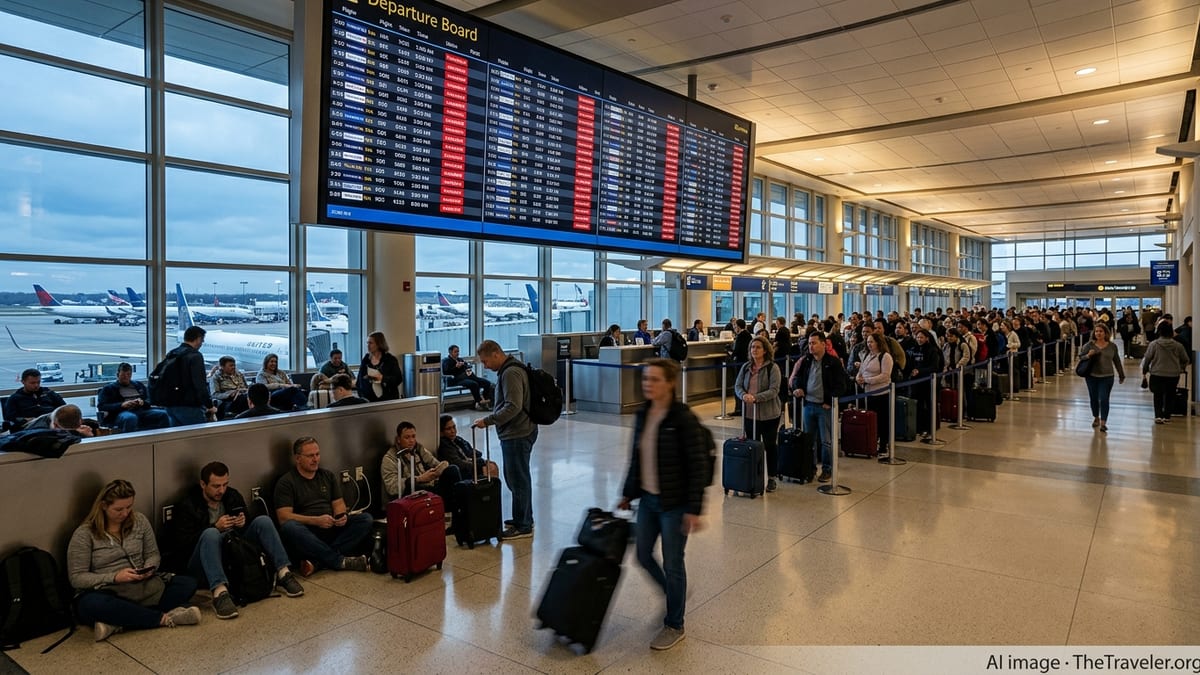
Ronald Reagan Washington National Airport faced hours of severe disruption this week, with a cascade of cancellations and delays that left hundreds of flights grounded and travel plans across the United States and overseas suddenly in disarray.
Get the latest news straight to your inbox!
Ground Stops and Outages Paralyze a Key Washington Hub
Flight-tracking data and passenger accounts indicate that Reagan National, along with the broader Washington region airspace, has endured repeated operational shocks in recent days. A temporary shutdown tied to an apparent air traffic control issue at the Potomac TRACON facility in Warrenton, Virginia led to a ground stop that halted takeoffs and limited arrivals into the capital region’s airports, including Reagan National. For several hours, flights bound for Washington were diverted, held at origin, or canceled outright as controllers reduced traffic volumes for safety.
Separately, earlier winter weather episodes this year have shown how quickly conditions can trigger a near-total pause in activity at Reagan National. In late January, a powerful winter storm led to all flights being grounded at the airport for a full day, before operations gradually resumed the following morning. That precedent has shaped expectations among travelers and airlines alike that disruption at the compact, heavily used airfield can escalate rapidly when key infrastructure or staffing is constrained.
While the most recent outage was shorter than the January shutdown, its timing during a busier spring travel period meant that the operational shock translated quickly into full cancellations rather than manageable delays. As aircraft and crews fell out of position, schedules became increasingly difficult to recover within the same day.
Hundreds of Cancellations and a Network Domino Effect
Publicly available aviation data and airline status boards showed that the combined impact of the ground stop and ongoing weather-related disruptions across the eastern United States translated into hundreds of canceled flights touching Reagan National over several days. Many of those cancellations were concentrated on the busiest banked periods in the morning and late afternoon, when slots at the airport are most tightly scheduled.
Because Reagan National serves as a critical spoke and, for some carriers, a focus city within broader route networks, the local disruption quickly spread. Canceled departures from Washington meant missed inbound connections at major hubs such as Charlotte, Atlanta, Chicago and Dallas, which in turn forced additional cancellations on domestic and international legs later in the day. Some passengers traveling from smaller U.S. cities to Europe or Latin America via East Coast hubs reported losing entire itineraries when the initial Washington segment was scrubbed.
Reports from travelers on social platforms described departure boards dominated by red "canceled" notices and aircraft parked at gates with no crews available to operate them. In some cases, flights that had already boarded were held on the ground, then ultimately canceled, compounding congestion in terminals as passengers returned to crowded concourses in search of alternatives.
Ripple Effects for International and Long-Haul Travel
Although Reagan National itself handles primarily domestic and short-haul cross-border services, its role as a feeder to international gateways meant that the local chaos had an outsized effect on overseas travel. Travelers connecting through New York, Boston, Philadelphia and other East Coast hubs reported missed onward flights to Europe and the Middle East after departures from Washington were canceled or delayed beyond connection windows.
Airlines attempted to reroute affected passengers through other Washington-area airports, particularly Washington Dulles International and Baltimore/Washington International, where transatlantic and long-haul options are more plentiful. However, those airports were also managing residual delays from severe weather and a nationwide storm system that had already forced thousands of cancellations across the Midwest and East Coast. In many cases, available long-haul seats were limited, pushing some travelers to accept departures a day or more later than planned.
The disruption also affected inbound international passengers who had planned to connect directly into Washington’s city-center airport for government meetings, business travel or tourism. With onward segments into Reagan National canceled, some arrivals into East Coast hubs were rebooked to alternative regional airports and then completed their journey by rail or road, lengthening overall travel times but avoiding additional overnight stays.
Travelers Face Rebooking Challenges Amid Wider System Strain
The turbulence at Reagan National came amid a broader period of stress for the U.S. aviation system, marked by a powerful March storm complex that disrupted flight operations across much of the country and a partial federal government shutdown that has put pressure on security and air traffic staffing. Against that backdrop, travelers caught in the Washington disruption encountered limited options when seeking new itineraries.
Same-day rebooking onto alternative flights from Reagan National was often difficult, as remaining departures were already close to full with spring break and business traffic. Some passengers reported being offered rebooked flights from Dulles or Baltimore the following morning, requiring last-minute hotel stays and additional ground transportation across the region. Others turned to rail operators along the Northeast Corridor when it became clear that air capacity would not recover quickly enough to salvage same-day plans.
Publicly available information from travel insurers and consumer advocates indicates that compensation options vary widely based on the cause of a cancellation and the specific terms of a ticket. Weather-related and airspace management issues are typically categorized as outside an airline’s control, limiting eligibility for hotel or meal vouchers. As a result, many affected travelers shouldered added expenses themselves while waiting for new departure times.
Ongoing Uncertainty for Upcoming Trips
With storm systems continuing to move across the eastern half of the United States and the government funding stalemate unresolved, analysts warn that air travel to and from the Washington region may remain vulnerable to further disruption in the days ahead. Reagan National’s tightly constrained runway and slot structure leaves little flexibility when widespread delays or outages occur, increasing the likelihood that airlines will cancel flights outright to stabilize their operations.
Travel planners recommend that passengers with near-term departures or connections involving Reagan National build in additional time, monitor flight status frequently, and consider backup options such as departures from Dulles or Baltimore where feasible. For those with critical long-haul or international commitments, choosing routings that allow for longer layovers at gateway airports may provide a buffer if initial segments from Washington are delayed or cancelled.
As airlines work through displaced crews and aircraft and adjust schedules to account for recent disruptions, flight operations at Reagan National are expected to improve gradually. However, the events of recent days underscore how quickly conditions at one compact, high-demand airport can spiral into a nationwide tangle of missed connections and abandoned itineraries for travelers across the globe.