

More news on this day
Hundreds of flights in and out of Ronald Reagan Washington National Airport were canceled or severely delayed after a sudden ground stop disrupted operations across the Washington region, upending domestic and international travel plans at the height of a busy spring travel period.
Get the latest news straight to your inbox!
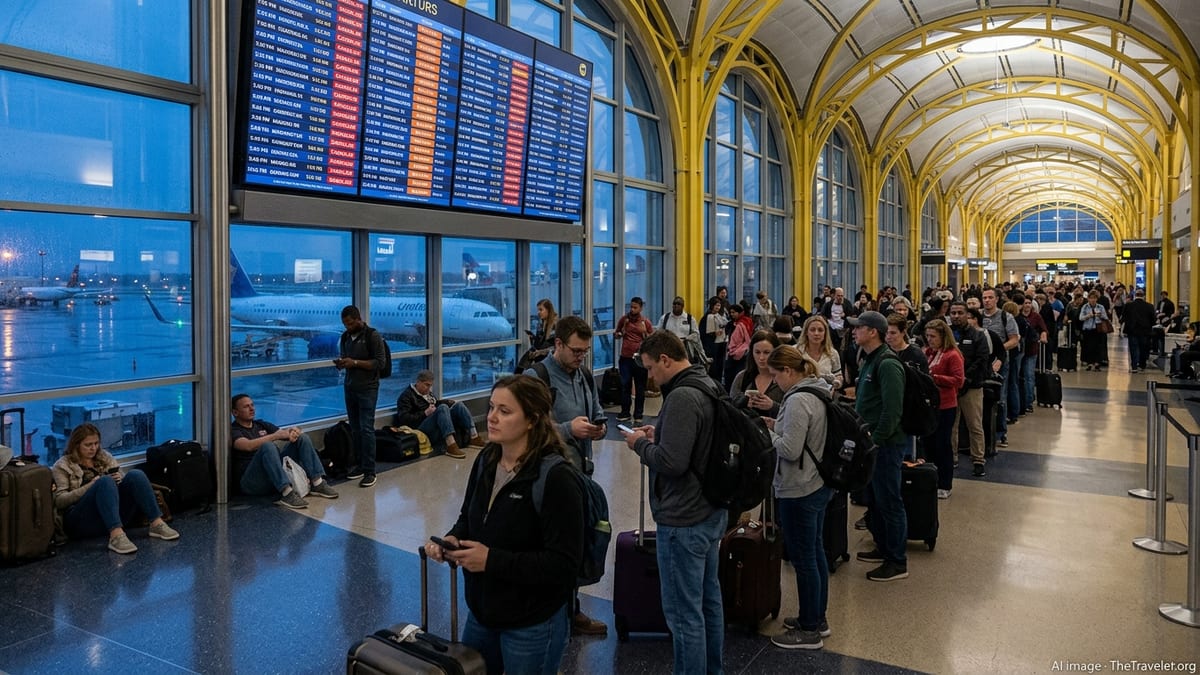
Ground Stop Freezes Washington Air Traffic
Flight-tracking data and regional coverage indicate that operations at Ronald Reagan Washington National Airport, along with nearby Dulles International and Baltimore/Washington International, were abruptly halted when a ground stop was issued for the Washington airspace. The most significant disruption began late Friday, March 13, when a strong chemical odor at the Potomac Terminal Radar Approach Control facility in Warrenton, Virginia, led to a pause in arrivals and departures for more than an hour. That pause quickly cascaded into extended delays and cancellations at Reagan National.
Publicly available information describes Potomac TRACON as the traffic nerve center for the capital region, handling approach traffic for Reagan National, Dulles, Baltimore/Washington and several smaller airports. When the facility slows or suspends operations, major airports across the region are effectively forced to throttle back as well. On Friday evening, that bottleneck left aircraft idling on taxiways, diverted to outlying airports and held at origin cities nationwide.
Reports from passengers and airline updates show that while some departures began to move again after 7 p.m. Eastern time, the system-wide disruption at Reagan National lasted for hours. With aircraft and crews out of position by late evening, airlines turned many rolling delays into outright cancellations, particularly for shorter-haul routes that could not be re-accommodated before the end of the operational day.
By the overnight hours, Reagan National had shifted from a normal Friday rush to rows of darkened gate areas, with departure boards showing long strings of canceled flights to major hubs, regional cities and popular leisure destinations along the East Coast.
Hundreds of Flights Scrapped, Schedules in Turmoil
Aggregated data from flight-monitoring services, combined with airline advisory postings, indicate that the wave of cancellations affecting Reagan National reached into the hundreds over the course of the weekend. The initial halt to arrivals and departures on Friday quickly produced a backlog that carried into Saturday and Sunday as carriers attempted to reposition aircraft while also navigating a wide-reaching storm system sweeping across the eastern United States.
Nationally, the same period has seen thousands of flights canceled or delayed as winter weather and powerful winds disrupted operations at major hubs from Chicago and Atlanta to New York. Within that broader pattern, Reagan National emerged as one of the most constrained airports because of its dependence on a single river-adjacent runway configuration and tight airspace restrictions around central Washington. Once the ground stop took effect, recovery proved slower and more complex than at some larger, more flexible facilities.
Carriers serving Reagan National issued rolling travel waivers that allowed passengers to rebook without change fees, but not all travelers could be accommodated quickly. With spring break crowds already pushing loads higher, many alternative flights during the subsequent days operated with limited open seats, contributing to extended wait times for new itineraries.
The result, according to publicly available operational tallies, was a multi-day pattern in which Reagan National’s cancellation rate ran significantly above seasonal norms. Some short-haul frequencies to cities such as Charlotte, Boston and New York were trimmed repeatedly in order to protect longer-haul and high-demand routes, leaving regional connectivity particularly strained.
Ripple Effects on US and International Networks
Although Reagan National itself handles a largely domestic schedule with a perimeter limiting long-distance routes, the airport sits at the center of many complex, multi-leg journeys. When dozens of departures from Washington are axed in quick succession, the impact spreads well beyond the capital region to connecting hubs and onward international services.
Published coverage of recent storm-related disruption across the country shows how tight airline networks have become. Flights from Reagan National feed major hubs such as Chicago O’Hare, Atlanta, Dallas-Fort Worth and Charlotte, where passengers connect to Europe, Latin America and Asia. When those feeder flights are canceled in large numbers, travelers can miss once-daily long-haul departures, resulting in unplanned overnight stays, rerouting through third-country hubs or, in some cases, full trip cancellations.
During the latest disruption, travelers reported missed onward connections to destinations including London, Paris, Toronto and various Caribbean islands. For some, rebooking involved backtracking through other East Coast airports not as heavily affected by the Washington-area ground stop, while others were moved to flights departing one or two days later. With airlines already managing weather-related challenges at major northern airports, options for quick international re-accommodation were limited.
Industry analysts noted in recent commentary that Washington’s role as a political, diplomatic and business capital amplifies the effect of disruptions at Reagan National. Canceled departures can derail time-sensitive government-related travel, international negotiations and corporate meetings, adding another layer of urgency to recovery efforts after large-scale operational shocks.
Travelers Face Long Lines, Confusion and Limited Answers
Social media posts and local reporting from the terminals at Reagan National describe scenes familiar from previous aviation disruptions: long lines at airline counters, crowded gate areas and large clusters of passengers gathered under departure boards as schedules changed repeatedly. Some travelers described sitting on parked aircraft for extended periods before flights returned to the gate and were eventually canceled.
Because the trigger for the initial ground stop was linked to conditions away from the main terminals, information flowed unevenly. Flight crews and gate staff relied on updates filtering through airline operations centers and federal air traffic notices, which evolved as the situation at Potomac TRACON developed. Passengers recounted partial announcements about a “regional air traffic issue” or “ATC equipment problem,” followed by revised departure times that were later pushed back again.
Hotel availability around the Washington region tightened quickly as stranded travelers sought overnight accommodations, particularly near Reagan National’s urban-adjacent location in Arlington, Virginia. Some airlines distributed hotel and meal vouchers where policies allowed, but others encouraged customers to seek reimbursement later or use digital channels for support, contributing to congestion on call centers and mobile apps.
For arriving passengers whose flights did land after lengthy diversions or holding patterns, the experience often included missed ground transportation connections, including last trains and intercity buses. The timing, at the end of a workweek already affected by a national storm system and a continuing partial government shutdown, added to the perception among many travelers that air travel across the United States was under unusual strain.
What Travelers Should Know Before Flying to or Through DCA
Consumer advocates and travel planners reviewing the latest disruptions around Washington suggest that passengers treating Reagan National as a critical connection point build in additional flexibility over the coming days. With airlines still working through residual imbalances in aircraft and crew assignments after the ground stop and broader weather issues, schedules remain vulnerable to further adjustment, particularly in the late afternoon and evening peaks.
Public advisories from airlines emphasize the importance of checking flight status frequently on official channels and enrolling in real-time notifications. Same-day changes, including shifting to earlier departures when seats are available, can help mitigate the risk that a later flight will be scrubbed if recovery operations slow. For those connecting onward to long-haul international services, selecting longer layovers and avoiding tight turns through Washington may reduce the chance of missed flights.
Travel experts quoted in recent coverage also highlight the value of preparing contingency plans, such as alternate routings through nearby airports including Dulles or Baltimore/Washington, which sometimes recover at a different pace than Reagan National after regional airspace disruptions. Rail options along the Northeast Corridor may offer a reliable backup for some itineraries between Washington, Philadelphia, New York and Boston when short-haul air service becomes unstable.
As the broader US aviation system continues to grapple with severe weather, infrastructure challenges and the ongoing government shutdown, the recent chaos at Reagan National illustrates how quickly a localized operational issue can spill into a nationwide disruption. For travelers, staying informed, building in buffers and considering alternative routes may be the most practical defenses against the next sudden ground stop in the capital’s crowded skies.