

More news on this day
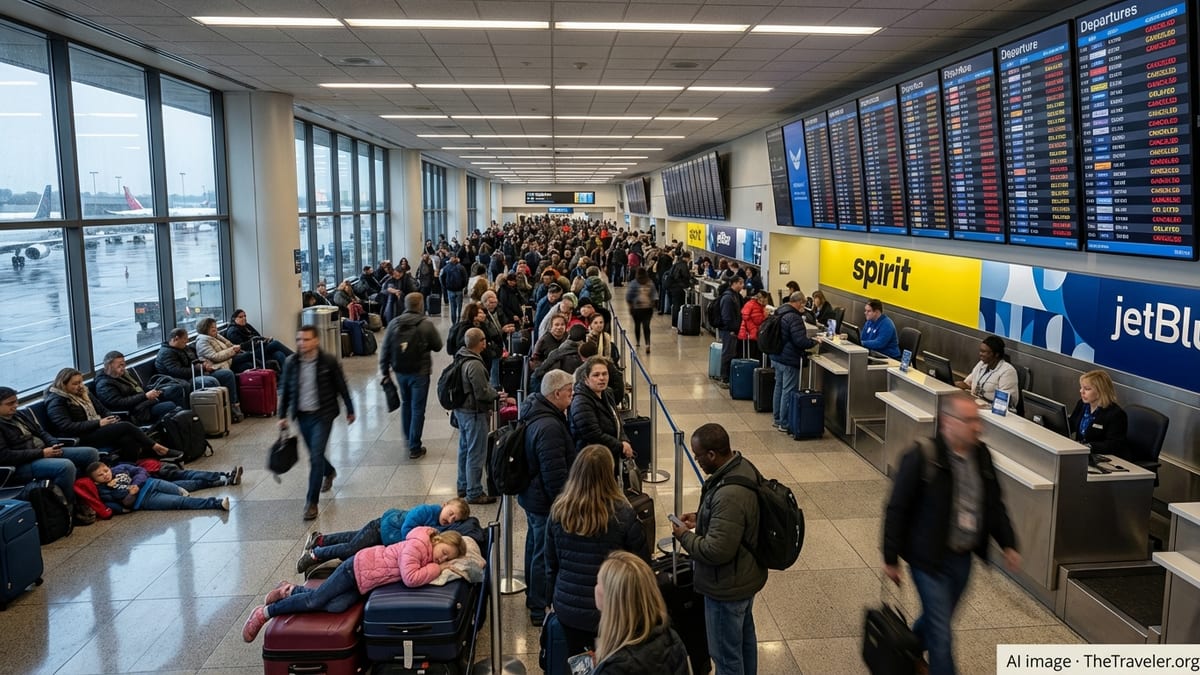
Thousands of travelers were left sleeping on terminal floors and scrambling for scarce hotel rooms on Monday as a fresh wave of flight cancellations and delays rippled across the United States, snarling operations for Spirit, United, Emirates, Qatar Airways, JetBlue and other major carriers at airports from Orlando and New York to Chicago and Boston.
Weather, War and System Strain Converge
The latest disruption comes as the global aviation system is already under acute strain from cascading shocks. A historic blizzard on February 23 crippled air travel along the US East Coast, grounding nearly one in five flights nationwide and virtually shutting down operations at New York, Boston and several other key hubs. Airlines were still working through the backlog of displaced crews and aircraft when the situation deteriorated again.
At the same time, airspace closures and missile damage to major Middle Eastern hubs after US and Israeli strikes on Iran have forced long haul carriers to reroute or suspend services. Gulf giants such as Emirates and Qatar Airways, which funnel tens of thousands of passengers a day between North America, Europe, Asia and Africa, have been forced to thin schedules, cancel departures and reposition aircraft, reducing the slack available in the global system.
Those pressures are now being felt on both domestic and international routes touching the United States. Aviation tracking data on Monday showed at least 175 flights canceled and more than 2,500 delayed by early evening across the country, with Florida, the Northeast corridor and Chicago among the hardest hit. With aircraft and crews out of position, a single local weather cell or technical issue could cascade into dozens of additional disruptions.
Industry analysts say the combination of lingering winter weather, constrained airspace over the Middle East and tight airline staffing has created a fragile operating environment. Any fresh shock, they warn, risks turning a difficult day of travel into a full system logjam.
Orlando and Florida Hubs Buckle Under the Strain
In Florida, where leisure demand remains strong and schedules are dense, airports again emerged as national trouble spots. Orlando International, one of the busiest gateways for theme park and cruise traffic, reported mounting delays through the morning as inbound aircraft arrived late from the Northeast and Midwest, compressing departure banks and overwhelming gate capacity.
Budget carriers such as Spirit and JetBlue, which rely heavily on tightly timed turnarounds and Florida leisure traffic, were among those hardest hit. Travelers reported early morning flights canceled with little warning, followed by long queues at customer service counters as rebooking options quickly evaporated. Many families bound for school break vacations faced the choice of cutting trips short, paying last minute premiums on alternative airlines or abandoning plans altogether.
Smaller Florida airports added to the pressure. Data from recent seasons show the state is home to several of the nation’s most delay prone facilities, where more than a quarter of flights routinely depart late or not at all. Limited runway capacity and heavy reliance on a handful of carriers make recovery from large-scale disruption especially difficult. When blizzards in the Northeast or storms in the Gulf send schedules off track, Florida’s leisure hubs often feel the impact for days.
As the day went on, knock on effects spread to connecting passengers. Travelers attempting to route through Orlando from cities such as Pittsburgh, Detroit or Nashville found themselves facing missed connections to Caribbean resorts or transatlantic departures, adding to the population of stranded passengers camped out near power outlets and departure boards.
New York, Boston and Chicago Grapple With Backlogs
In the Northeast, where the late February blizzard had already caused thousands of cancellations, Monday’s figures underscored how slowly the system is recovering. New York’s major airports, along with Boston Logan, continued to see elevated numbers of late departures and arrivals as airlines tried to clear residual backlogs and reposition aircraft that had been stranded out of place by the storm.
United, JetBlue and Spirit, all with large operations in the region, posted some of the highest totals of delayed flights. Passengers arriving at New York and Boston terminals were greeted by departure boards thick with yellow and red notices, and in many cases learned that even when their flight was still scheduled, crews or aircraft had not yet arrived from previous legs.
Chicago, a crucial Midwestern connector and one of United’s primary hubs, experienced its own wave of disruption as storms brushed the Great Lakes and bottlenecks formed in the crowded airspace over the region. Delays at Chicago O’Hare quickly radiated outward, affecting routes to Florida, Texas and the West Coast as aircraft waited for departure slots and crews bumped up against federally mandated duty limits.
With so many long haul flights to and from Europe and the Middle East already reshuffled, even a modest weather system or runway constraint at these northern hubs was enough to push schedules beyond their limits. The result was a patchwork of rolling delays that left passengers uncertain whether they would make connections home or abroad.
Global Carriers Caught in the Crossfire
The turmoil was not limited to US airlines. Emirates and Qatar Airways, which normally operate multiple daily services to major US cities, have been grappling with unprecedented challenges since large swaths of Middle Eastern airspace closed in the wake of escalating conflict. Many flights have been canceled outright, while others have been forced into longer routings that add hours to journey times and disrupt crew scheduling.
For passengers in Orlando, New York, Boston and Chicago booked on these Gulf carriers, the effects have been stark. Some discovered at check in that their onward connections via Dubai or Doha no longer existed, with rebooking options pushed days into the future. Others found themselves diverted mid journey to secondary European hubs, only to face additional delays or overnight stays as airlines scrambled to find legal crews and available aircraft.
United and JetBlue, which codeshare or interline with several international partners, have also struggled to absorb displaced travelers. Seats on alternative routings across the Atlantic and to South Asia rapidly sold out, leaving many travelers effectively stranded with limited options beyond refunds or travel vouchers. Long queues formed at alliance help desks, where agents attempted to juggle complex itineraries affected by both regional weather and geopolitical upheaval.
Travel experts note that Gulf superconnectors play a central role in linking North America with India, Southeast Asia and parts of Africa. With their networks constrained, pressure shifts onto European and US carriers, which often lack spare capacity during peak travel periods. The result is a thinner margin for error across entire continents.
Passengers Face Long Waits and Limited Recourse
For travelers caught in the middle of the latest disruption, the experience has been one of uncertainty, long lines and mounting costs. In Orlando, families reported sleeping in terminals after evening flights were canceled and local hotels filled to capacity. In New York and Boston, some passengers described spending hours in telephone queues or app chats trying to reach airline agents, only to be offered itineraries departing days later or refunds that did little to cover out of pocket expenses.
Under US regulations, airlines are not required to compensate passengers for delays or cancellations caused by weather or air traffic control constraints, though they must provide refunds if a flight is canceled and the traveler chooses not to be rebooked. That leaves many stranded customers navigating a patchwork of airline goodwill policies, travel insurance clauses and credit card protections in their efforts to recoup hotel, meal and alternative transport costs.
Consumer advocates urged passengers to document all expenses and keep detailed records of communications with airlines, noting that formal complaints can sometimes yield additional vouchers or reimbursements. They also warned that with storms still in the forecast and Middle Eastern airspace closures showing no clear end date, disruptions are likely to continue in the coming days.
For now, departure boards at Orlando, New York, Chicago, Boston and other major hubs offer a visual reminder of the fragility of the modern air travel network. Even as airlines tout record demand and expanding route maps, a convergence of weather, war and operational limits has left thousands of would be travelers temporarily going nowhere at all.